Highlights of the week: US-Iran pact, chipmakers raised forecasts, luxury sagged

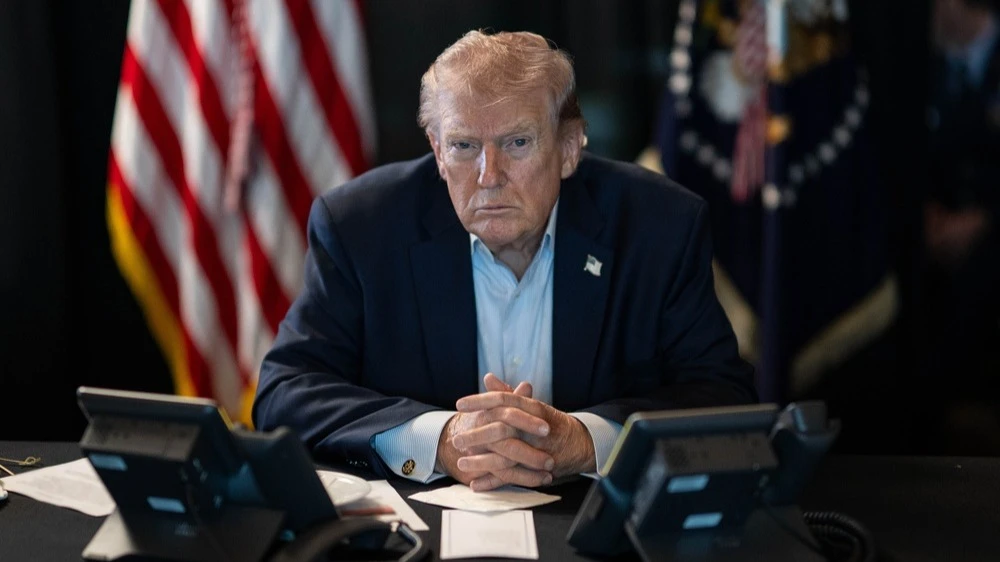
On April 17, US President Donald Trump said Iran has agreed to suspend its nuclear program indefinitely / Photo: Rawpixel.com / Shutterstock.com
Donald Trump reiterated the imminent end of the war with Iran, claiming Tehran will suspend its nuclear program. Volatility amid the Middle East conflict helped Wall Street banks earn record trading profits, while sales of luxury brands remain under pressure. TSMC and ASML raised forecasts amid robust demand for AI chips. The main events of April 13-17 are in our review.
Iran has agreed to suspend its nuclear program - Trump
Iran has agreed to suspend its nuclear program indefinitely, Bloomberg reported Friday, April 17, citing a telephone interview with U.S. President Donald Trump. He said that the agreement to end the war between the US, Israel and Iran is largely prepared and most of the main points have been agreed upon. Axios cited sources as saying that the countries have made progress in discussing the peace plan, but there are still disagreements on some issues.
Iran's Foreign Ministry said on April 17 that the Strait of Hormuz is open to commercial shipping. A day earlier, Trump said Israel and Lebanon had agreed to a 10-day cease-fire after talks in Washington. In trading on Friday, oil prices fell, U.S. indices S&P 500, Nasdaq Composite and Russell 2000 rose to record highs.
What else is there to read about it?
- How should the discovery of Hormuz be viewed in terms of the confrontation between the US and Iran? Gershon Kogan, an Israeli Iranian Orientalist, journalist and author of the Telegram channel "About Iran from Israel," argued in his article "Iran Blinked First: What the Opening of the Strait of Hormuz Means from a Political Perspective.
- What oil tanker owners say about the return to the Strait of Hormuz - in the article "Who will be the first penguin? Shipowners - on the return to the Strait of Hormuz".
Chipmakers boosted forecasts amid AI boom
TSMC, the largest contract chip maker, has raised its outlook for 2026 and now expects revenue growth of more than 30% - following a strong quarterly report. In the first quarter of 2026, TSMC's profits rose 58% to $18 billion, with quarterly sales up nearly 41% in dollar terms: demand for AI chips remains robust despite geopolitical risks and rising raw material prices.
Dutch chip equipment maker ASML also improved its revenue expectations to €36 billion to €40 billion after a strong first quarter where profits rose 17% year-on-year. The company's revenue added 13% to €8.8 billion, both beating analysts' expectations.
What else is there to read about AI?
- Anthropic has refused to release its new Claude Mythos model after discovering that it can exploit critical vulnerabilities in systems with unprecedented efficiency. Instead, the company has launched a $100 million project to harness its capabilities for cyber defense. Wouldn't such power become a new threat? - argued AI researcher and lecturer at the Holon Institute of Technology Mikael Gorsky in his column "$100 million for deterrence: Why Anthropic won't release Claude Mythos".
- The development of the Mythos model has strengthened the conviction of Dario Amodei, head of Anthropic, in the need for AI regulation. His interview with the Financial Times was recounted by Oninvest in the article "Shocks are inevitable: Amodei on Mythos, AI regulation and wealth".
Wall Street banks reported record profits amid war
Bank of America and Morgan Stanley reported strong results for the first quarter thanks to record revenue from equity trading amid high market volatility. Other major banks, including Goldman Sachs, JPMorgan and Citigroup, reported similar revenue growth.
Bank of America's revenue from stock trading grew by 30% year-on-year to $2.83 billion, and earnings per share reached the highest level in almost 20 years. Morgan Stanley also recorded record numbers: trading revenues increased 25% to $5.15 billion and total revenue reached $10.7 billion - $1 billion more than expected, CNBC noted.
Conflict in the Middle East pressures luxury sales
Sales of Gucci, Kering Group's flagship brand, fell 8% in the first quarter, almost double analysts' forecasts. Pressure was exacerbated by the war in the Middle East: Kering's retail revenue in that region, which accounts for about 5% of total revenue, fell 11% in the quarter. Kering's total revenue fell 6% to €3.57 billion. The company is undergoing a major transformation of Gucci, but analysts believe it may take time for demand for the brand to recover.
Earlier, Hermès and LVMH reported on the impact of the conflict in the Middle East on sales, which cast doubt on the recovery of the luxury market. Weak reports of the companies pulled down the entire luxury sector: in trading on April 15, shares of Burberry, Christian Dior and Moncler were among the worst in the pan-European index Stoxx 600, losing 2-3.3% at a time. Hermès shares in Paris were down 14% at the moment, the biggest intraday decline in the company's history, Bloomberg wrote.
What else is there to read about it?
- Kering CEO Luca de Meo unveiled the company's new strategy: the plan is to double profitability and relaunch key brand Gucci amid falling sales. Why did Kering's shares fall? - in the article "Gucci owner announces he wants to revitalize the brand and double profitability. Shares plummeted."
Shares of United and American Airlines rose on news of a possible merger
Shares of United Airlines and American Airlines jumped after reports of a possible merger of the companies: American securities rose by 7.5% in trading on April 14, United - by 2.3%. The idea of the deal was discussed by the head of United at a meeting with US President Donald Trump, Reuters wrote, citing sources. However, it is not known whether the official process for the deal has been launched.
The potential merger could create the world's largest airline with revenues of more than $100 billion and a fleet of over 2,800 aircraft, but would face serious antitrust barriers. Experts warn of the risks of reduced competition and higher prices in an already highly concentrated market.
Investor Mark Mobius, a pioneer of emerging markets, has died
Wall Street veteran Mark Mobius died April 15 at the age of 89. Mobius called himself the "Indiana Jones of emerging markets" and was known for his frequent travel and independent analysis of markets that large global investors often ignored. Mobius' company will continue to operate with no changes to its investment approach or day-to-day operations, the statement said.
Mobius was a pioneer in investing in emerging markets, launching one of the first such funds at Franklin Templeton Management Company. He successfully invested during crises, predicted market growth in 2009, and was one of the first to single out Africa as a promising area. In 2018, he founded his own company Mobius Capital Partners, which specializes in equity investments in small and medium-sized companies in emerging and frontier markets.
Mexican fintech Plata reaches $5 billion valuation
Plata, a fintech company founded by former top managers of Tinkoff Bank (now operating under the T-Bank brand), has raised $405 million in a new round of funding. That brings the bank's valuation to $5 billion, one of the highest among private fintech companies in Latin America, Michael Calvey, one of Plata's investors, wrote on Linkedin. Plata's Series C funding round was led by large investors including sovereign wealth funds, investment banks and international asset managers.
Plata is growing rapidly amid competition from banks in Mexico, with more than 3.5 million users, $600 million in revenue and a loan portfolio that grew 170% in a year. Plata has already obtained a banking license in the country and is considering an IPO. Nikolay Storonsky's Revolut joined the ranks of Mexican banks at the end of last year.
This article was AI-translated and verified by a human editor