How a fund involving Trump's sons made hundreds of millions from micro-cap trades

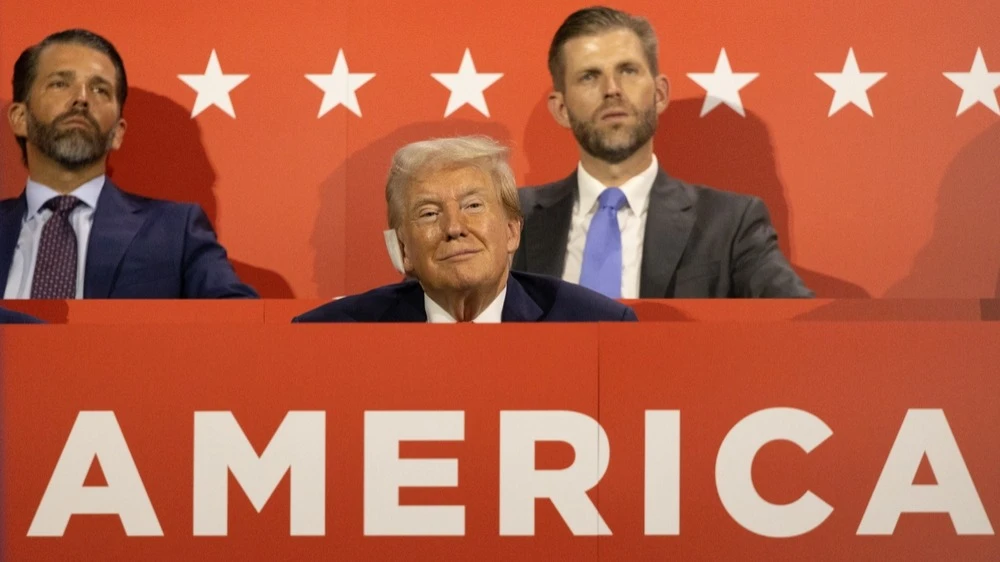
Donald Trump Jr. and Eric Trump joined the advisory board of Dominari Holdings and participated in its private placement / Photo: Maxim Elramsisy / Shutterstock.com
Small-cap investment banks rarely find themselves in the spotlight. But one of them has become the center of one of the most talked-about stories.
We’re talking about Dominari Holdings—a small investment bank with an office in Trump Tower and a market capitalization of about $66 million. According to Dominari’s annual report on Form 10-K dated March 31, 2026, the bank owns 90% of American Ventures Management LLC. Among Dominari Holdings’ advisors and shareholders are Donald Trump Jr. and Eric Trump: both joined the company’s advisory board and participated in its private placements, as Dominari reported back in February 2025.
In its investigation, Bloomberg estimated American Ventures’ profits from warrants at “hundreds of millions of dollars” in paper (unrealized) gains. Bloomberg emphasizes that this is merely an estimate based on publicly disclosed transactions, the terms of the warrant issuances, and current market prices. It is not clear from publicly available data what portion of these gains has already been realized.
The main instrument is a warrant
The scheme used by the fund is based on a warrant—a security that grants the right, but not the obligation, to buy a share at a predetermined price within a specified period. Economically speaking, it is similar to a call option: both instruments allow investors to profit if the market price of the stock rises above the exercise price. However, there is an important difference. An option is a contract between market participants, whereas a warrant is issued by the company itself. When a warrant is exercised, the issuer issues new shares, which dilutes the stakes of existing shareholders.
For an investor, a warrant is essentially a long-term option to buy shares issued by the company itself. The key thing to understand is that this instrument has a built-in leverage effect: it doesn’t simply track the stock’s price movement—it amplifies it. If the price rises above the strike price, the warrant’s return can be significantly higher than that of the underlying stock. But if that doesn’t happen, the warrant may lose all its value by the time it expires.
That is precisely why even a relatively small investment can yield very high returns—or result in a total loss. In an illiquid market, where prices react strongly even to small trades, this often leads to a sharp increase in the position’s value before the investor has even realized a profit.
A warrant is a legitimate and widely used financial instrument. What makes this story unusual is something else: the same scenario is repeated in several transactions, and the involvement of Donald Trump’s sons is drawing the attention of retail investors. Eric Trump told Bloomberg that he is a “passive investor in American Ventures” and “plays no management role” in the fund’s operations. The history of American Ventures shows that in the small-cap market, the value of warrants can rise significantly faster than the value of the underlying business.
Below are four transactions in which the fund’s role can be traced through documents from the U.S. Securities and Exchange Commission (SEC).
A "toy" company turns into a crypto treasury
The most telling example is the transformation of SRM Entertainment, a manufacturer of souvenirs for theme parks, into Tron Inc. According to Form 8-K filed with the SEC on June 16, 2025, the company raised $100 million through a private placement paid for with TRX tokens. Investors received preferred shares convertible into 200 million common shares at a price of 50 cents per share, as well as 220 million warrants with the same exercise price. Prior to the transaction, SRM’s market value was approximately $25 million. Dominari Securities served as the exclusive placement agent, and Tron founder Justin Sun acted as a transaction advisor.
Subsequent events show how warrants are converted into actual shares. According to the subsequent Form 8-K, as early as August 2025, the investor exercised all 220 million warrants, paying for them with TRX tokens worth $110 million. As a result, the company issued an additional 220 million shares.
According to Bloomberg, SRM’s shift to a cryptocurrency model generated more than $120 million in unrealized gains for American Ventures. The fund invested in the company just a few weeks before the deal, and there is no public information about the direct involvement of Donald Trump’s sons in the transaction.
Today, Tron Inc.’s business depends largely on the value of the TRX token and the returns from staking it. As Marktfeld analysts note, the company’s key risk is its high concentration on a single asset.
Prepaid Warrants That Bypass the Ownership Threshold
The deal involving the educational AI platform Genius Group (NYSE American: GNS) illustrates another mechanism used by the fund—the use of pre-funded warrants. According to the prospectus filed with the SEC in April 2026, the company raised $8 million by by issuing 2.3 million common shares at 37 cents each and 19.3 million pre-funded warrants with a nominal exercise price of $0.0001. According to Bloomberg, American Ventures was the lead investor in the deal.
The distinctive feature of such warrants is that they allow an investor to pay for future shares almost in full in advance, while formally remaining below the 4.99% ownership threshold (or, at the holder’s discretion, 9.99%). This makes it possible to accumulate a significant economic stake without incurring additional disclosure requirements.
The deal is also notable because American Ventures invested in a company that is operating at a loss. According to Bloomberg, Genius Group has been posting annual losses since 2019 and had previously warned that, without new capital, it might have to cease operations within a year.
A similar mechanism was used in disclosures related to Dominari. In February 2025, Donald Trump Jr. and Eric Trump reported holding approximately 6.71% each, not including an additional 432,276 shares each that could be obtained through warrants. Meanwhile, Genius Group CEO Roger Hamilton told Bloomberg that the Trumps’ stake in American Ventures did not influence the company’s decision regarding the deal, and there is no public information about their direct investments in Genius Group.
A Reverse Merger and a Bet on the Drone Market
The third example illustrates how warrants are combined with a reverse merger. According to Form 8-K filed with the SEC, in July 2025, golf club operator Aureus Greenway Holdings raised approximately $26 million in a private placement by issuing shares, prepaid warrants, and two tranches of common warrants. Revere Securities and Dominari Securities acted as co-managers of the offering.
According to Bloomberg, American Ventures received nearly 60 million warrants. Since the market price of the shares was already higher than their exercise price, the warrants were immediately “in the money.”
In March 2026, Aureus Greenway merged with drone manufacturer Powerus, which had gone public through a reverse merger. Dominari Securities served as the placement agent and financial advisor for the transaction. Among the investors was drone manufacturer Unusual Machines, in which Donald Trump Jr. is a shareholder. Following the announcement of the deal, Aureus Greenway’s stock rose 12% in a single day.
According to Bloomberg’s estimates, based on data as of the close of trading on June 24, 2026, the value of American Ventures’ warrants was at least $165.2 million.
Kazakhstan's Shift Toward Critical Minerals
The fourth deal extends American Ventures’ strategy into the critical minerals sector. According to SEC filings, in the third quarter of 2025, the Ventures fund led a group of investors that acquired control of Hong Kong-based Skyline Builders Group (NASDAQ: SKBL) in order to divest from the construction business and focus on the extraction of strategic raw materials.
According to the Financial Times, Donald Trump’s sons joined Skyline through American Ventures in August 2025, and Bloomberg estimated the value of the fund’s warrants just one month later at at least $132.5 million. In April 2026, Skyline announced a merger with Cove Kaz Capital Group, after which the combined company will go public under the name Kaz Resources Inc. (KAZR).
The main asset of the transaction is a 70% stake in the “Northern Katpar” project in Kazakhstan, which, according to the parties involved, is the world’s largest undeveloped tungsten deposit. The transaction is expected to close in late 2026 or early 2027, following approval from regulators.