Howard Marks: Investors are overly optimistic. What can they learn from Buffett?
An Oaktree co-founder believes investors should prepare for tougher times and adopt an “owner’s mindset”

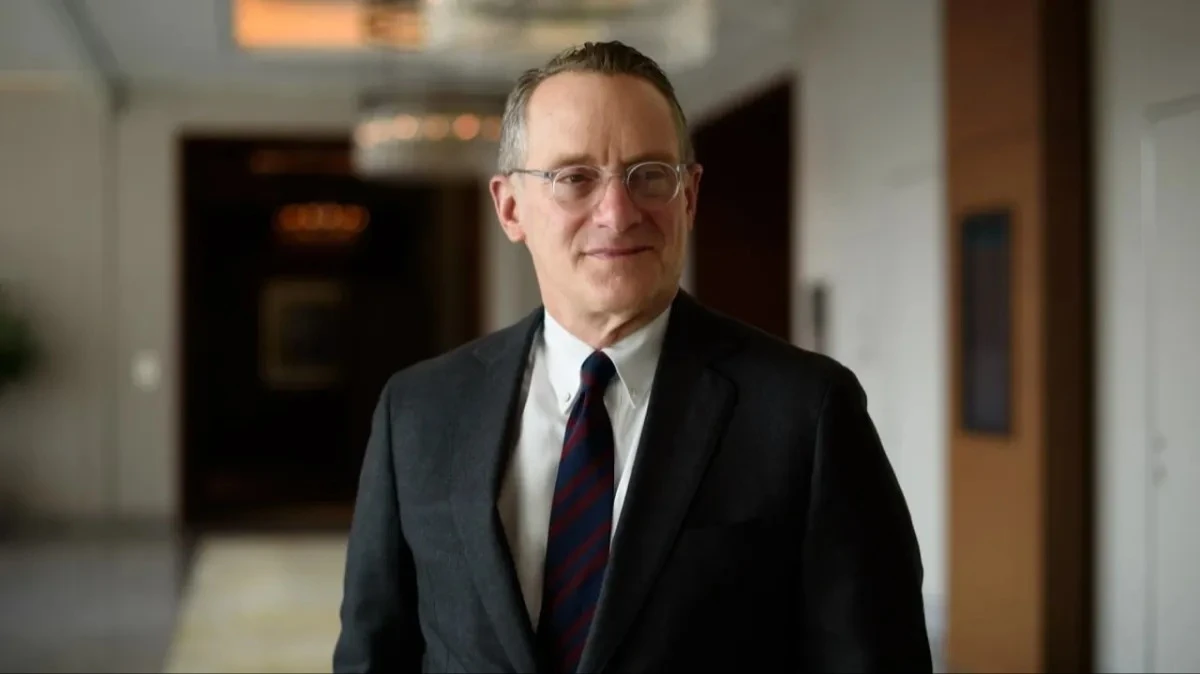
Marks warns that, caught up in a wave of optimism, investors are buying stocks at prices higher than their true value, which could result in lower-than-average future returns / Photo: Facebook / Howard Marks
The U.S. stock market has been in a phase of optimism for nearly four years, which increases risks for investors, said Oaktree Capital co-founder and billionaire Howard Marks in an interview with Barron’s. According to him, investors should prepare for the possibility that the tide may turn in the future.
“It is optimism that drives the kind of IPOs we’re seeing today,” Marks said in an interview recorded three days before SpaceX’s record-breaking offering. “In a pessimistic climate, something like this would simply be unthinkable. And that, in my view, is important to understand.”
Market sentiment has been improving since October 2022, when the Fed softened its tone, said the co-founder of Oaktree. According to him, the S&P 500 index has more than doubled during that period. The credit market, according to Marks, has also experienced a powerful upswing: The U.S. emerged from the global financial crisis in 2009; the economy has weathered a pandemic, the fight against inflation, and rising interest rates—and now, according to Marks, looks strong.
“Add to this the growing optimism, and we have a market where raising capital is no problem. The credit market is becoming generous, and in such an atmosphere, fear recedes, skepticism evaporates, and borrower screening standards are lowered to some extent. They are replaced by a willingness to act, excitement, and the fear of missing out,” Marks noted.
Riding this wave of optimism, stocks are being bought at prices higher than their actual value, which is why the returns on such investments may turn out to be below average over the next few years, the investor warned.
“We need to acknowledge that optimism is currently the prevailing sentiment and act accordingly. This means that with every step you take, you should ask yourself, ‘This is all well and good, but how can we prepare for less favorable times?’” he said.
Marks notes that during the period of falling interest rates, returns were largely driven by financial engineering and leveraged asset ownership—the market consistently valued these assets at a premium. In the coming period, according to Marks, the focus will shift toward purchasing assets at reasonable prices, creating additional value, and treating investments as equity stakes in businesses.
“I believe that ‘owner’s mindset’ is an extremely important thing,” said Marks. “Everyone talks about Warren Buffett’s success, but he has always acted like a business owner, not a trader. Buffett is the last person on earth you could call a trader. It seems to me that investors see his tremendous success, but they don’t always fully understand exactly how it was achieved.”
Howard Marks, whose net worth Forbes estimates at $2.2 billion, is known on Wall Street for his “memos” (notes) in which he describes his views on the stock market. He caught investors’ attention in 2000 when, in a note titled “Bubble.com,” he predicted the imminent collapse of tech stocks just three months before the dot-com bubble began to burst. Warren Buffett has said that he always reads Marks’ newsletter and learns something new from it every time.
This article was AI-translated and verified by a human editor