Howard Marks: Should You Sell U.S. Stocks Because of the Rising U.S. National Debt?
The growing U.S. budget deficit is shifting from a political issue to a concern for investors

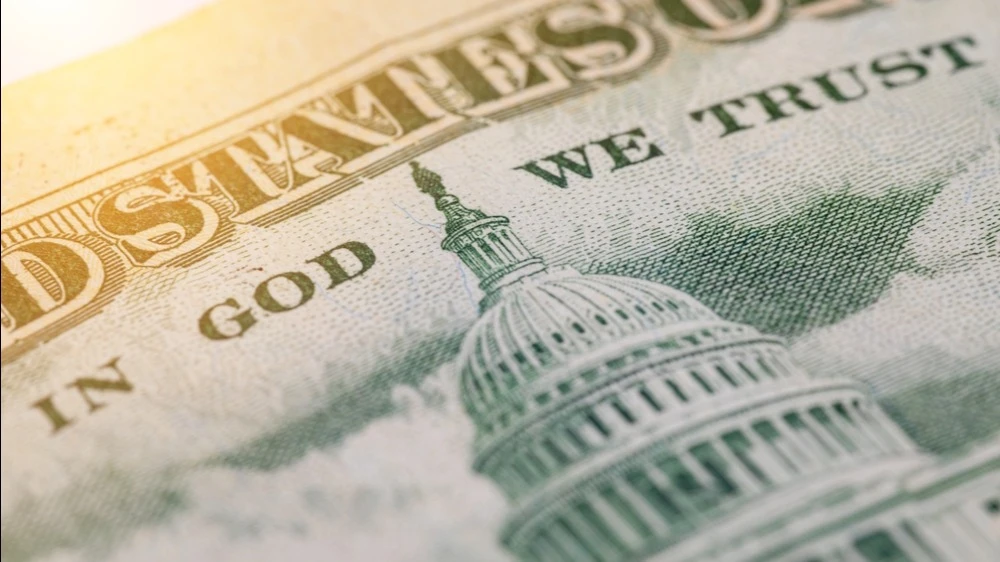
Thanks to the dollar's status, the U.S. has been given a "golden credit card," but it risks getting caught in a vicious cycle of rising debt, according to a billionaire investor / Photo: Shutterstock.com
The growing U.S. national debt poses a threat to the dollar and U.S. Treasury bonds, but that is no reason to sell shares of U.S. companies, argues renowned investor and billionaire Howard Marks in his new note, “Should We Abolish the Laws of Economics?”
A co-founder of the investment firm Oaktree Capital Management describes the U.S. national debt problem as simple math: The U.S. spends more than it earns, the debt-to-GDP ratio is rising, and interest payments are skyrocketing. In his view, the country cannot run a budget deficit indefinitely and expect confidence in the dollar and government bonds to remain unshaken.
“This isn’t an investment problem. It’s a political problem, but it creates a problem for investors,” Marks concludes.
The Vicious Cycle of U.S. Debt
The U.S. continues to increase its national debt despite economic growth and low unemployment: Marks calls this a “complete lack of fiscal discipline.”
“Thanks to the dollar’s status as the world’s reserve currency, the United States has gained what I call a ‘golden credit card’—there is no credit limit, no bill is ever sent, and the interest rate is extremely low. However, the country is using this card unwisely.”

The dollar’s status as the world’s primary reserve currency allowed the U.S. to borrow virtually without restriction for decades. However, servicing the growing national debt is now becoming increasingly costly for the country: according to a forecast cited by Marks, in 2026 the U.S. will spend more than $1 trillion on interest payments on the national debt—more than it spends on defense. Marks believes this could turn into a vicious cycle: rising interest expenses will increase the budget deficit, and to cover it, the U.S. will have to borrow even more. That said, Marks considers a U.S. default unlikely.
"I don't think there's a serious possibility that the U.S. won't be able to repay its debt on schedule. Why would we do that if our debt is denominated in a currency that the U.S. itself issues?"

The dollar remains the world’s primary reserve currency: in the first quarter of 2026, it accounted for 57% of official foreign exchange reserves. Marks believes that a viable alternative to the dollar is unlikely to emerge in the near future: the euro still lags significantly behind the U.S. currency, and the yuan accounts for about 2% of reserves. Therefore, according to Marks, the U.S. will be able to continue covering its budget deficit through new borrowing.
Even if the dollar depreciates, the U.S. will be able to pay off its creditors, according to Marks. However, investors may demand higher interest rates on new U.S. government bonds to compensate for the risk of a decline in the dollar’s purchasing power. As a result, servicing the national debt will become even more expensive. Attempts by the government to artificially lower borrowing costs may only reinforce these fears.
What should an investor do?
Despite the existing risks to the dollar, Marks does not advise investors to sell U.S. stocks: any potential depreciation of the U.S. currency is linked to the country’s fiscal policy, not to the U.S. stock market or U.S. companies. According to Marks, the U.S. retains advantages that are important to investors: a business-friendly environment, technological and innovative leadership, and developed capital markets. Moreover, selling U.S. stocks will not eliminate currency risk: if an investor transfers funds to a bank deposit, a money market fund, or dollar-denominated bonds, they will still be exposed to fluctuations in the dollar’s exchange rate.
Marks does not oppose diversifying one's portfolio as a hedge against the devaluation of the dollar: among the possible alternatives, he mentions assets denominated in other currencies, gold, foreign real estate, shares of foreign companies, and cryptocurrencies.
However, shifting to foreign assets also carries risks, Marks warns. Companies in other developed countries often lag behind leading U.S. corporations in terms of growth prospects and business scale. In addition, they often operate in countries with stricter regulations and less favorable business conditions. Emerging-market companies may have high growth potential, but, according to Marks, it is much harder to predict whether they will be able to realize it. Diversifying into other currencies also offers no guarantee of protection: budget deficits exist not only in the U.S., and the currencies of other countries can also depreciate.
The main point, Marks emphasizes, is that no one knows whether the U.S. national debt problems will lead to a crisis or when such a crisis might occur. Therefore, he does not advise investors to withdraw capital from U.S. assets on a large scale. Attempting to protect oneself in advance against a crisis that may not occur for many years could turn out to be a major investment mistake.
This article was AI-translated and verified by a human editor