The Dollar Faces a Triple Threat: Interest Rates, the Yen, and Hedging

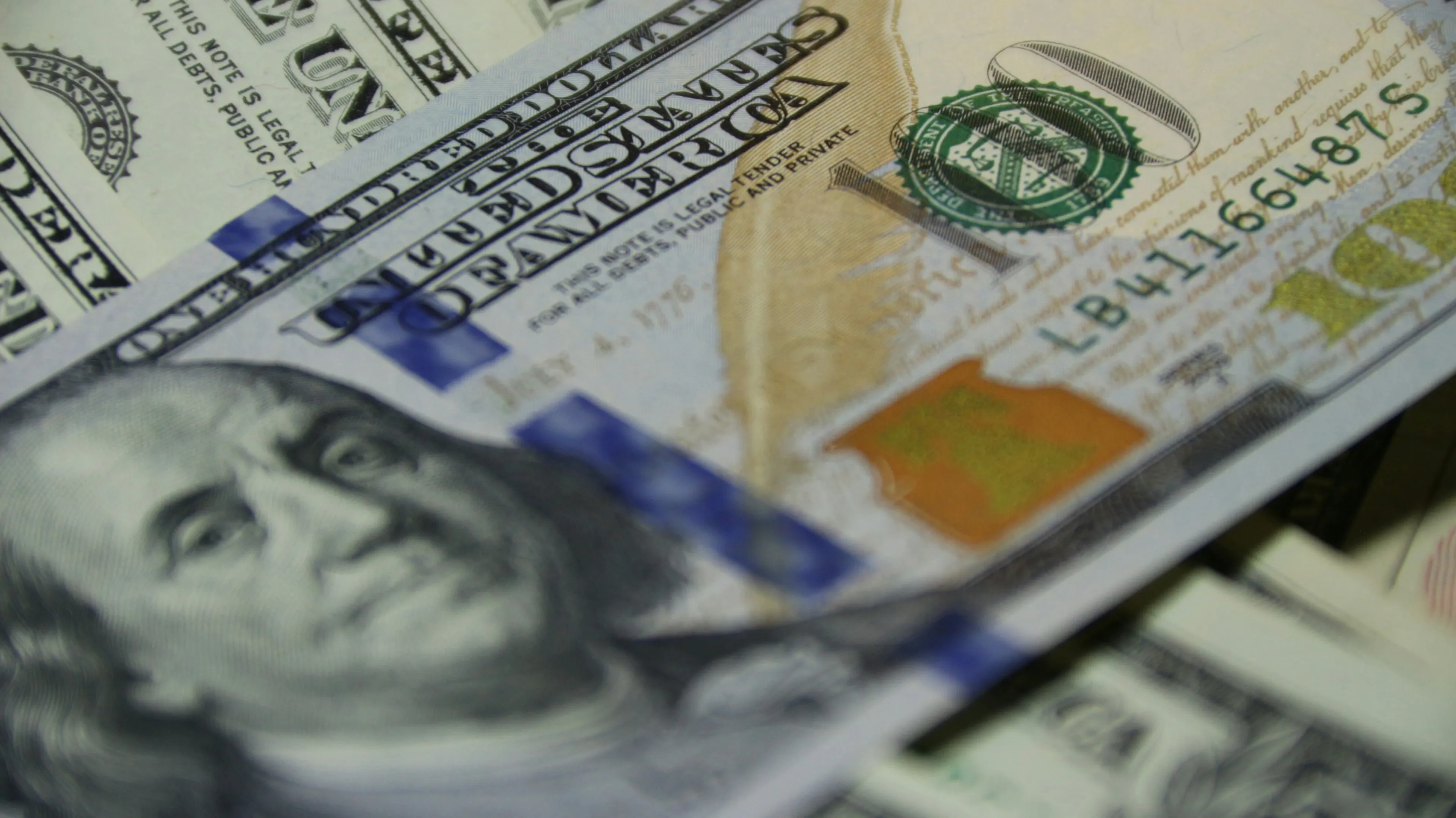
Since the start of the third quarter, the dollar has fallen by more than 2% against major world currencies. Investors believe this is not the end of the decline. Photo: Vladimir Solomianyi / Unsplash.com
Investors are once again betting on a decline in the dollar, for several reasons: a potential narrowing of the interest rate gap between the U.S. and other countries, a reversal in carry trade operations, and a possible increase in currency hedging by foreign investors in the U.S. market. The latter could result in significant dollar sales.
A heap of problems
Since the start of the third quarter, the dollar has fallen by more than 2% against major global currencies. And now, after a stable first half of the year, investors are once again betting on its depreciation.
This has not stopped the inflow of funds from foreign investors into U.S. assets. But the dollar is the one that has to “take the heat” for the problems of U.S. policy—the federal government’s $40 trillion debt, a budget deficit that has remained above 6% of GDP since the start of the decade, and inflation.
Interest rate trends are putting additional pressure on the U.S. dollar. Currently, central banks in the eurozone and Japan are expected to raise rates, while the Fed is expected to keep them at current levels. This will narrow the interest rate differential between the U.S. and other countries, which is already prompting market participants to close their yen carry trade positions, pushing the yen’s exchange rate higher and the dollar’s lower.
In the future, other factors will put pressure on the dollar—namely, hedging against its decline.
The yen is up
The yen is the world’s primary currency for carry trade transactions—when investors borrow money in a country with a low interest rate and invest it in countries with high-yielding instruments. The yen’s popularity stems from the fact that the Bank of Japan kept interest rates at near-zero or negative levels for many years, and even now, after several rate hikes, the rate stands at 1%.
However, for the trade to be profitable, the interest rate must remain low, and the yen exchange rate must remain stable or decline. Both of these factors are currently changing.
The dollar fell by more than 2% to 155–156 yen at the end of this week. The Japanese currency reached this level in May, following interventions by the country’s central bank, and in late July through early August, when the U.S. Treasury Department decided to prop up the yen.

This time, the Japanese currency strengthened after Central Bank Governor Kazuo Ueda and Board Member Hajime Takata hinted at a rate hike as early as September and at the possibility of further monetary tightening.
In an extreme scenario, Nomura Securities analysts now believe that interest rates in Japan will be raised at all three meetings through the end of the year. The bank is already seeing the unwinding of yen-funded carry trades.
“There seems to be a broad consensus that the era of easy carry trades is over, and the volume of cross-border flows from Japan to the U.S. is changing significantly, — Bloomberg quotes Sagara Sambrani, a senior currency options trader at Nomura.”
Jon Trisi, publisher of the Fuller Treacy Money investment newsletter, expects the dollar to weaken in the coming years. Other currencies will strengthen, “and the yen is currently the most likely contender to take the lead against the dollar,” he notes. The Bank of Japan actively defends the yen’s exchange rate when it reaches approximately 160 yen per dollar. In July, the dollar’s exchange rate against the yen did not hold up following interventions initiated by U.S. Treasury Secretary Scott Bessent, and it may now retreat to around 147 yen, according to Trisi. In other words, according to his forecast, the dollar could weaken by about 6%.
Protect Yourself Against the Dollar
The European Central Bank will raise its policy rate by 0.25 percentage points to 2.5% this coming Thursday, according to the overwhelming majority of economists surveyed by Bloomberg. They believe the rate will then remain at that level throughout 2027. However, market participants expect further tightening and three more rate hikes by the middle of next year.
Meanwhile, doubts are growing about the Fed’s readiness to actively combat inflation. Chairman Kevin Warsh stated in late August that the Fed “has work to do” if there is no rapid progress in stabilizing prices.
However, Board of Governors member Chris Waller said on Thursday, September 3, that he is inclined to keep the rate at its current level, as recent data point to easing inflationary pressures. John Williams, president of the Federal Reserve Bank of New York and Warsh’s deputy on the rate-setting committee, also noted progress in curbing inflation.
Following these statements, traders in the interest rate futures market lowered the probability of a rate hike in September from 59% to 50%, and the dollar weakened, according to the Financial Times.
If the markets increasingly price out the likelihood of a Fed rate hike and the interest rate differential with other central banks narrows, pressure on the dollar will increase.
In this case, international investors will have to increase their hedging to protect against a decline in the dollar, explains Nathan Tuft, chief investment officer at Manulife Investment Management. According to him, this will put sustained additional pressure on the dollar.
When hedging, a foreign investor who has invested in U.S. assets seeks to protect their profits so that they are not “eroded” by the dollar’s depreciation. Otherwise, their revenue in their home currency would decline. To avoid this outcome, the investor hedges currency risk in advance: for example, by entering into a forward contract to sell dollars, thereby locking in a future exchange rate.
Pension funds, insurance companies, and other large institutional investors in Japan, Australia, Canada, Denmark, Finland, and Taiwan—with $4.6 trillion in U.S. assets—had hedged only 41% of their investments as of June 30, according to Bloomberg. This is the lowest level in more than a decade: between 2015 and 2020, the figure remained at around 53–56%.
A 5-percentage-point increase would result in $230 billion in dollar sales, according to Bloomberg estimates.
“Foreign investors hold a significant amount of U.S. assets, so even small changes in hedging ratios can generate substantial volumes of foreign exchange transactions,” Laura Cooper, director of credit markets at the asset management firm Nuveen, told the news agency.
In the second quarter, foreign investors purchased a record $426 billion worth of U.S. stocks. This is 43% more than the previous high, according to Tim Baker, a macro strategist at Deutsche Bank. In his view, this is partly due to their desire to participate in the growing number of IPOs (during this period, on June 12, SpaceX held its initial public offering).
Despite this inflow of funds, the dollar remained stable throughout the quarter. One factor that may have prevented it from strengthening was the outflow of funds from the U.S. Treasury bond market, where the yield on 10-year bonds jumped to 4.67% in May, and 30-year yields to 5.18%.
At the same time, the U.S. stock market has stopped outperforming other major markets over the past couple of years (and especially this year), Baker points out.
“We prefer to take a bearish view of a currency that is seeing record inflows into equities, despite a lagging stock market that does not offer significantly more favorable prospects in terms of valuation and growth,” he wrote.
This article was AI-translated and verified by a human editor