Iran attacked two tankers belonging to a UAE state-owned company in the Strait of Hormuz

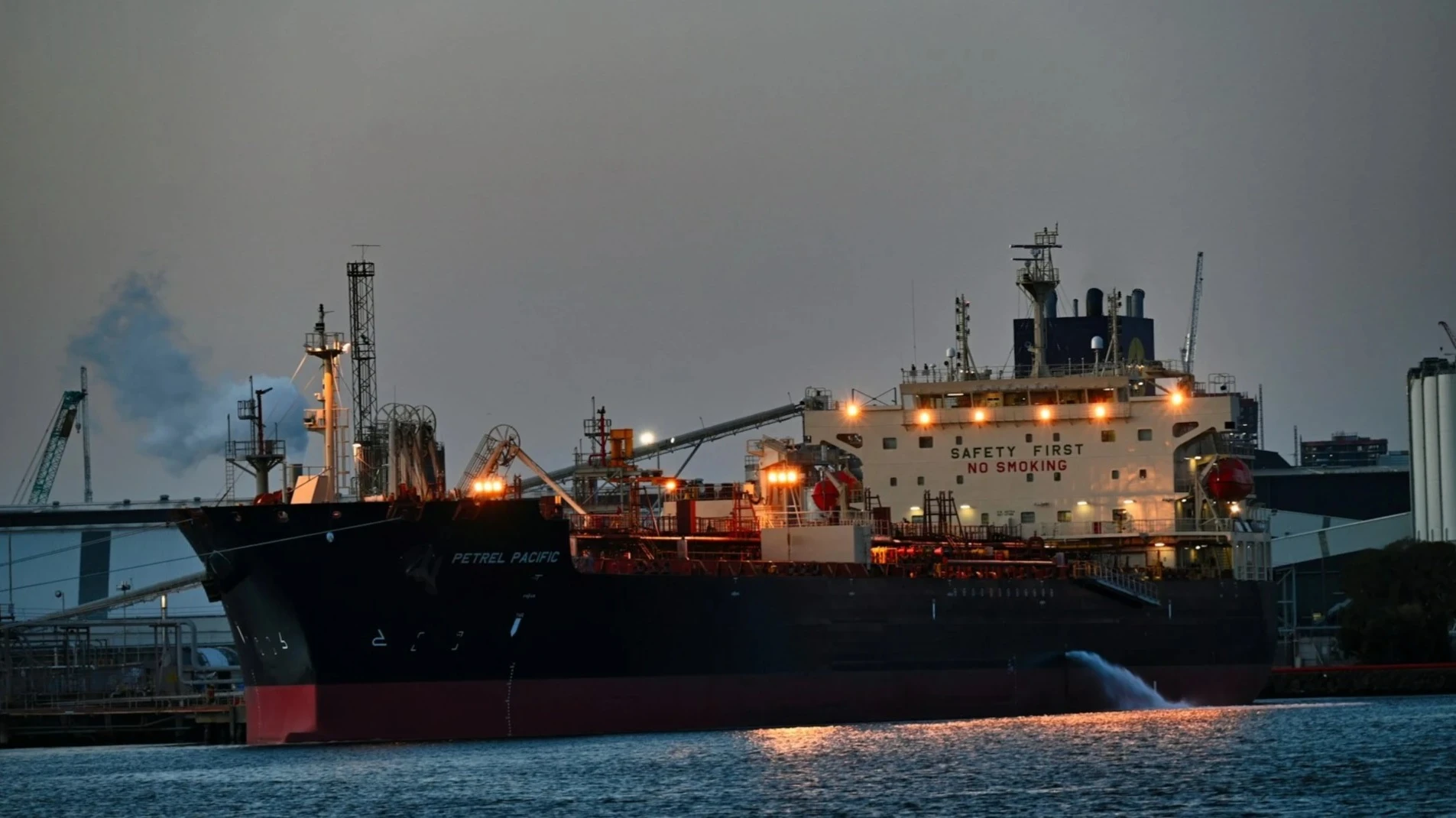
Oil prices are up about 4% for the week amid new attacks on Emirati tankers and a tougher stance by the White House / Photo: Unsplash/Enguerrand Photography
Iran struck two more vessels belonging to the Emirati company Adnoc Logistics & Services as they were passing through the Strait of Hormuz. The UAE Foreign Ministry called Tehran’s attacks on commercial shipping “acts of piracy.” Meanwhile, the U.S. is preparing a plan for unprecedented economic measures against Iran aimed at isolating the country economically.
Drones vs. ADNOC
The tankers were attacked on the evening of Thursday, August 13: no one was injured, and the situation was brought under control, ADNOC stated in a report by The Washington Post. The tankers Navig8 Messi and Tarif were targeted, according to the maritime news portal TradeWinds. According to Vanguard Tech, the attacks on the tankers were carried out by drones. Both vessels remain in the Middle East but have not transmitted their coordinates for several days, TradeWinds reports, citing the vessel-tracking service Kpler.
Two vessels sustained minor damage as a result of a drone attack while transiting the Strait of Hormuz, according to the UK Maritime Trade Operations (UKMTO). It did not identify them as ADNOC vessels, but The Washington Post noted that this likely refers to the same incident.
TradeWinds notes that 16 attacks on vessels owned by an Emirati shipowner have been reported since the start of the U.S.- and Israeli-led war against Iran. The latest attack coincided with the Islamic Revolutionary Guard Corps’ response to Washington’s statements that it controls the Strait of Hormuz and intends to continue the naval blockade of Iran, the publication notes.
ADNOC's Shuttle Business
Adnoc L&S, whose own fleet exceeds 340 vessels, has established shuttle services through the strait: large tankers pass through the Strait of Hormuz without transmitting their location data, and the oil is then transferred to other vessels outside the Persian Gulf, Bloomberg has learned. This is costing the company dearly—just last week, tankers were attacked four times—and taking a toll on its crew: one sailor was killed and 20 others were injured in missile and drone strikes, according to TradeWinds. Nevertheless, shipments continue, although the number of transits is declining, and operators are still trying to adapt to the constant threat, notes Lloyd’s List.
Oil Prices Are Rising
On August 14, futures for the benchmark Brent crude initially rose 1.9% to above $88 per barrel, but then gave up all of their daily gains and began to fall by 0.4%. Nevertheless, prices gained about 4% over the course of the week.
The rise in raw material prices is a natural consequence of the U.S.’s new policy, which threatens to drag out the Middle East crisis with no hope of a quick resolution, according to Bjarne Scheldrop of SEB Research. “Hopes that shipments through the Strait of Hormuz would return to previous levels in the near future have suddenly vanished,” he stated (as quoted by Reuters).
The U.S. will soon announce unprecedented economic measures against Iran, U.S. Treasury Secretary Scott Bessent said on Thursday, August 13. “We plan to implement measures that are unprecedented in the history of economic isolation against a country,” he noted. The U.S. has already imposed some 2,200 sanctions against Iran since 2018, noted Jeremy Payner, a partner at Hughes Hubbard & Reed, in a Bloomberg report. “If 47 years of sanctions haven’t broken Tehran’s will, a little more is unlikely to bring about any change,” wrote analysts at Bloomberg Economics.
This article was AI-translated and verified by a human editor