"Mag7 is dead as a concept": Citi sees new leaders in the "growth cluster"
Bank strategists urge analysts to assess the AI trend across a broader group of companies

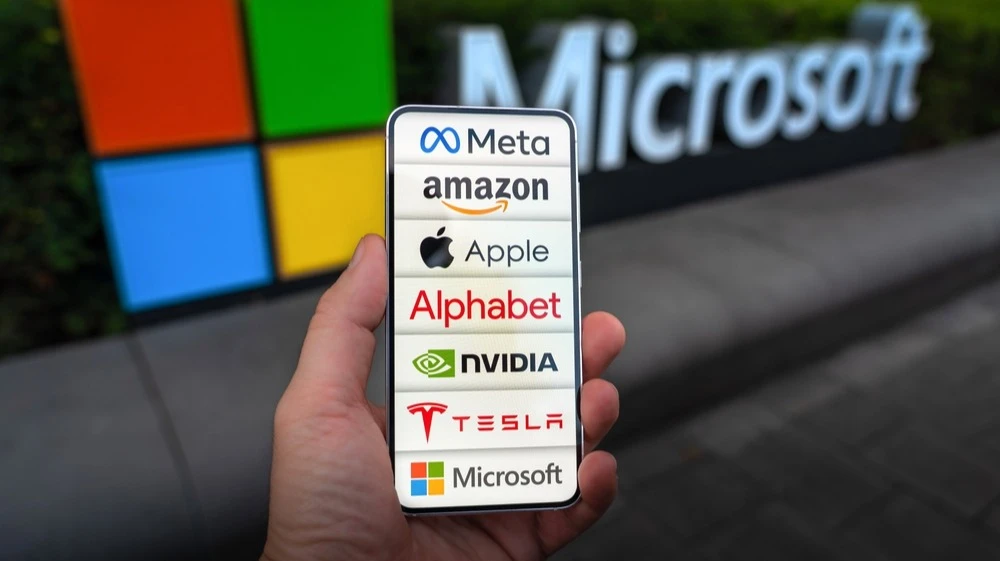
"The Magnificent Seven" Is No Longer Relevant, According to Citi / Photo: gguy / Shutterstock
The term “Magnificent Seven”—as the group of the largest technology companies is known—is no longer a relevant benchmark for assessing how to invest in artificial intelligence on the U.S. stock market, according to Citigroup strategists. Analyst Scott Kronert believes that investors should focus on a broader range of companies that have become the main drivers of both earnings growth and the rise in the S&P 500 index, according to Bloomberg.
Details
The term “Magnificent 7” (or “Mag 7” for short) was coined in 2023 by BofA investment strategist Michael Hartnett. With this term, he grouped together the tech giants Nvidia, Apple, Amazon, Alphabet, Meta, Tesla, and Microsoft. However, Citigroup advises shifting the focus to the so-called “growth cluster,” which includes not only leading tech companies but also players involved in deploying AI infrastructure, according to Bloomberg. This group accounts for more than half of the S&P 500’s market capitalization.
“The ‘Magnificent Seven’ is dead as a concept for evaluating the performance of large-cap growth stocks. This has happened before—for example, when was the last time you thought about FAANG?” asks Kronert. He’s referring to the well-known acronym formed from the first letters of five companies: Facebook, Apple, Amazon, Netflix, and Google. In 2013, when the acronym first appeared, these were the fastest-growing tech companies, but over time, the market has moved on from it.
As Citi notes, by historical standards, the valuations of companies in the “growth cluster” remain attractive in terms of the P/E ratio—that is, the ratio of stock price to projected earnings. Despite the rise in share prices, their valuations are far from their all-time highs and are supported by expectations of rapid earnings growth through 2027.
What the market trends show
Hortnet’s view is supported by the ongoing capital outflow in the stock market, Bloomberg explains. The Bloomberg Magnificent Seven Index, which propelled the S&P 500 to a string of record highs, has lost its lead this year and is now lagging behind. Investors are now favoring sectors that benefit from massive spending on AI, the agency reports.
The correlation between the stock prices of the “Magnificent Seven” companies themselves has also broken down, Bloomberg adds. While Microsoft and Meta saw their shares fall due to skepticism about the return on their billion-dollar investments, Apple’s stock soared as the company decided not to participate in the “arms race” to build data centers.
Context
This is not the first time the viability of the “Magnificent Seven” concept has been raised, and the debate has intensified following the IPO of the space company SpaceX. Following its initial public offering on June 12, 2026, its market capitalization reached $2.1 trillion, allowing it to surpass two members of the “Magnificent Seven”—Meta and Tesla—in value.
Analysts surveyed by Reuters predicted at the time that, due to the expected IPOs of other major players in the AI sector—such as OpenAI and Anthropic—the composition of the group of technology leaders would change, requiring the introduction of new terminology. In particular, the acronym MANGOS—standing for Meta, Anthropic, Nvidia, Alphabet, OpenAI, and SpaceX—was discussed on the social media platform X. And Dan Bordman-Weston, CEO of BRI Wealth Management, proposed the name “Magna Atoms,” which combines the members of the Mag7 along with SpaceX, OpenAI, and Anthropic.
Since then, SpaceX's stock price has fallen: in mid-July, it dropped below its IPO price for the first time. As a result, the company's market capitalization declined, and it slipped to tenth place on the list of the most valuable companies.
This article was AI-translated and verified by a human editor