Market exits credit risk: US bank stocks fall to lowest in nearly a year

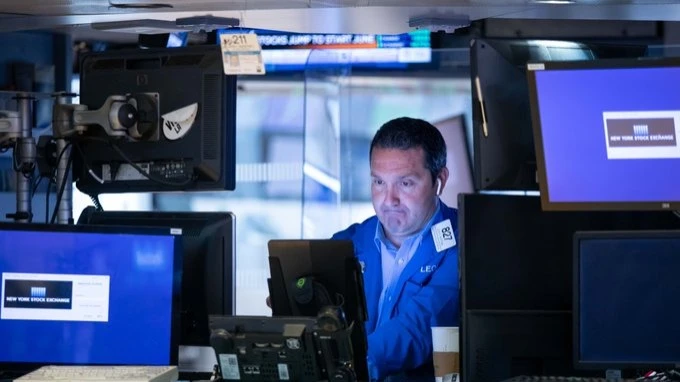
The crisis in private lending and fear of AI technology has sent shares of banks and private asset managers tumbling / Photo: x.com/NYSE
Shares of U.S. banks and private asset managers fell on February 27 amid growing concerns about artificial intelligence and instability in the private lending sector. The sell-off affected both the largest Wall Street banks and securities of alternative investment funds.
Details
The index of American banks KBW Index at trading on February 27 at the moment fell by almost 6% - to the minimum since March 2025, according to data from MarketWatch. Bloomberg notes that the shares of all 23 companies-issuers of this index are in minus, in particular, the securities of Zions Bancorp fall by 7.6%, Wells Fargo - by 6%, Keycorp - by 5.79%. Securities of the largest Wall Street banks - Goldman Sachs (-7.43%), Citigroup (-5.76%) and Morgan Stanley (-6.89%) are also trading in the negative.
In addition to them, the sell-off affected payment operators and credit card companies: securities of Synchrony Financial, American Express and Capital One fell by 6.77%, 6.92% and 6% respectively. Shares of alternative asset managers, including Apollo, KKR and Ares, lost 8.87%, 7.22% and 6.69% respectively.
Blue Owl Capital (-6%), meanwhile, shows the largest monthly decline in almost four years, Bloomberg notes. Since the beginning of February, the company's shares have fallen by 18%.
What's happening in the market
Credit institutions, payment processors and asset managers have faced a number of blows this month, most notably updates to artificial intelligence tools and models and problems with private lending, Bloomberg notes. "The market is selling anything with any sensitivity to credit risk this morning," Truist analyst Brian Finneran wrote in a note to clients.
"The negative news from the credit market - following [the imposition of external receivership on U.K. mortgage company] Market Financial Solutions - is causing problems for companies like Apollo and Jefferies, and investors are starting to fear a [domino] effect," said Miller Tabak chief market strategist Matt Maley(quoted by Bloomberg). "Even if it's not [a domino effect], there's still a risk that the growing problems in the credit markets will lead to losses for financial companies," he added.
In addition, BlackRock's direct-loan fund fell sharply in price after a dividend cut, pulling down shares of other companies in the sector, Bloomberg notes.
What else is going on in the credit markets
The situation in the private lending market has escalated after Blue Owl - one of the largest players in the market - suspended withdrawal of funds from one of its funds on February 19 and announced the sale of some assets for settlements with investors. On the next trading day after the news, Feb. 20, the company's market value fell by about $1.2 billion, Bloomberg notes.
In addition, in the last week of February, the British mortgage company Market Financial Solutions (MFS) was appointed external management - its lenders warned of a possible $1.3 billion collateral shortfall, Bloomberg reports. Zircon Bridging and Amber Bridging accused MFS of using the same assets as collateral for multiple loans. Such practices may have led to unrecorded shortfalls of more than 80% of the total £1.2bn debt, Bloomberg notes, citing documents from Zircon and Amber.
In addition, the day before, securities of a publicly traded large loan fund managed by KKR Investment Company - FS KKR Capital - collapsed by 15% after it reported a sharp increase in bad loans and a decline in investment income in the fourth quarter of 2025. The fund manages a portfolio of about $13 billion, which mainly consists of loans to mid-sized companies backed by private equity funds, the Financial Times noted. FS KKR Capital's net investment income fell to $0.48 per share in the fourth quarter, down from $0.57 a quarter earlier. Significant markdowns came from loans to software companies. This includes loans on which borrowers stopped paying interest on time. For such debts, the fund no longer reflects accrued interest as income, which signals an increased risk of losses, writes the Financial Times.
"Blue Owl shares and the entire private credit sector are under pressure from a significant amount of misleading information," BofA Securities analyst Craig Siegenthaler pointed out on Feb. 27, noting that at the same time, "Blue Owl's investment results remain solid and strong across all strategies," Bloomberg quotes the analyst as saying.
UBS warned on Feb. 25 that the private credit market could face a wave of "cascading defaults" due to the impact of AI if the "bleakest scenario" materializes.
This article was AI-translated and verified by a human editor