Morgan Stanley has once again lowered its oil price forecast amid a panic sell-off
The price of Brent crude, the benchmark grade, plummeted 20% in June due to the ceasefire in the Persian Gulf

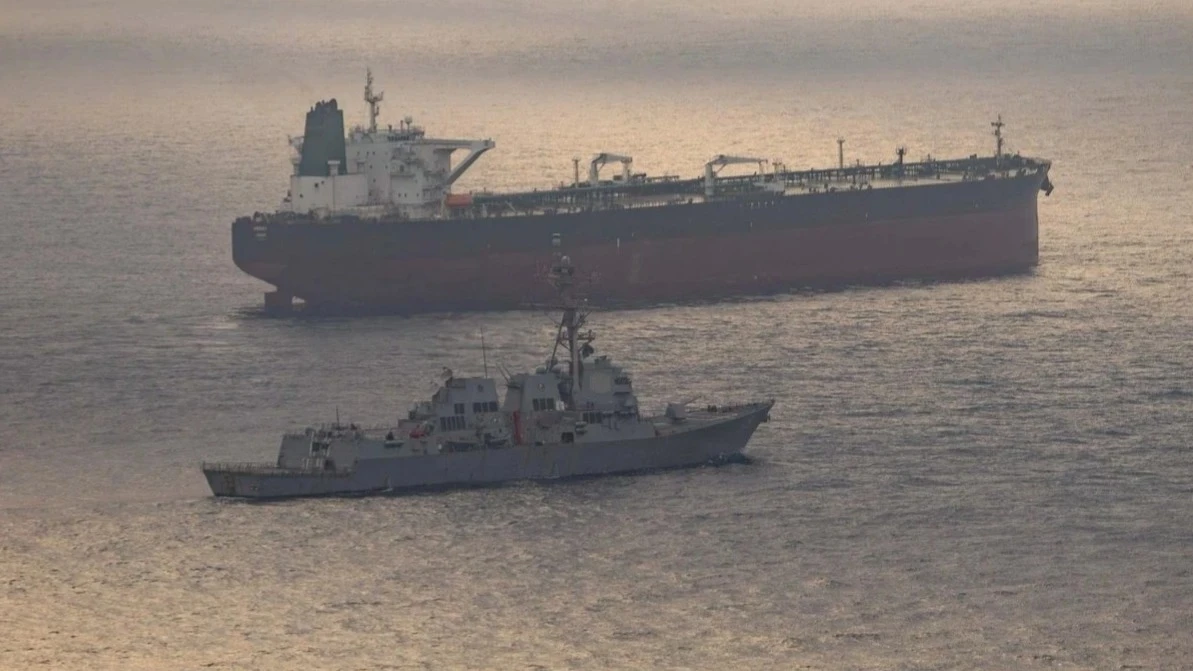
Daily transit through the Strait of Hormuz reached pre-war levels for the first time last week / Photo: X / U.S. Central Command
Morgan Stanley has lowered its oil price forecast for the second time in two weeks. The investment bank warned that shipments through the Strait of Hormuz are resuming faster than expected, and that high oil supply from the U.S. and weak demand in China are increasing the risk of a market glut.
Details
The bank now expects Dated Brent—the benchmark for physical oil deliveries—to average $75 per barrel in the third and fourth quarters. This is $15 and $5 lower, respectively, than its previous estimates. Morgan Stanley has also revised its forecasts downward for all quarters of 2027. By the end of 2027, it expects Dated Brent to be at $70 per barrel, according to Bloomberg.
Analysts at Morgan Stanley, led by Martijn Rats, explained the change as follows: the strait is opening up faster than expected, but two factors continue to weigh on prices—rising U.S. export volumes and low oil demand from China. If one looks not at short-term military risks but at the supply-demand balance for 2027, the market has effectively returned to where it started—a surplus, the experts noted.
On June 25, the bank counted 35 oil and gas tankers that had left the Persian Gulf via the strait. According to Morgan Stanley, this is the first time since the start of the Middle East crisis that the figure has returned to its usual range of 30–40 vessels. For the market to be balanced in 2027, shipments through the Strait of Hormuz need to recover to only 65% of pre-war levels—that is, to 11–12 million barrels per day, the bank noted.
Analysts have also pointed to signs of weakness even now. These include “bear contango”—a situation in which futures with the nearest delivery date trade at a lower price than those with later delivery dates—and “stress” sell-offs of physical oil shipments. “If we set aside the news and look only at prices, we see a ‘market that has weakened across the board,’” Morgan Stanley concluded.
What Other Investment Banks Are Saying
Fears of a supply shock have given way to concerns about a surplus of raw materials, confirmed ING commodities strategist Warren Patterson. “There is a growing expectation that the global oil market will be well-supplied through the end of 2027,” Patterson wrote on June 29, as quoted by Business Insider. According to him, with oil prices around $70 per barrel, “the geopolitical risk premium is close to zero.”The most actively traded Brentfutures are currently trading below $73 per barrel.
Earlier this month, Goldman Sachs lowered its Brent price target for the fourth quarter of 2026 from $90 to $80 per barrel, and its average price forecast for 2027 from $80 to $75. Analysts who had bet on high oil prices misjudged how quickly the market would cool off after tensions surrounding Iran eased, said the bank’s commodities strategist, Daan Struijven. According to him, the market “underestimated the system’s flexibility”: it turned out to have more fallback options than proponents of the scenario of persistently high prices had anticipated.
JPMorgan Chase expects Brent crude to trade at an average of $80 per barrel in the fourth quarter and to fall to an average of $64 in 2027.
Context
Brent is on track to end June with a drop of nearly 20% and the second quarter with a decline of more than 23%, as expectations of increased oil supplies from the Persian Gulf are weighing on prices, according to Trading Economics. Over the weekend, shipping traffic through the Strait of Hormuz slowed after new attacks that damaged two vessels. Nevertheless, tanker operators and their crews have expressed their willingness to continue sailing the route.
This article was AI-translated and verified by a human editor