Morning in New York: Focus on the Producer Price Index


Thursday's key macroeconomic release will be the July Producer Price Index data / Photo: Unsplash/Clayton Cardinalli
A daily review and forecast of events in the U.S. stock market by Mikhail Denislamov, Deputy Director of Freedom Capital Markets Research.
We expect
Negotiations between the U.S. and Iran on restoring the June interim agreement to reopen the Strait of Hormuz have yet to yield results. Tehran continues to insist on the fulfillment of its conditions for resuming shipping along this route. Oil prices are under pressure from downwardly revised demand forecasts by OPEC and the IEA, as well as data showing a 17.4 million-barrel increase in U.S. commercial inventories. Attacks on ships in the Gulf of Oman and the Red Sea remain a driver of growth for energy prices. Overall, oil remains sensitive to the effects of weakening demand, limited supply, and geopolitical factors, which continue to fuel upward inflation expectations.

The key macroeconomic release this Thursday will be the Producer Price Index (PPI) data for July. The consensus forecast calls for a 0.2% increase in the overall index following a 0.3% decline the previous month. The core index (excluding food and energy), according to market forecasts, is expected to rise by 0.3% after a 0.2% increase in June. Consumer price data released yesterday came in line with average estimates. Against this backdrop, the investment community has revised downward its assessment of the likelihood of a Fed rate hike in September. However, the slowdown in the annual core inflation rate in July was largely driven by volatile components. If the PPI comes in above expectations, this will once again reinforce expectations of a likely tightening of monetary policy.

Also today, data on initial unemployment insurance claims will be released (consensus: 202,000; previous figure: 199,000).
Before the market opens, JD.com (JD), Intuitive Machines (LUNR), and Figure Technology Solutions (FIGR) will report their quarterly results. After the market closes, Applied Materials (AMAT) and Celcuity (CELC) will report. Applied Materials’ report will be of the greatest significance, as it will provide insight into the extent to which demand for computing power is driving sustained growth in spending on equipment for the production of advanced microchips, memory, and packaging. Expectations remain high, so for the market to react positively to the release, management will need to provide optimistic guidance for the next quarter.
Futures on U.S. stock indices are trading near zero. We assess the risk balance for the upcoming session as neutral, with elevated volatility. Demand for artificial intelligence-related stocks remains strong, while concerns about an imminent tightening of monetary policy have eased. Expectations surrounding the release of the Producer Price Index are acting as a restraining factor, and the market’s reaction to this data will determine the direction of the session. We expect the S&P 500 to fluctuate within the 7,700–7,800-point range.
What to Watch for in the Pre-Market
— Cisco Systems (CSCO) shares are down more than 6%, even though its quarterly revenue rose 18% year-over-year to $17.25 billion, beating the consensus estimate of $16.82 billion, and adjusted EPS came in at $1.22, exceeding the market’s consensus estimate of $1.17. Pressure on the stock came from the company’s guidance on gross margin, which fell short of average market estimates due to rising component costs and a higher proportion of hardware in sales.
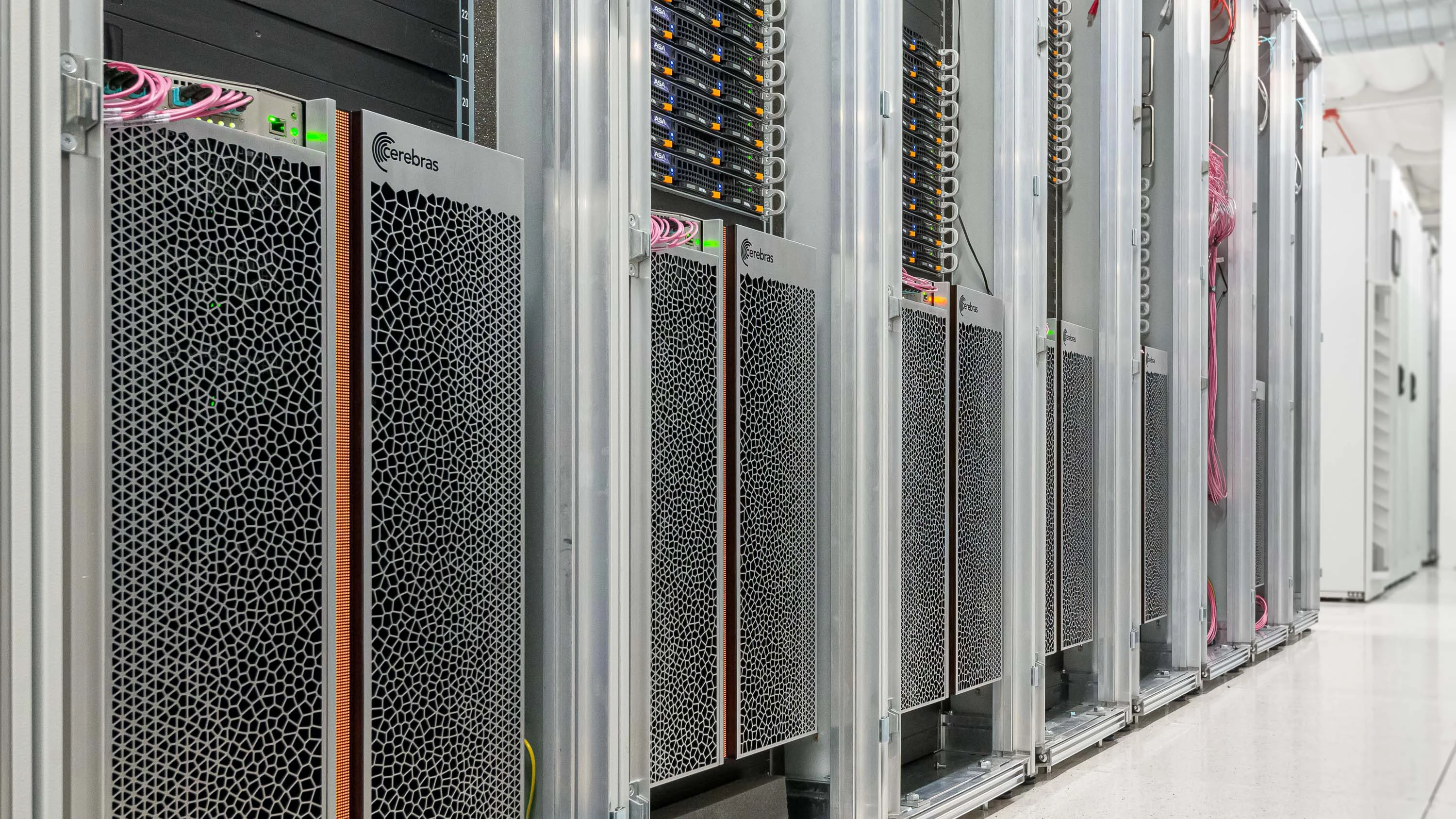
— Cerebras Systems (CBRS) shares fell more than 16% as its second-quarter revenue came in at $180.1 million, compared with a consensus estimate of $194.2 million, and its core gross margin declined from 46.5% in January–March to 40.6%. At the same time, the company’s underlying revenue increased 103% year-over-year to $209.9 million, and its full-year guidance was raised.
— Coherent (COHR) is trading down by about 4%, even though its revenue for the fourth fiscal quarter rose 34% year-over-year to $2.05 billion, and adjusted EPS increased to $1.74. Pressure on the stock price came from the forecast for adjusted gross margin for the current quarter, which is expected to range from 39.5% to 41.5%. The midpoint of this range exceeds the current result by only 30 basis points, whereas over the past year the metric increased by 215 basis points. Since the beginning of the year, the company’s stock has already risen 83% due to inflated expectations regarding its earnings reports. The initial reaction to the earnings release confirms that the negative sentiment is not related to growth rates, but rather to insufficient margin improvement.
— EnerSys (ENS) shares are up more than 12% following a strong earnings report. Revenue came in at $935.6 million, compared with consensus estimates of $928.6 million, while adjusted EPS came in at $3.66, compared with market expectations of $2.82. For the current quarter, the company forecasts sales in the range of $955 million to $995 million, compared to a consensus estimate of $975.2 million. The dividend was increased by 10%.
— EquipmentShare.com (EQPT) shares are rising by nearly 5%. The company’s revenue for the most recent reporting period rose 26% year-over-year to $1.45 billion, beating the consensus estimate of about $1.15 billion, while adjusted EPS came in at $0.18, despite a projected loss of about $0.07. The company maintained its previously raised full-year guidance.
— Andersen Group (ANDG) shares are down about 7%. Its revenue for the quarter rose 23.7% year-over-year to $217.7 million, compared with average estimates of around $203.3 million. However, diluted loss per share was $0.09, and full-year guidance remained unchanged.
The Market on the Eve of...
Trading on August 12 on U.S. stock markets ended in positive territory, although the indices had pulled back from their session highs by the close. The S&P 500 gained 0.26%, the Nasdaq 100 rose 0.74%, the Russell 2000 rose 0.61%, and the Dow Jones remained near the zero mark. The benchmarks were supported by CPI data, as well as strong earnings reports from AI infrastructure providers.
The IT sector led the gains (XLK: +1.49%). Raw materials and materials producers were the underperformers (XLB: −1.24%). Software developers, building materials manufacturers, and real estate developers also came under pressure. The “Magnificent Seven” stocks moved in different directions. Nvidia (NVDA: +3.03%) saw the heaviest buying, while Meta Platforms (META: −3.38%) posted the steepest decline.
The Consumer Price Index (CPI) rose 0.1% month-over-month in July, following a 0.4% decline the previous month. The main contributor to inflation was a 0.1% increase in housing costs. Energy prices, which fell by 1.5%, acted as a dampening factor. The core index rose by 0.2% after remaining unchanged in June.
Against the backdrop of these statistics, the probability of a tightening of monetary conditions in September has fallen by approximately 11 percentage points, to 40%. For the current year, market participants forecast a rate hike of approximately 26 basis points; the previous estimate was around 30 basis points. Interest rate levels are determined not only by inflation and Fed policy. The state of the budget and the growing supply of securities linked to financing the artificial intelligence sector also play a role.
Treasury bond yields declined. The Dollar Index (DXY) rose 0.2%. Gold rose 0.6%, and silver rose 1.2%. WTI crude oil rose 0.1%. Bitcoin futures fell 0.3%.
The SOX semiconductor industry index rose 2.49%. The segment gained momentum from the quarterly earnings reports of several companies operating in various segments of the AI infrastructure supply chain. The focus was on growth in order backlogs, improved margins, pricing terms for new contracts, and return on invested capital. This is precisely what the market had been missing in previous reports, where the sheer volume of contracted demand alone was no longer impressive. Shares of data center power suppliers, which did not publish their own financial reports, also rose in price.
Company News
— Nebius Group (NBIS: +34.14%) reported second-quarter results that exceeded average market forecasts. The total value of contracts nearly quadrupled, and the payback period for investments was reduced from 24–34 months to 22. Starting in 2027, the company expects to commission more than 1 GW of capacity annually.

— Nebius cited the switch to Bloom Energy (BE: +12.29%) solutions as the reason for the significant improvement in its project, noting the reliability of the on-site power supply, extremely low emissions, and rapid deployment times.
— Quantinuum (QNT: +27.97%) has agreed to a multi-year partnership with Oracle (ORCL) and the sale of a computing system to the company. Quantinuum’s loss per share and EBITDA loss were higher than consensus estimates, but its revenue and management’s guidance for fiscal year 2026 exceeded market expectations. Order volume year-to-date has significantly outpaced analysts’ forecasts.
— Lumentum Holdings (LITE: +13.63%) reported better-than-expected results for the fourth fiscal quarter, and its outlook for the current quarter exceeded the market consensus. Demand for lasers continues to outpace supply by more than 30%, and shipments are fully contracted. The company attributes the growth in margins to its sales mix, price increases, and production utilization.
— Brinker International’s (EAT: +11.07%) revenue for the fourth fiscal quarter slightly exceeded expectations. Comparable sales at Chili’s and Maggiano’s also came in stronger than forecasts, but restaurant profitability declined due to rising food costs. Nevertheless, management’s confident guidance for fiscal year 2027 provided support for the stock price.
This article was AI-translated and verified by a human editor