Oil has fallen in price after the US and Iran's decision to continue nuclear talks. What's next?
The talks are "guaranteed to fail" and then $100 a barrel oil is "well within reach," FGE NexantECA, a consulting firm, warned

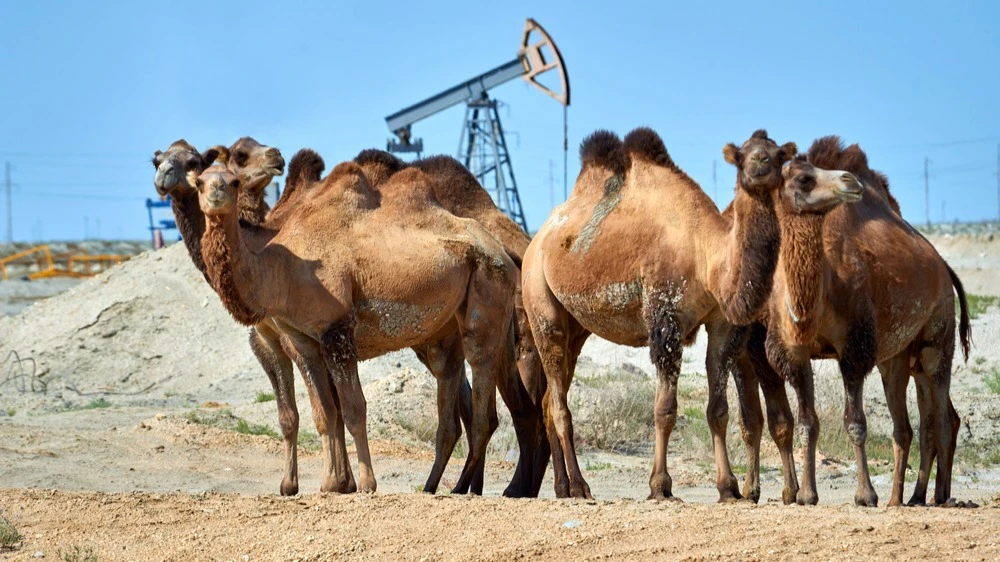
A US military conflict with Iran could start after the IAEA meeting in March and lead to a sharp rise in oil prices / Photo: Yerbolat Shadrakhov/Shutterstock.com
World oil prices declined by about 1% in trading on February 23 amid preparations by Washington and Tehran for the next round of nuclear talks. The expectation of this meeting has somewhat alleviated investors' fears of a possible US war with Iran. Nevertheless, the market is of the opinion that war is inevitable, and it will lead to a sharp rise in oil prices.
Details
On Monday, futures for the benchmark grade Brent cheapened by 1.5% to $70.69 per barrel, while the U.S. Mark WTI lost 1.7%, falling to $65.38. However, then quotes partially recovered losses, and by the time of publication of this text futures were cheaper by about 0.4%.
Last week, Brent and WTI quotations rose by more than 5% due to the threat of a military conflict between Washington and Tehran. However, the decision of the two countries to begin preparations for a new round of negotiations eased fears of escalation, in addition, the new duties of President Donald Trump have created uncertainty about the prospects for global economic growth and, consequently, demand for oil, writes Reuters.
What the analysts are saying
"News of the duties over the weekend has led to a capital flight this morning due to risk aversion, which can be seen in gold prices and U.S. stock futures, and that is putting pressure on oil prices," Reuters quoted IG Markets analyst Tony Sycamore as saying.
"As long as the threat of U.S. strikes dominates diplomatic efforts, with a constant frightening reminder in the form of the naval armada Washington has pulled into the Middle East, it is hard to expect oil prices to fall significantly," said Vandana Hari, founder of analyst firm Vanda Insights (quoted by Reuters). According to her calculations, the price of Brent now includes a premium for Iranian risk of at least $10 per barrel.
What's next
"I don't think the U.S. has any choice but to go to war," FGE NexantECA chairman emeritus Fereydoun Fesharaki told Bloomberg. Iran also cannot give in to pressure without losing legitimacy, he said. The analyst warned that Tehran is capable of attacking neighboring Saudi Arabia, the UAE and Kuwait or trying to block the Strait of Hormuz, an important conduit for Persian Gulf oil exports. Depending on the severity of the scenario, prices of $90 to $100 a barrel are "quite achievable," Fesharaki said. The planned negotiations are "guaranteed to fail," and it will take at least a year to restore stability if the Iranian regime collapses, the expert added.
Analysts at Goldman Sachs are laying down a calmer scenario: on February 23, they raised their price forecast for the fourth quarter of 2026 to $60 per barrel of Brent and $56 per WTI amid a decline in inventories in OECD countries, Reuters reports. At the same time, the bank still assumes that there will be no disruptions in supplies due to Iran, and maintains the forecast of surplus in the market, allowing even a decline in quotations in the case of lifting sanctions on Tehran or Russia. The Morningstar analytical agency also shares a reserved assessment: they believe that the U.S. strike on Iran will be targeted and will have a limited impact on supplies, while the global surplus will remain, The Wall Street Journal reports.
When Trump might strike Iran
Trump's 10-15 day deadline for Iran to prevent a military strike coincides with the upcoming IAEA meeting. The agency's board will meet March 2 in Vienna to discuss a new resolution condemning Iran's nuclear program. According to former IAEA official Tariq Rauf, this could give the U.S. a formal pretext to attack Iran for regime change. Bloomberg does not rule out a repeat of the June 2025 scenario, when Israel attacked Iran immediately after the IAEA's decision to condemn Tehran for not cooperating with the monitors.
This article was AI-translated and verified by a human editor