Oil rises to $115, stocks in Asia plummet: markets have begun to consider the risk of a long war
The Gulf War will last until at least the summer, says Madison Cartwright of Commonwealth Bank of Australia

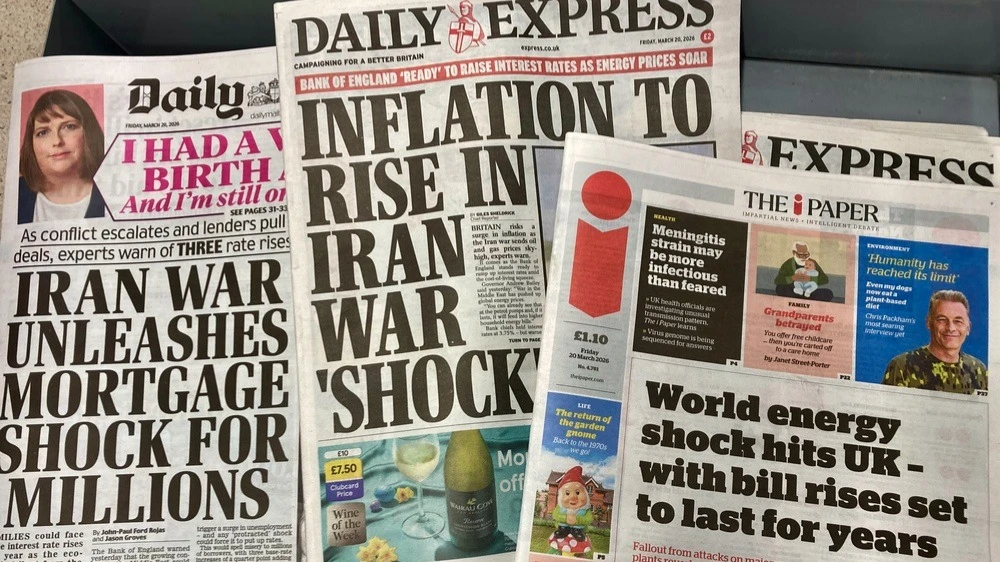
Fears are growing in the markets that the U.S.-Israeli operation to force Iran into peace will escalate into a protracted war / Photo:Steve Travelguide/Shutterstock.com
Markets started the week with a sharp decline in quotations on Asian stock exchanges and a rise in oil prices. Investors' hopes for a quick resolution of the crisis in the Persian Gulf are fading, giving way to preparations for a protracted confrontation. The escalation of the conflict involving the Yemeni Houthis and the build-up of the US military presence in the Middle East make traders put the scenario of a long war in the prices.
Details
Brent futures rose by 3.7% to $116.75 per barrel in morning trading on March 30. Now the May contracts for the benchmark grade are quoted around $115. Over the past month, Brent has increased in price by almost 60% - more than after the Iraqi invasion of Kuwait in 1990, states Reuters.
Japan's Nikkei 225 index lost 3% on March 30, bringing its March decline to nearly 13%. South Korea's Kospi fell 3.1%, and China's blue-chip index CSI 300 slipped 0.3%. MSCI's broadest index of Asia-Pacific shares excluding Japan fell 1.8%.
Futures on U.S. indices S&P 500 and Nasdaq have recovered the morning drawdown and are now only in a slight minus, reports Reuters. In Europe, contracts on EUROSTOXX 50 and German DAX fell by 0.7%, and on British FTSE - by 0.4%.
Context
Investors' hope for a quick end to the Middle East crisis has waned after rebels from Yemen entered the conflict and additional U.S. troops moved into the Middle East, Trading Economics reported. The Houthis fired rockets at Israel over the weekend and vowed to continue strikes until a ceasefire on Iran. They have also threatened shipping in the Red Sea and Saudi oil facilities. Meanwhile, the Pentagon is preparing for ground operations. According to the Financial Times, US President Donald Trump has threatened to "seize Iranian oil" and the export hub on Hark Island in a Venezuelan scenario.
What the analysts are saying
"Iran's control of the Strait of Hormuz, ability to destabilize global energy and food markets, and continued missile and drone capabilities leave him (Trump. - Oninvest) little room for compromise, forcing the U.S. to escalate," said Maison Cartwright, senior geoeconomics analyst at Commonwealth Bank of Australia (quoted by Reuters). "We expect the war to last until at least June, with the balance of risks tilted towards a longer conflict," she added.
"The longer the [Strait of Hormuz] remains closed, the sharper the decline in buffer stocks will be, which could trigger a rapid rise in the prices of oil, natural gas and other exchange-traded commodities. A scenario in which the strait remains closed for another month would be consistent with oil prices rising to $150 a barrel," warned Bruce Kasman, head of global economics at JPMorgan Chase.
This article was AI-translated and verified by a human editor