One of Wall Street’s leading “bulls” has lowered his S&P 500 target. What risks does he see?

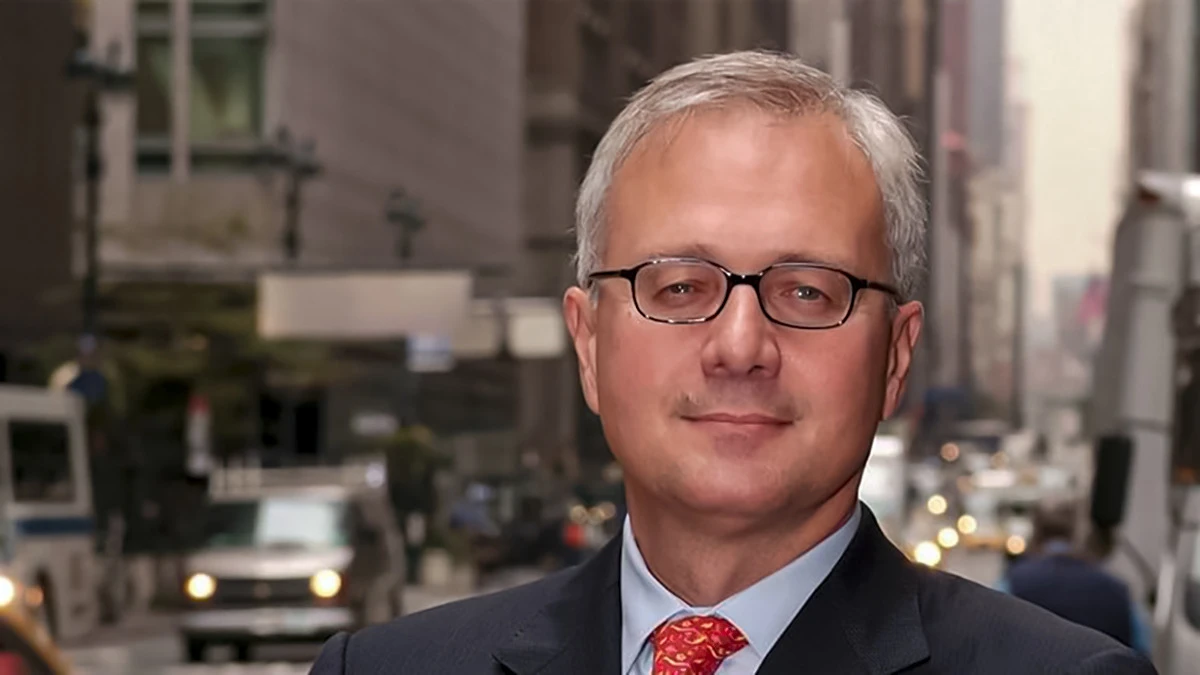
Wall Street veteran Ed Yardeni lowered his target for the broad-market index from 8,400 points to 7,900 / Photo: Yardeni Research
Ed Yardeni, president of Yardeni Research and one of Wall Street’s most optimistic strategists on U.S. stocks, lowered his year-end forecast for the S&P 500 just one month after raising it. He cited the growing risk of a recession in the next three to six months as the reason, according to Bloomberg.
Details
Wall Street veteran Ed Yardeni has revised his target for the S&P 500 broad-market index from 8,400 points to 7,900. The strategist issued his previous forecast in August, and at the time, it was the most optimistic on the market—Yarden explained it by citing “impressive” corporate earnings growth. The new target still implies growth for the S&P 500—by 4.1% relative to Tuesday’s closing level—and falls roughly in the middle of the forecast range of two dozen analysts surveyed by Bloomberg.
Yardeni asserts that “the risks of a recession over the next three to six months have increased,” according to CNBC. He cited higher Treasury yields due to rising energy prices as a factor holding back the index’s growth. As a result, the strategist was forced to lower his forecast for the S&P 500 forward P/E—an indicator that shows the ratio of a stock’s price to its projected earnings for the coming year. Yardeni expects this multiple to stand at 18.6 by the end of the year, down from his previous estimate of 19.8. This is what led to the downward revision of the index’s target level, the analyst explained.
He also noted that the previous forecast of 8,400 points is now the target for mid-2027. In August, Yardeni stated that any decline—or even a crash—would present a buying opportunity. He still expects that “the economy will grow without a recession through the end of the decade” and that by then the S&P 500 will reach 10,000 points—a jump of nearly one-third. However, for now, “caution is warranted,” Yarden advised investors.
What Other Analysts Are Saying
Yarden has become the second strategist this week to lower his target for the S&P 500: as the end of the year—which will feature the midterm elections—approaches, analysts are becoming increasingly skeptical. Oson Kwon of Wells Fargo lowered his forecast for the index to 7,700 points, implying growth of only 1.5% over the remaining 3.5 months. The strategist stated that the ten-year cycle of earnings growth will eventually slow, while risks in the technology sector are mounting.
Savita Subramanian of Bank of America raised her target for the S&P 500, but even the revised target of 7,400 points implies a decline from current levels. BofA strategists warned of the risk of a correction amid high inflation and possible Fed rate hikes. In addition, Subramanian believes that the U.S. stock market has gone too long without a full-fledged pullback: in 2026, the S&P 500 experienced only one 5% decline, whereas such pullbacks typically occur about three times a year, the analyst explained.
Michael Perves of Tallbacken Capital Advisors remains optimistic: his target of 8,500 points is now the highest on Wall Street, according to Bloomberg.
The forecast revisions followed a sell-off in long-term U.S. Treasury bonds. The yield on the benchmark 10-year Treasury note surpassed the 5% mark this week and briefly reached a 19-year high. This is a bad “sign” for the stock market: historically, a surge in Treasury yields has heightened investors’ concerns about the impact of high interest rates on stocks, notes Business Insider. But this won’t necessarily halt the bull market, according to Wall Street analysts surveyed by CNBC.
This article was AI-translated and verified by a human editor