A Democracy of Abundance—With AI and Without Jobs: How Musk and Other Billionaires Envision the Future
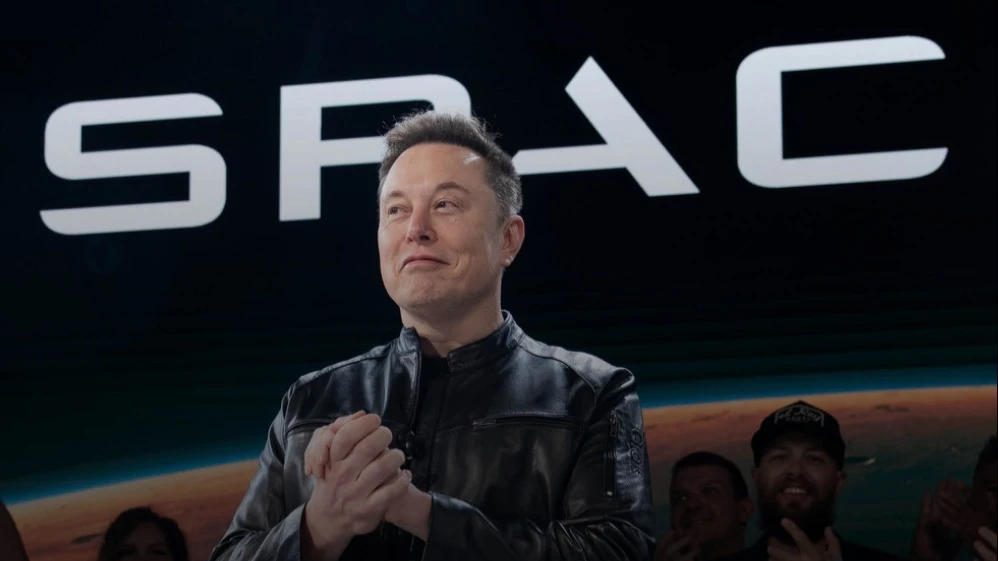
Elon Musk believes that in the future, mass and energy—not dollars—will be used as currency. Photo: Nasdaq / X
Elon Musk, the founder and CEO of SpaceX, held the title of the world’s first trillionaire for less than two weeks after the aerospace company went public. Following the market crash on June 23, he ceased to be a trillionaire. But Musk himself is convinced that money will soon become much less important—or even disappear altogether. He is not the only tech billionaire who believes in such a future. What might it look like?
Only mass and energy
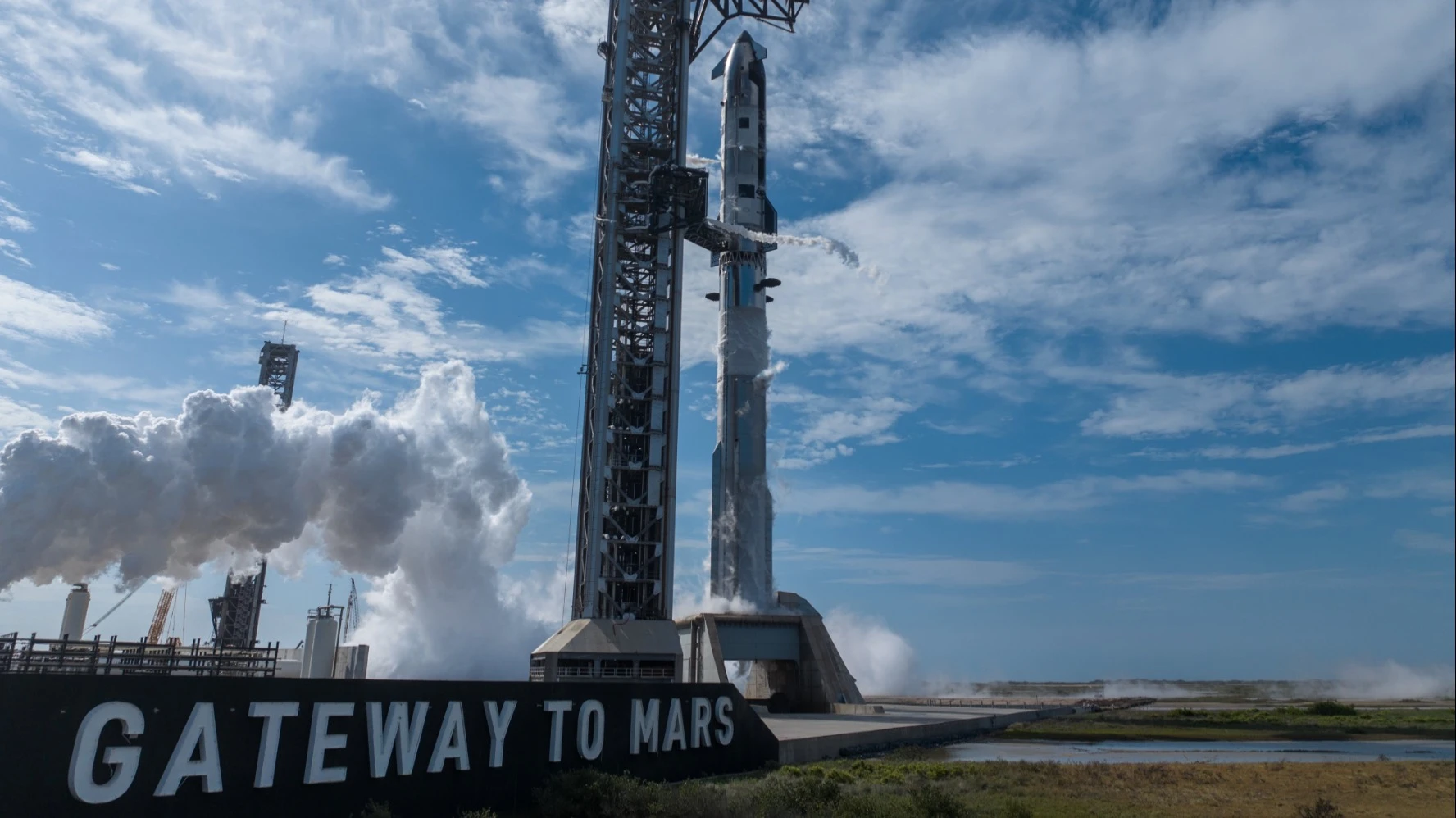
When, following SpaceX’s IPO, a user on X joked that Musk’s next goal was to become a quadrillionaire (that’s a thousand trillion), he calmly replied, “It’s not impossible, but it would definitely require factories on the Moon and Mars. By that time, I think dollars will no longer be used as currency. Only mass and energy.”
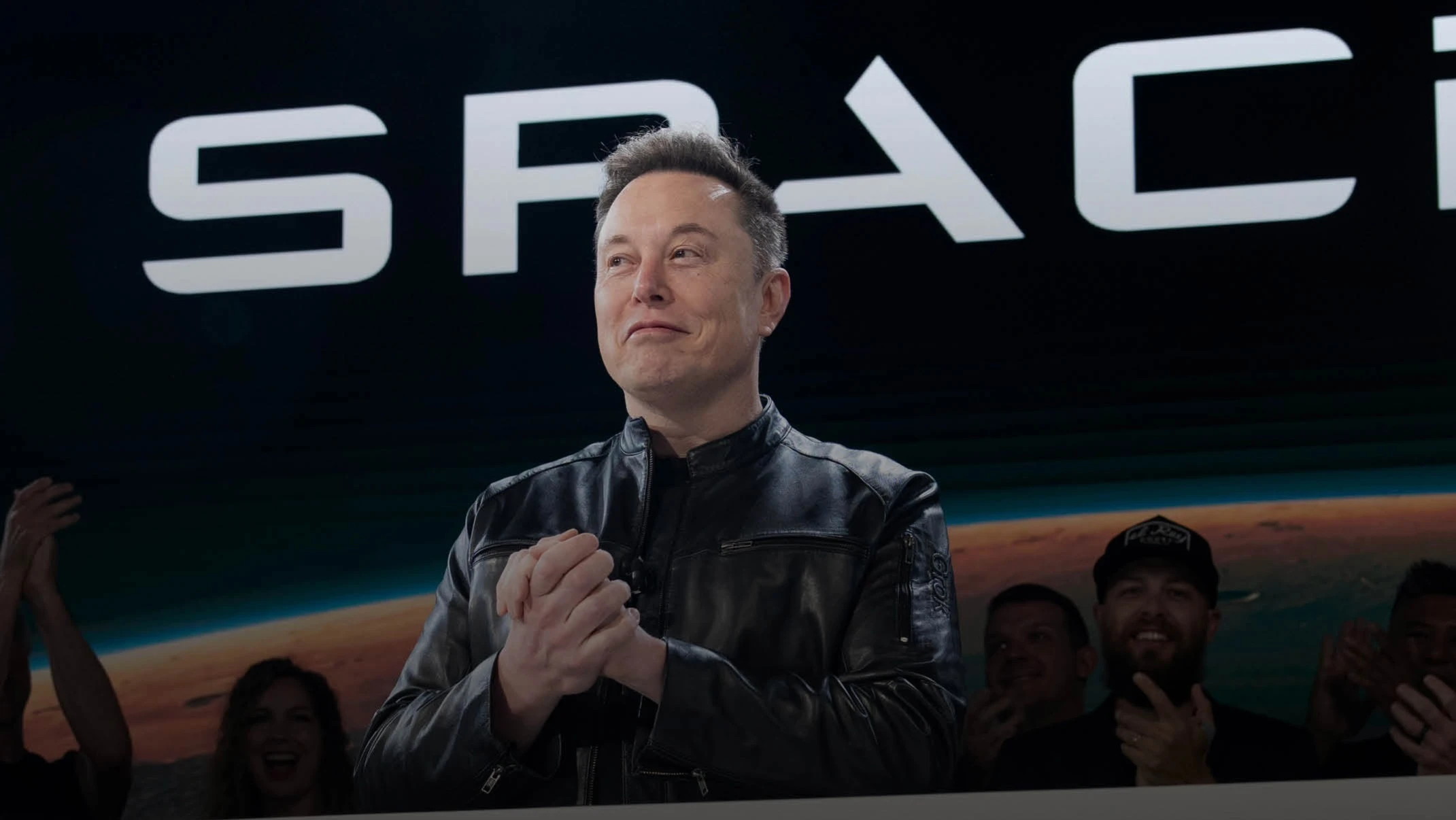
This isn’t the first time Musk has spoken about the obsolescence of money. On the “People by WTF” podcast with Indian entrepreneur Nihil Kamat, he elaborated on this idea. From his perspective, AI and robotics will create such abundance—a “high-welfare society”—that work will become optional rather than mandatory. “If AI and robots are capable of meeting all human needs, the need for money will rapidly disappear. I’m not sure we’ll even have money at all,” he said.
From Musk’s perspective, money is nothing more than a “database for the allocation of labor.” If work for the sake of making a living, in its current form, were to disappear, the database would no longer be needed, he believes—which makes perfect sense!
Moreover, in his view, this isn’t a matter for the distant future: work—and money—could become unnecessary “in less than 20 years,” according to Fortune.
The Culture of the Future
When Musk is asked what this might look like, he refers to *Culture*—a series of science fiction novels by the late Scottish author Iain M. Banks. Musk has called “The Culture” “the best description of a future civilization” of anything he has read.
In Banks’s fictional world, there is no money, no government, and no poverty. Important issues are decided by universal vote, and the role of government is played by the “Minds”—super-intelligent AIs endowed with a sense of humor and deep empathy. They do not rule; they care. Humans and aliens live on gigantic spaceships and “orbital cities,” ring-shaped artificial structures orbiting stars. To the AI, organic sentient beings are guests, symbionts, or even pets. Citizens of the Culture devote themselves to art, philosophy, science, or simply pleasure. Work exists only for those who choose it, and even then, it is structured to resemble an engaging game rather than tedious duties.
Meanwhile, there are also some troubling undertones in this idyllic description of Culture. Its main motivation for action—to avoid sinking into endless hedonism—is a curiosity to explore the universe and a desire to “do good,” as they understand it, to other “backward” races, which sometimes even leads to wars.
In another article, Banks mentions that humans will apparently have to undergo extensive genetic modification. And, as we know, the tech billionaires in Silicon Valley are already working on this. As far as I’m concerned, that sounds a little scary.
Banks, who remained a staunch socialist throughout his life, sharply criticized capitalist greed and selfishness—which had been elevated to cult status—in an interview with Strange Horizons. He created a fundamentally anti-capitalist world—a society that thrives precisely because profit and private property have disappeared. Musk is already paving his way toward this world (space, Mars, AI, robotization, brain-computer interfaces), but within the logic of capitalism—through private companies, personal wealth, and power. This is the irony that many critics point out: Musk has fallen in love with the idea of utopia without understanding its inner workings.
Two Paths
Another tech billionaire, Vinod Khosla—co-founder of Sun Microsystems and one of Silicon Valley’s most influential venture capitalists— warns in his essay “AI: Utopia or Dystopia?”: In a world where AI provides abundance, the main question is not “is it possible?” but “who controls it?”
Khosla compares AI to the steam engine—but not for muscles, rather for the brain. Steam multiplied human physical strength; AI multiplies intellectual strength. And just as control over coal, the seas, railroads, and resources once defined geopolitics, control over AI infrastructure and energy will define the geo- (and possibly cosmo-) politics of the future.
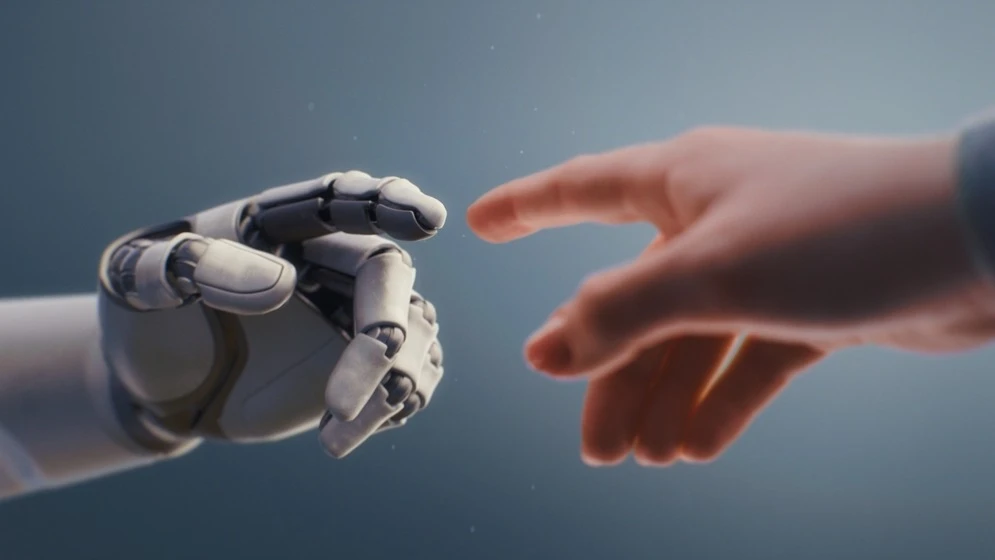
By 2050, according to Khosla’s estimates, traditional professions may disappear —AI and robots will take over 80% of the work in 80% of professions. Governments will be forced to introduce a universal basic income or its equivalent. From there, there are two possible scenarios.
Either we will end up with a post-scarcity democracy, where abundance is distributed through mechanisms of social consensus, or we will face a world where a few megacorporations—controlling orbital data centers and energy grids—will become more powerful than most nations. Corporate feudalism on a cosmic scale. Where are we headed?
Khosla's Recipes
Khosla calls himself a “techno-optimist.” He believes that if GDP growth accelerates from 2% to 4–6% thanks to AI, within 50 years society will have the abundance needed to create “transitional funds” — similar to Norway’s oil fund, but for the AI era. A universal basic income or its equivalent, a three-day workweek, and a reimagining of education—“not to prepare for a profession, but for intellectual pursuits for their own sake.”
Capitalism, too, must undergo a transformation, according to Khosla: while it currently ensures efficiency, in an era of universal abundance it must focus more on ethics and the fair distribution of wealth.
Hmm, redistribution? Sounds familiar—very socialist.
Western capitalism, as Hosla points out, exists “by the grace of democracy and its voters.” In other words, democratic institutions and governments must strive to develop mechanisms of control and distribution that ensure universal prosperity.
"Nothing but arbitrariness"
The problem is that democracy hasn't been able to cope very well with Musk so far—he has been steadily concentrating more and more levers of influence in his own hands.
Researchers at the University of Cambridge drew a direct parallel between SpaceX in 2026 and the British East India Company: a private entity operating autonomously on the fringes of sovereign control, amassing dominant influence over critical infrastructure. In business matters, he strives to maintain a tight grip on his companies. If we recall the history of his conflict with OpenAI—according to the account of Sam Altman, the CEO of that AI developer—Musk left the company when he was denied full control. Last year, he threatened to leave Tesla if he wasn’t given control of at least 25% of the company’s shares.
As for SpaceX’s IPO, business law professor Ann Lipton notes in her blog that it is structured in such a way that shareholders will not be able to remove Musk without his consent, and their ability to file lawsuits will be severely limited. In addition, the company is set to be fast-tracked for inclusion in major stock market indices.
“Many of us—if not most—who have invested our savings in major stock indices (myself included) will have no choice. We’ll be investing in SpaceX, whether we like it or not... All of this is sheer arbitrariness, based on hype and the will of a single man with a huge ego and an insatiable thirst for money and power,” former U.S. Labor Secretary Robert Reich wrote in his column in The Guardian, commenting on SpaceX’s IPO.
Last year, Musk became the most unpopular person in America, and his image hasn’t improved much since then: more than 50% of Americans disapprove of his actions, while 37% approve. But he probably doesn’t care about that, as long as investors are rushing to pour money into his ventures.
A Cottage by the Sea
Let’s hope that humanity will still manage to avoid the worst-case scenario, and then we can let our imaginations run wild—what should we invest in if, 20 years from now, we’re facing a cashless society where practically everyone has everything they need?
Probably in some unique assets, such as a beautiful house in a nice location by the water (remember: “they aren’t making any more land”). Or works of art, antiques, various coins and banknotes as collectibles (after all, according to Musk, they’ll soon become useless in any other capacity). In their hobbies, in self-improvement, in the ability to do something special to amaze other people (and, perhaps, AI) or to derive pleasure from a job well done.
After all, just think about what you'd like to do when you no longer have to go to work.
This article was AI-translated and verified by a human editor