Problems for export: How the crisis in the Russian economy may affect Kazakhstan

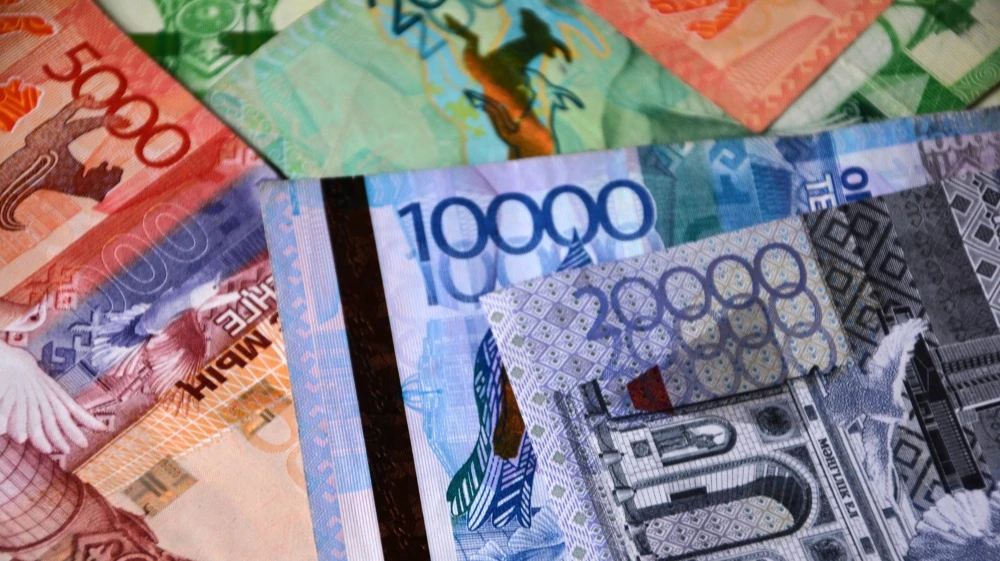
The difficulties of Russian business will affect Kazakhstan primarily through trade. / Photo: Shutterstock.com
The Russian economy is shrinking for the second month in a row. Economist Vladimir Kizilov writes in his column about how its further cooling may affect Kazakhstan's export and transit sectors.
Signs of stagnation
The Russian economy is showing signs of stagnation. According to the Ministry of Economic Development estimates, the country's GDP is declining for the second month in a row: in February it fell by 1.5% year-on-year, in January - by 2.1%. Industrial production in January-February 2026 amounted to 99.1% of last year's level. Decrease in production relative to the comparable period is a rather rare and significant fact: it happened only twice in the last 4 years.
In addition, investments in fixed capital in comparable prices for 2025 amounted to only 97.7% of the previous year. The real volume of investments in Russia last decreased in the covid 2020, but even then only by a tenth of a percent. And there has not been a significant decline of more than 1% per year since 2015.
A breakdown by federal districts shows that for 2025, investments increased in the North Caucasus, Northwest and Central districts. All these districts do not border Kazakhstan. But the adjacent Ural, Southern, Siberian and Volga districts are experiencing a decline.
The economy is shrinking
March brought bad news about the execution of the federal budget for January-February. Revenues were 10.8% less than in the same period last year. This could be attributed to the oil and gas component: revenues from hydrocarbons almost halved, by 47%. Oil and gas revenues are volatile, they can fall quickly and recover quickly. In addition, they now account for only 23% of federal budget revenues.
The problem is that non-oil and gas revenues are also in short supply: nominally they grew by only 4.1%, which means that in real terms they declined. And this is a very sad sign: if after the increase in tax rates the amount of collections in real terms shrinks, it indicates that the economy, or at least its legal sector, is shrinking.
The same trend is indicated by the reduction in profits of Russian commercial organizations (without financial organizations, small enterprises and government agencies). In 2025, their aggregate financial result amounted to 27.1 trillion rubles ($337 billion). In nominal terms, this is only slightly higher than the level of 2022, and the dynamics is even worse when inflation is taken into account.
A few more indicators of the crisis: loading on the Russian Railways network in January-February 2026 was 3.6% less than in the same period last year. Cargo turnover fell even more sharply - by 8.8% compared to the first two months of 2025. Electricity consumption fell for the first time in 4 years: in 2025 it was 1.1% lower than in 2024.
How the situation in Russia may develop
Further contraction of industrial production, investment, profits and economic activity in general is almost inevitable. Of course, oil and gas revenues may rise for a while due to the problems in the Persian Gulf, which pushed up global energy prices. However, the resulting rise in oil prices may be short-lived and could be offset by increased oil production in other regions. Sanctions may prevent Russia from benefiting from the high cost of hydrocarbons. Among the possible reactions to the crisis:
A new tax increase. However, the risk of an accelerated and more pronounced economic downturn in this scenario is too high, so such measures are still unlikely.
Spending cuts. This will minimize long-term problems, but right now it will create problems for the state's budgeters and suppliers.
Spending of reserves. As of March 1, 2026, the National Welfare Fund still had RUB 4 trillion ($50 billion) worth of liquid funds (in yuan and gold). However, the Ministry of Finance decided not to sell them, effectively suspending the budget rule.
Borrowing on the domestic market. Russia could build up its debt for a long time without fear (domestic federal debt is only about 15% of annual GDP). The problem is that the yield on 5-year federal loan bonds is now very high, and it is necessary to borrow at 14.5% per annum.
Trading risks
The difficulties of Russian business will affect Kazakhstan primarily through trade. Russia is the third most important destination (after China and Italy) for Kazakhstan's exports, accounting for just over 10% by total value. The main export item from Kazakhstan to Russia is uranium produced by Kazatomprom.
Uranium ranks second after oil in Kazakhstan's exports: it accounts for 5-7% of export revenues, while oil accounts for about 50%. However, Kazakhstan plays a minor role in the oil market, while it plays a key role in the uranium market.
Kazakhstan has 14% of the world's uranium reserves; only Australia has more. In terms of production, Kazakhstan is in first place: with 39% of the world's production, it is ahead of the second producing country, Canada, and the third, Namibia, combined.
The distribution of uranium exports by geographical destinations changes dramatically from year to year and from quarter to quarter - this is the specifics of long-term contracts. For example, in 2020-21 China was the largest buyer of Kazakh uranium, in 2022-23 - Russia. In 2024, both Russia and China accounted for almost 40% of uranium export revenues.
In the first quarter, France accounted for about 70%. In the second and third quarters of 2025, a new structure has emerged, where 50-60% of uranium export revenue comes from China, 20-25% from Russia, and 15-20% from Western countries, with the United States and Canada playing the leading role.
Russia now buys uranium from Kazakhstan on average $100-200 million per month. In monetary terms, this is comparable to Kazakhstan's revenue from natural gas exports in all directions ($1.4 billion in 2024). Probably, if Russia's problems worsen, it will buy less, and then China and Western countries will compete for Kazakhstan's uranium.
Increased uncertainty
Another important item of supplies to Russia is ferrous metallurgy products. Kazakhstan's exports in this area are also quite diversified: at the end of Q3 2025, the share of Russia in purchases amounted to 29%, China - 25.5%, Uzbekistan - 16%, Japan - 11%. However, Russia's share is large, and this flow may decrease quite sharply. The Russian steel industry itself is in crisis, and demand for its products from its key customer - the construction sector - is shrinking. In all likelihood, some steelmakers in Kazakhstan may have difficulties with sales. This risk is most relevant for Karaganda Metallurgical Plant (Qarmet), Aktobe Ferroalloy Plant (Kazchrome).
Aluminum oxide is also exported from Kazakhstan to Russia in large volumes. And here there are almost no alternative buyers - Russia's share in this export item is over 80%.
What Russia hardly buys from Kazakhstan is oil. But it remains a key transit intermediary for liquid hydrocarbons to the West. The Caspian pipeline, critical for Tengiz's oil, runs through Russian territory to the port of Novorossiysk, from where it is shipped across the Black Sea. The Russian-Ukrainian conflict has already created problems for this route. Economic and geopolitical risks associated with Russia may continue to affect the sustainability of this route.
This article was AI-translated and verified by a human editor