SK Hynix's First Day of Trading in the U.S. and Meta's Surge: The Market Bet on AI on Friday

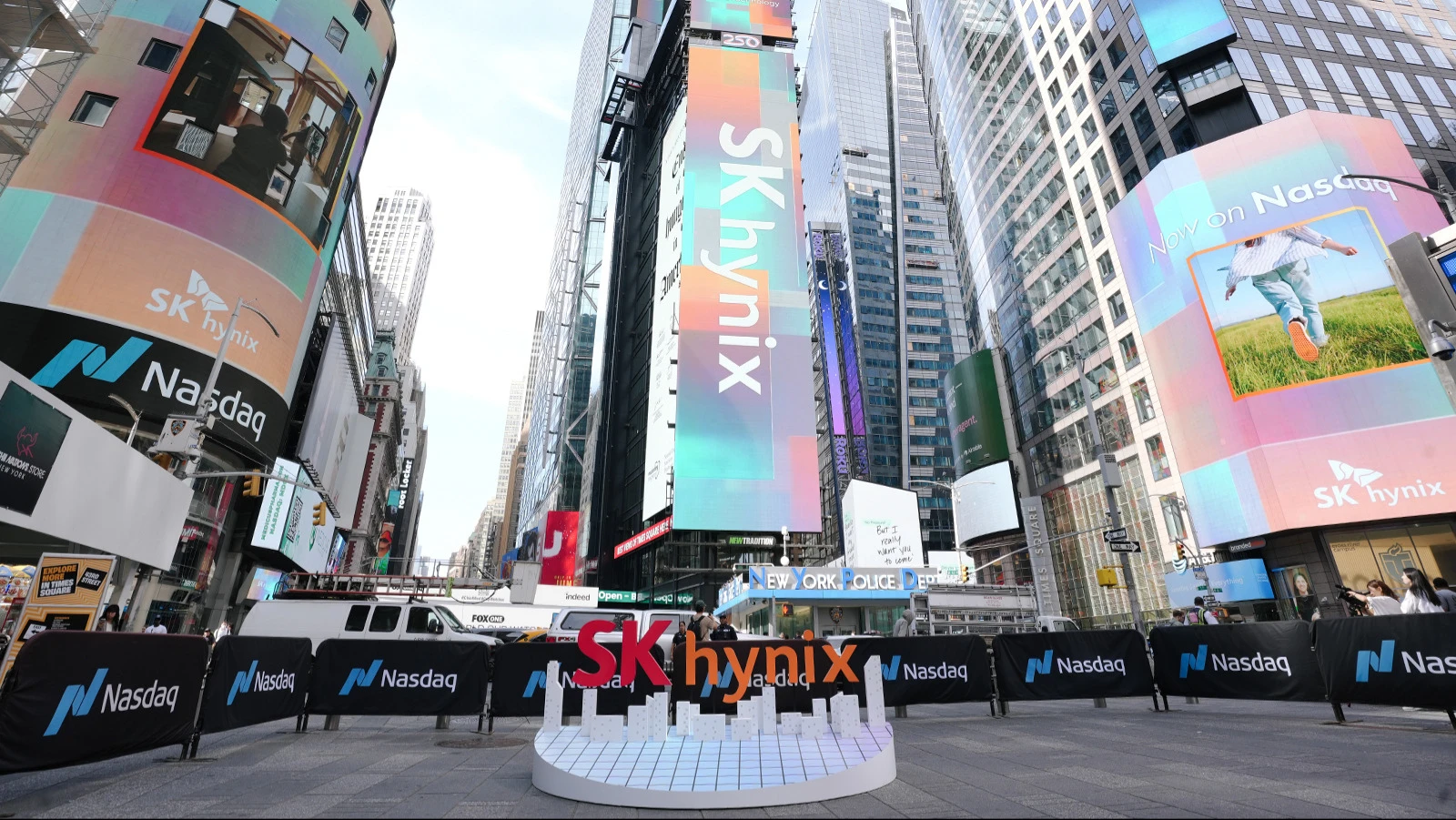
On the day of its U.S. debut, SK Hynix's stock rose nearly 13% / Photo: X / SK Hynix
Major U.S. market indices closed higher on Friday, July 10. The market was buoyed by South Korean memory chipmaker SK Hynix’s U.S. market debut, as well as gains in the shares of “Magnificent Seven” giants—Nvidia and Meta Platforms—which had previously lagged behind. Investors reacted only mildly to the escalating tensions in the Strait of Hormuz throughout the week, and Friday was no exception. Oil prices fell slightly amid statements from the White House regarding the continuation of negotiations and the end of the ceasefire.
Details
— The S&P 500 broad-market index rose 0.4% on July 10 and gained 1.23% for the week.
— The Nasdaq Composite technology index rose 0.3% on Friday and jumped 1.7% for the week.
— The Dow Jones Industrial Average, a "blue-chip" index, rose 0.3% on the day but remained down 0.5% for the week.
— The Russell 2000 Small- and Mid-Cap Index fell 0.4% on Friday and also posted a weekly decline of nearly 0.6%.
— Brent crude oil futures fell 0.3% on July 10, dropping to $76 per barrel. North American WTI traded 0.7% lower at $71.6 per barrel.
What drove the market
South Korean chipmaker SK Hynix made its debut on the U.S. market on Friday: by the end of the first trading day, the company’s American Depositary Receipts had risen 12.8%. The high demand for the shares confirmed investors’ continued interest in memory manufacturers and the AI boom in general. However, some traders fear that the new offering could compete with U.S. companies for investor funds, CNBC notes. Shares of SK Hynix’s main U.S. competitor, Micron Technology, fell 1.2% in Friday’s trading. However, shares of other memory manufacturers rose.
The S&P 500’s rise on July 10 was driven by Nvidia shares, which rose 4% amid a resurgence in demand for AI chip manufacturers. Investor sentiment was boosted by a recent report about the possible approval of H200 accelerators for the Chinese market. Meta Platforms was another growth leader: its stock jumped about 6% on July 10 and nearly 15% over the week. This is the company’s best weekly performance since the beginning of 2024. This month, Meta unveiled a strategy to monetize its AI business by launching a new subscription-based agent-based AI model and announcing plans to sell cloud computing services from its data centers. Both Meta and Nvidia have underperformed the Nasdaq Composite, which has risen more than 12% since the start of the year.
SpaceX shares fell 4.5% on Friday, hitting a low of $145.3 at the start of trading. Elon Musk’s space company’s market capitalization thus fell below $2 trillion. This occurred amid a sharp rise in the stock prices of Chinese companies operating in the space sector. The catalyst was the successful recovery of a rocket booster after launch for future reuse. China became the second country in the world to achieve this, matching SpaceX’s feat.
Last week, the market proved largely unfazed by events in the Middle East. The week began with reports of an Iranian attack on tankers in the Strait of Hormuz, which led to retaliatory strikes by the U.S. and effectively ended the ceasefire. On Thursday, President Donald Trump stated that Tehran had proposed a deal. On Friday, the U.S. leader wrote on the social media platform Truth Social that he had agreed to continue negotiations on a peace deal, but that “the ceasefire is over”. At the same time, the U.S. imposed new sanctions on Iran—for the first time since the signing of the memorandum of understanding. Washington added Iranian businessman Ali Ansari to its “blacklist,” accusing him of managing an international network of assets on behalf of the Islamic Republic’s Supreme Leader, Mojtaba Khamenei, and other high-ranking regime officials. The truce between the parties included a ban on new restrictions, Bloomberg notes.
What Analysts Are Saying
— “The stock market’s muted reaction to the renewed escalation of tensions surrounding Iran this week is the best proof that investors are willing to look past geopolitical risks,” — MarketWatch quotes a note from Clark Bellin, chief investment officer at Bellwether Wealth.
— “There’s been tremendous excitement surrounding artificial intelligence since the summer of 2023,” Eric Parnell, chief market strategist at Great Valley Advisor Group, told CNBC. — “We’re clearly in a boom phase right now, but I have serious concerns that some sort of downturn could follow in the second half of the year.”
— The backdrop for corporate earnings, the season for which begins next week, remains favorable, but some investors fear that expectations are already too high and will likely wait for confirmation of strong results before pushing the market toward sustained growth, according to Mark Hackett, chief market strategist at Nationwide Investment Management Group. “Although some segments are exhibiting behavior reminiscent of gambling, the broader market as a whole remains sober and skeptical,” Hackett told Bloomberg. “We’re still a long way from the kind of overconfidence that usually precedes a prolonged decline.”
This article was AI-translated and verified by a human editor