Tax on excess profits for oil producers: what is the risk of the EU initiative for investors?

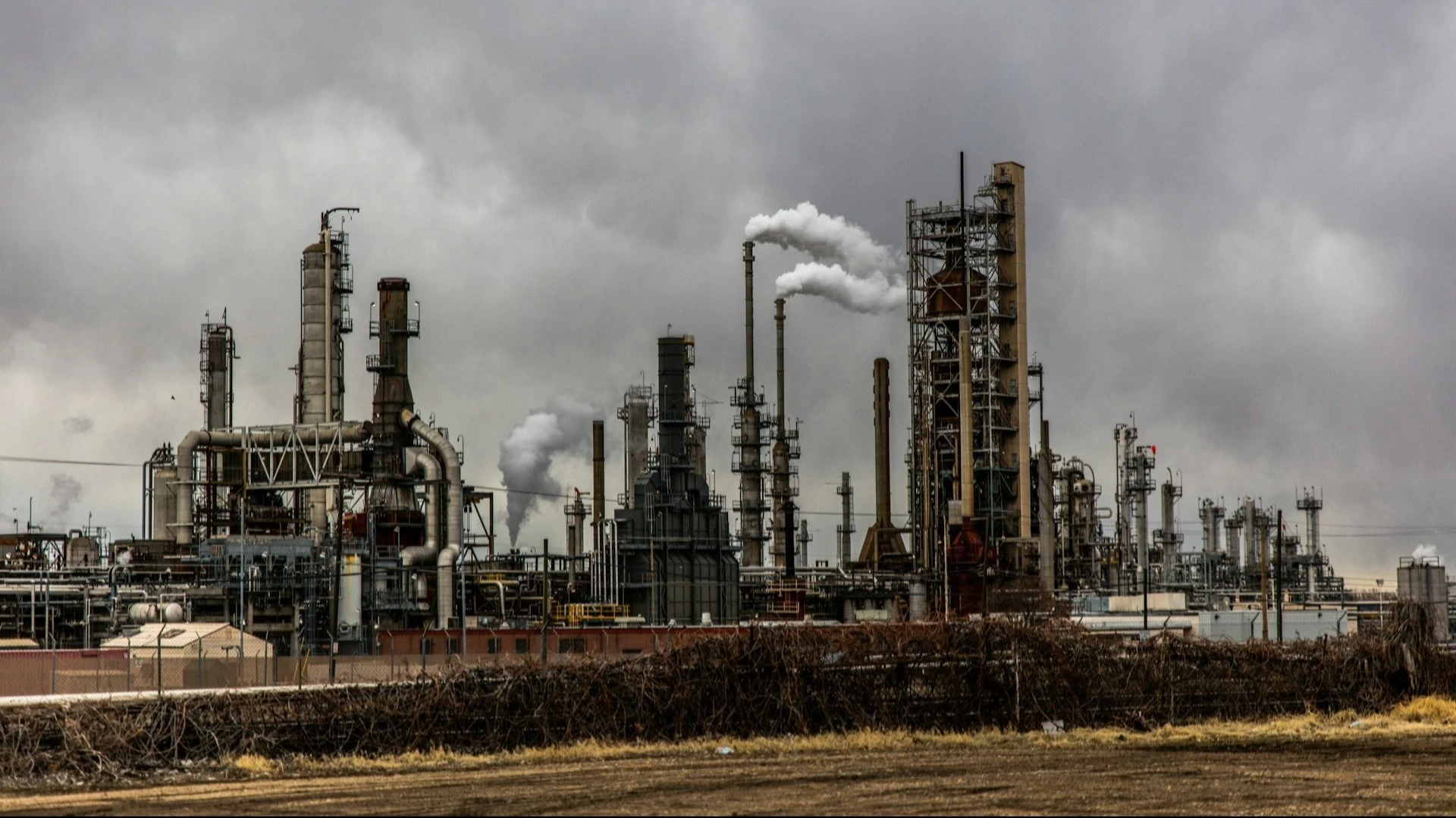
The hardest hit of the excess profits tax could be for giant companies in Europe's oil and gas sector. Photo by Patrick Hendry / Unsplash.com
Ministers of key EU countries - Germany, Italy, Spain, Portugal and Austria - have called for the introduction of a pan-European tax on excess profits of energy companies. By design, a windfall tax could ease the burden on consumers. For investors, this means the risk of pressure on dividends, share buyback programs and free cash flow in the sector.
Where did it all start?
The idea arose because of the rise in oil and gas prices after the closure of the Strait of Hormuz. After the start of the US-Israeli operation against Iran, Brent futures rose above $120 per barrel. In Germany and other EU countries, gasoline prices rose by an average of 15% in early April and diesel prices by 30% compared to the end of February 2026.
Windfall tax was already introduced in Europe after Russia's full-scale invasion of Ukraine, but the scale of the consequences for the industry may be different now than in 2022, when the super profits of energy companies were extremely high. The current initiative is a populist solution, said Ashley Kelty, director of energy sector research at investment bank Panmure Liberum.
No lessons were learned after Ukraine: Europe simply swapped its overdependence on one supplier, Russia, for another, the United States. This makes the region very vulnerable to price shocks.

By the time of publication, the European Commission had not responded to Oninvest's questions about how long the EC expects to consider the proposal, and how it treats the situation with energy prices in general.
Effect of windfall tax in 2022
In 2022, when the EU first applied the windfull tax, according to the IMF, wholesale electricity and gas prices increased 15 times from the beginning of 2021. The "solidarity contribution" rate amounted to at least 33% of excess profits - that is, profits more than 20% higher than the average for 2018-2021.
According to the European Parliament's plan, the collection potential from the "solidarity contribution" and the revenue ceiling was supposed to be about €110 billion for 2022. In fact, almost 4 times less was collected for 2022-2023 - about €28 billion.
Then in 2022, the EU introduced a revenue ceiling for electricity producers with low variable costs (in particular nuclear, hydro and coal). The cap was common to all European countries and amounted to 180 €/MWh. The European Parliament estimates that this measure generated around €100-110 billion in revenues.
For companies, this meant reduced free cash flow and less room for dividends, share buybacks and debt repayment. Each company compensated for the blow in its own way.
What now?
Volumes of "supernormal" profits for energy companies are "unlikely to be as pronounced" as they were in 2022, Ashley Kelty, director of energy sector research at investment bank Panmure Liberum, told Oninvest. Oil and gas prices have not jumped to the levels seen immediately after the conflict in Ukraine began. On the other hand, "This is already evident from the fact that Exxon and Shell are giving lower forecasts for their Q2 results despite higher prices," Kelty points out.
This time the decrease in net profit after the windfall tax will hit not so much dividends as the buyback, Ashley Kelty is convinced. Nevertheless, the EU initiative may hit dividends, says Alexander Kolyandr from the Center for European Policy Analysis.
For companies with dividend obligations as a share of profits, this means that dividends will be lower than they would have been without the tax - but not necessarily lower than they were before energy prices rose.

Who is at risk?
Ashley Kelty believes that the biggest impact of the excess profits tax may be for the giant companies of the oil and gas sector in Europe. A Russian analyst, who wished to remain unnamed, agrees with him: these may be "North Sea oil companies and supermajors - Shell, Total, BP". But theoretically, the concept of energy companies may be interpreted quite broadly, and eventually the tax will affect some LNG terminals as well.
In order to assess which European companies may be most vulnerable to the new excess profits tax, Oninvest analyzed their publicly declared dividend policies and share buyback plans.
Based on these data, the debt load is estimated (net debt/EBITDA ratio and the ratio of cash flow from operating activities to net debt, FFO/net debt) and the share of free cash flow (FCF) reserved in advance for dividends and share buyback. The higher the latter indicator, the more sensitive the company is to any new tax that reduces this flow. A Russian analyst, who wished to remain unnamed, agrees with the logic of Oninvest's calculations.
Based on these criteria, European energy companies can be roughly divided into three groups in terms of vulnerability
High risk
The group with the greatest sensitivity to the new tax includes Enel, TotalEnergies, Shell, Repsol and to a large extent Naturgy, all of which still have high profits after the peak until 2022 and a large share of free cash flow already reserved for dividends and share buybacks. This means that any additional tax exemption will be almost directly converted into reduced return of capital to shareholders or deferral of investments.
The biggest effect from windfall tax may be for Enel. The company combines a heavy balance sheet and high capital intensity with a generous dividend policy.
- Net income: €6.9bn - Revenue: €80.4bn (+1.9% YoY) - EBITDA: €22.9bn - Net debt: €57.2bn - Net debt / EBITDA: ~2.5x - Dividends: €0.47-0.49 per share (~70% of earnings) - Buyback: up to €1bn
Thus, for Enel, the new excess profits tax could practically mean a choice between a slower debt reduction and deferring some capex.
A similar logic applies to TotalEnergies and Shell. Both companies have built a shareholder case around high return on capital. Their balance sheets are strong and gearing is low, so the question is not one of survivability, but how much of the potential free cash flow will have to be given to the government instead of going to shareholders.
Capex will be spent only on projects with high profitability, and this will lead to a shift away from low-margin RES (renewable energy sources. - Editor's note). Deleveraging may also take longer, and this may put pressure on the credit rating of certain companies, such as BP.

If the EU decides to count excess profits relative to the lower base of previous years and reapply the increased rate to this "over-earnings" portion of profits, Shell will be one of the targets where the tax will almost directly convert into reduced buyback programs and more cautious dividend growth.
Moderate risk
The moderate impact group includes Iberdrola, Engie, RWE, EDP. These are companies with high or growing profits but stronger balance sheets, diversified businesses and less generous payouts to shareholders. We are talking about companies paying less than 70% of earnings/FCF, meaning some of the cash flow stays in the business. In addition, share buybacks are either small in volume or launched "on occasion" rather than as a permanent major program each year.
Debt reduction and CAPEX (including green) financing are also high on the public rhetoric of the top management of such companies. The new windfall tax at these issuers may further reduce the potential for dividend increases and share buybacks, but is unlikely to lead to an immediate revision of the base payout level.
Low risk
The least vulnerable among the largest companies are those whose business relies primarily on regulated network cash flow and who initially built a more conservative dividend policy. E.ON stands first and foremost in this lineup. It does not have the extreme raw material superprofits typical of oil and gas, but has relatively predictable profit from operating activities, moderate dividend growth and no ultra-aggressive buyback programs. For such an issuer, the windfall tax in 2026 may be quickly comparable to normal regulatory costs, which the company can probably stretch over time through cost optimization and investment plans, rather than directly through cutting shareholder payouts or buybacks.
What does this mean for investors?
The key question for investors is whether the 2022 scenario will be repeated. So far, the situation looks less extreme: energy companies' profits have already retreated from peak levels, which means that the scale of potential revenue withdrawal is likely to be lower.
This article was AI-translated and verified by a human editor