The Illusion of Return: Ray Dalio on why 2025 is the year of gold, not U.S. stocks
The founder of Bridgewater Associates believes that 2025 will be remembered not for the rise in stocks, but for the decline in the purchasing power of the dollar and the exodus of investors from U.S. assets

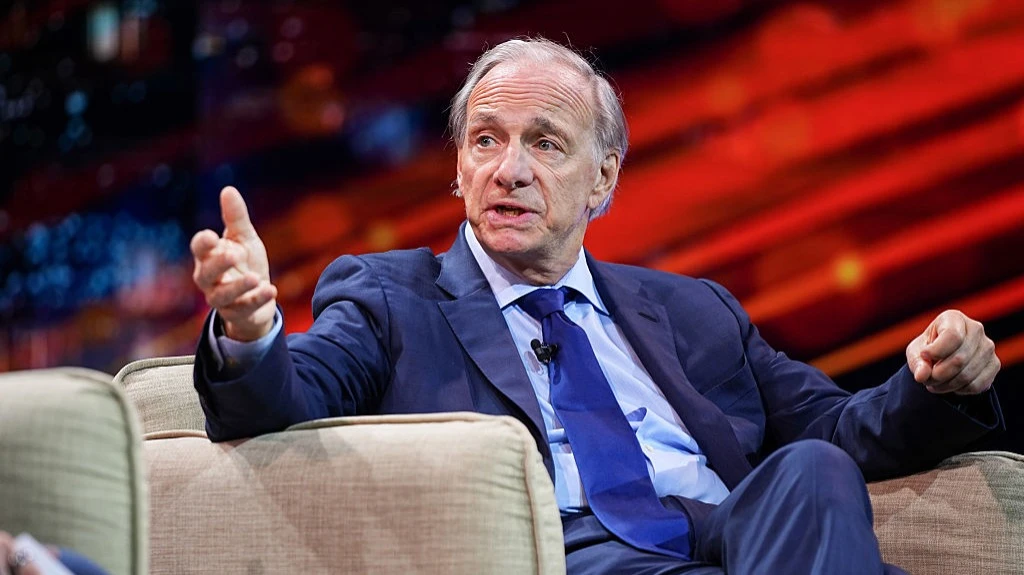
Most investors, Ray Dalio believes, will remember 2025 as a triumph for U.S. stocks - and especially artificial intelligence-related companies. The founder of Bridgewater Associates is convinced that this fact and bigtech returns are undeniable, but suggests evaluating the year by other criteria. In his new LinkedIn post, Dalio writes that the main investment story of 2025 is not U.S. AI stocks, but the value of money: the weakening of the dollar and fiat currencies relative to "hard" assets, primarily gold.
Best asset of 2025
Dalio formulates a rule of thumb through which he reads the 2025 numbers: market growth looks different depending on which unit you measure it in. "When your own currency is falling, it gives the impression that everything measured in it is rising," he writes. When viewed through the lens of the U.S. currency, investment returns seem higher than they actually are, simply because the dollar itself has weakened over the year - by 0.3% against the yen, 4% against the yuan, 12% against the euro, 13% against the Swiss franc and 39% against gold.
The S&P 500 index of U.S. stocks, Dalio writes, added 18% in dollars, but for an investor who evaluates the result in a currency that has strengthened against the dollar, the return will be different: in euros the index in 2025 brought 4%, in Swiss francs - 3%. If gold is used as a benchmark, the result for S&P becomes negative: -28%.
Based on this logic of market valuation, Dalio puts gold at the top of the list.
"The best large investment of the year was a long position in gold, which returned 65% in dollar terms, outperforming the S&P 500 index (which returned 18% in dollars)"
Bonds and caches: what are the risks for holders
Dalio applies currency logic to debt as well: a bond is a promise to pay money in the future, and when the purchasing power of money declines, the "real" bottom line on such securities can be worse than it looks in dollars. He cites figures for 2025 10-year US Treasuries: +9% in dollars and +9% in yen, +5% in yuan, but -4% in euros and -4% in Swiss francs. In terms of gold, the result, according to his data, is even worse: -34%.
This difference, in his logic, turns into a risk for long-term bonds. Dalio writes that the supply-demand imbalance in the U.S. government debt market has not yet become an acute problem, but there are nearly $10 trillion in debt refinancing ahead. In addition, he predicts that the Fed will ease policy to lower real rates. Therefore, Dalio considers debt assets unattractive: he admits that the gap between yields of long and short securities may grow, but he doubts that the Fed will cut rates as much as the market currently expects.
Separately, Dalio notes that cachet in 2025 is proving to be an even less attractive trade. In his logic, this is the same "value of money" effect: if purchasing power falls, holding money as an asset means losing in real terms.
Not just the U.S.
Dalio's currency recalculation also changes geography: the U.S. market in 2025 may have looked strong in dollars, but when compared to other markets and "units of account," the leadership shifts. Dalio compares results by region: European stocks outperformed U.S. stocks by 23%, Chinese stocks by 21%, British stocks by 19%, and Japanese stocks by 10%. Emerging markets as a whole gave 34%. In debt, according to his numbers, the picture is not in favor of the U.S. either: dollar-denominated emerging market debt yielded 14%, while debt in local currencies (in terms of the dollar) yielded 18%.
"Obviously, investors would rather be in non-U.S. stocks than U.S. stocks, just as they would prefer non-U.S. bonds to U.S. bonds and U.S. cachet"
In Dalio's interpretation, this is not a good year for Europe or a surge in emerging markets, but a shift in capital flows: money was leaving the U.S. and the U.S. currency. Therefore, according to him, 2025 was a year when it was more profitable for investors to keep exposure outside the US - both in equities and debt instruments.
"In other words, there have been massive shifts in capital flows, asset values and the resulting reallocation of wealth out of the US. What is happening is likely to lead to further rebalancing and diversification of portfolios"
Dalio attributes this not only to the economy, but also to geopolitics: US foreign policy, sanctions and conflicts have spooked foreign investors, causing them to seek protection in gold and non-US markets.
S&P 500: growth, revaluation and betting on the margin
But the outflow of investors from the U.S. does not mean that the U.S. market in 2025 was weak on its own, Dalio writes. In dollars, the S&P 500 added about 18%: corporate profits rose 12%, the P/E multiple rose about 5%, and dividends added about 1% more. That is, the market grew both because companies earned more and because investors began to pay more for each dollar of profit. And this growth, Dalio emphasizes, is not limited to the group of leaders. According to his data, the "Magnificent Seven" had a 22% profit growth in 2025, but the other 493 companies in the index also had a 9% profit growth.
Dalio attributes the rise in S&P 500 profits not only to the fact that companies sold more, but also to the fact that they made better money on each sale. He estimates that revenue grew 7% and margins grew 5.3%: 57% of the earnings gain came from higher sales, and another 43% from margin improvement. "It appears as though a good portion of the margin growth was driven by technology solutions and efficiency gains, but I don't have the exact numbers to say that for sure," the investor writes.
The market, Dalio said, is already alive to the expectation of further margin expansion - but political pressure could build around the distribution of those added profits:
"It's very important to watch the margin growth that turns into profits because the markets are now laying down that this growth is going to be big, while the political left is trying to take a bigger share of the pie"
The margin for future profitability is limited
Dalio looks at 2026 not through the question of "will growth continue" but through the question of price: how much an investor gets for taking risk when the market is already expensive. He writes that with high equity valuations and a very low credit risk premium, the market looks stretched.
"If one focuses on history, it bodes well for low future stock returns"
Dalio provides a numerical test of common sense: "When I calculate expected returns over the long horizon, my expected return on stocks comes out to about 4.7% (a very low value), and it's very small compared to the current bond yield of about 4.9%." In other words, the investor is getting too small a premium for the risk of equities, he says.
Politics and the demand for gold
Dalio links market outcomes in 2025 to the changing political order: by his logic, the movement of money and the choice of protective assets cannot be separated from how the rules of the game change. In the US, he describes the Trump administration's economic course as a bet on industrial revitalization and the development of AI technologies. He also fits the technology driver of the year itself into the same picture: "Obviously, the AI boom, which is now in the early stages of a bubble, has had a big impact on everything."
In foreign policy, his framework is broader: he describes a shift from multilateral rules to more stringent unilateral actions in the national interest. In such an environment, according to his logic, there is a higher risk of conflict, more military spending and borrowing, and greater use of sanctions and trade barriers. Hence the increased demand for gold and diversification and a more cautious attitude of foreign investors toward the dollar and U.S. debt.
What it means for the investor
Dalio believes that you can't take the dollar as a neutral outcome measure and keep the currency in your portfolio as a backdrop. He suggests starting with a suitable currency base - protect the portfolio against the "least risky currency mix" - and only then, if you are confident, make individual bets on the exchange rate.
"You should always be hedged to your least risky currency basket and already from that make tactical moves if you think you can do it well"
This article was AI-translated and verified by a human editor