The Ministry of Finance Has Given Investors a Reason to Buy: Deutsche Bank Advises Increasing Gold Holdings Amid the Rally
Investors are once again turning to gold for protection against the dollar's depreciation, but analysts are warning of the risk of interest rate hikes

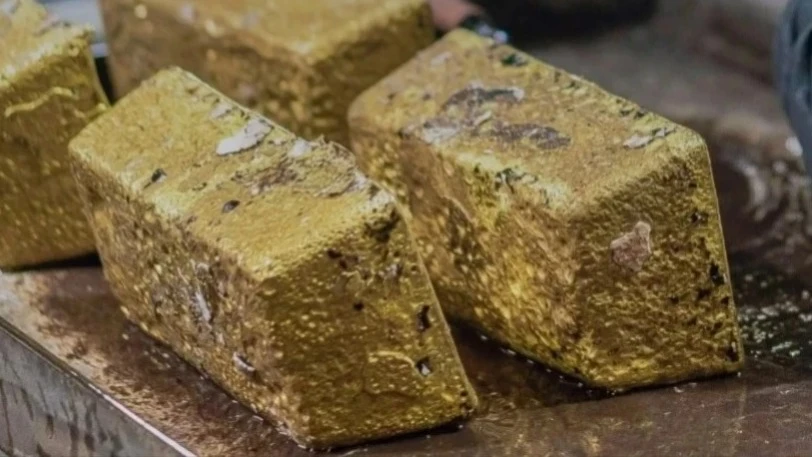
Gold hit a more-than-quarter-high earlier this week / Photo: newmont.com
U.S. Treasury Secretary Scott Bessent’s pledge to more than double Treasury bond redemptions has strengthened the case for buying gold, CNBC reports, citing Deutsche Bank. An August survey by Bank of America showed that, in the eyes of fund managers, gold appears to be the most undervalued it has been since March 2023. However, analysts are generally divided on how far the rally will go.
Details
Deutsche Bank analyst Michael Xue believes that the U.S. Treasury’s accelerated purchase of Treasuries could push the price of gold above the bank’s target of $4,800 per troy ounce from the current $4,640. “We believe that the Treasury Department’s policy shift supports a positive outlook for gold,” he wrote to clients (as quoted by CNBC). The analyst interpreted Bessent’s remarks about having a “wide range of tools” for regulation as a sign that the U.S. Treasury may intervene in the debt market again.
What Other Analysts Are Saying
Gold is currently being influenced by conflicting factors, according to Kitco, a precious metals dealer. Recent statistics have pointed to a slowdown in inflation and a weakening of consumer demand in the U.S., so the Fed has fewer reasons to rush into raising interest rates. At the same time, Treasury yields remain high—and this is weighing on gold, which does not generate interest income. As a result, analysts are divided on how sustainable this upward trend will be:
While 6% of fund managers considered the price of gold to be undervalued in July, that figure rose to 16% in August, according to a BofA survey published last week. The metal has not appeared this undervalued since March 2023. According to Candice Browning Platt, head of global research at BofA, the bank’s model links the current volume of purchases more closely to a gold price of $4,000. The metal could rise to $5,000 only if there is stronger demand from investors, Kitco quotes her as saying.
Bart Melek, head of commodities strategy at TD Securities, believes that the risk of a weaker dollar will support gold in the coming weeks: The Fed has not yet sent a clear signal that it is prepared to act if inflationary pressures intensify. “However, it is still too early to talk about gold surging to our target of $5,350 per ounce: [a possible] further rise in oil prices creates the risk of rate hikes in the short term,” Melek warned (as quoted by Kitco).
ING commodities strategist Eva Mantei believes that the likelihood of gold exceeding the bank’s year-end forecast is increasing, but the rally will not be smooth. The bank expects an average price of $4,150 per ounce in the fourth quarter, based on the assumption that persistent inflation will force the Fed to maintain a hawkish stance and prevent Treasury yields from falling sustainably, she wrote.
Nicky Shiels, a metals market analyst at MKS PAMP, asserts that gold has maintained its upward momentum, although its recent rally may already have been excessive. Even with the risk of an interest rate hike, gold, according to Shils, remains the most direct hedge against the depreciation of the dollar and the consequences of U.S. government intervention in the government debt market. “One institution is leaning toward tightening, the other toward easing, and both are affecting the same yield curve,” Shils said, referring to the Fed and the Treasury (quoted by Kitco).
Context
On August 21, billionaire Ray Dalio advised investors to increase the proportion of gold in their portfolios to 10–15% as a safeguard against a crisis caused by rising U.S. national debt. The precious metal has been rising in price for the sixth consecutive week—according to CNBC, it hasn’t seen such a long rally since October 2025—and on Tuesday, gold reached its highest level in more than a quarter. Last year was gold’s best since 1979: the metal rose 65% in price thanks to the Fed’s monetary easing, increased purchases by central banks, and an influx of funds into gold exchange-traded funds (ETFs).
This article was AI-translated and verified by a human editor