The Nasdaq and S&P 500 fell and oil fell in price following a dramatic day on Wall Street
Meanwhile, 9 of the 11 sectors of the broad market index rose


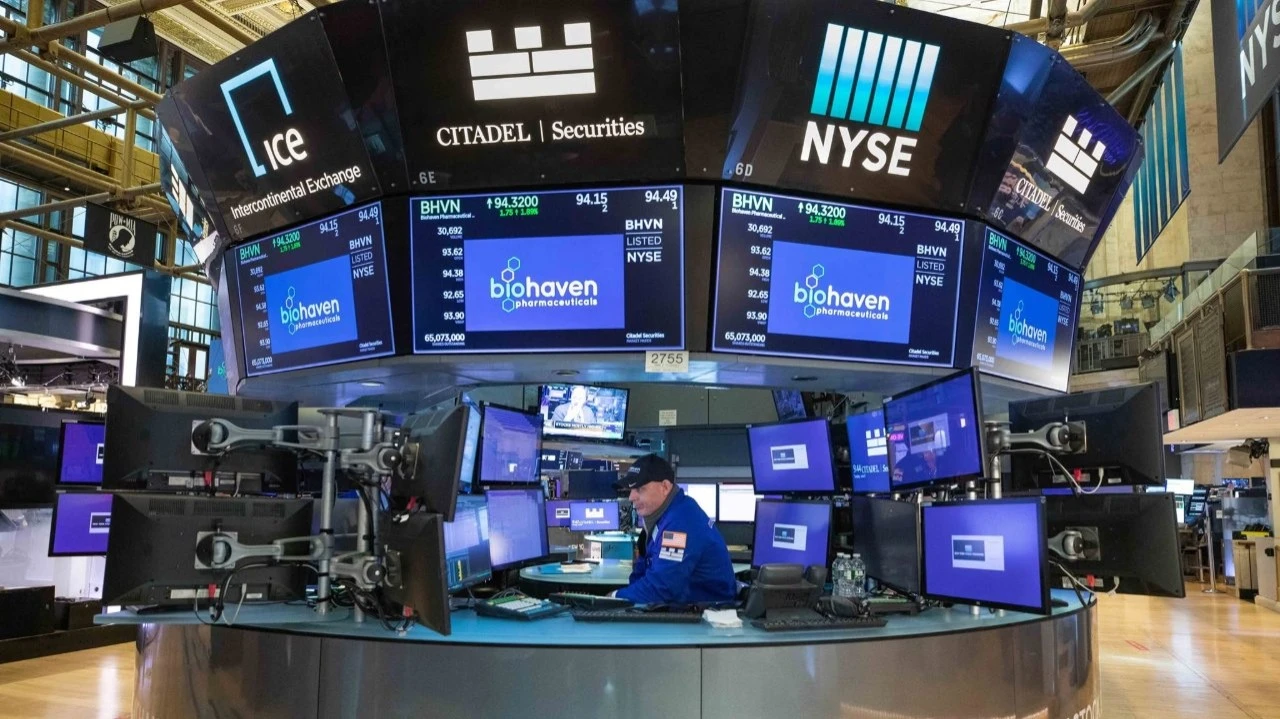
U.S. stock market indices ended trading mixed after a volatile day / Photo: X / NYSE
The Nasdaq Composite and S&P 500 indexes fell at the end of trading on Tuesday, June 9, although they recovered much of their losses after the mid-day collapse, while the Dow Jones even managed to grow slightly. Investors continued to sell off technology stocks, but many were reassured by U.S. President Donald Trump's statement that a peace agreement between the U.S. and Iran could be reached in "two to three days", after which the Strait of Hormuz would be "immediately" opened for shipping. Some analysts say the market's sharp swings are consistent with a period of healthy development.
Details
- The Nasdaq Composite index of the technology sector fell by almost 1%. At the same time, it was falling by more than 3.7% at the day's low.
- The broad market index S&P 500 declined by 0.26% on June 9. During the day, the rate of decline exceeded 2%.
- The blue-chip index Dow Jones Industrial Average added 0.17% on Tuesday. During the day it fell below 1%.
- The Russell 2000 index of small and mid-capitalization companies rose 0.4%. At the daily lows it was down 2%.
- CBOE Volatility Index (VIX) by the end of the trades was at the level of 19.9 points. Psychologically important mark indicating high volatility is considered to be 20 points. During the day, the "Wall Street Fear Index" exceeded 23.3 points.
- Brent crude futures were down 2.6% to $91.8 a barrel and WTI crude futures were down 3% to $88.5 a barrel.
- The price of gold fell 1.6% to $4260 an ounce.
- Bitcoin cheapened by 2%, dropping to $62,000 per token.
The news is being updated
What influenced the markets
Oil prices started Tuesday with a decline after US Energy Secretary Chris Wright said that shipping through the Strait of Hormuz is "very noticeably recovering." In addition, U.S. President Donald Trump said Washington and Tehran could strike a deal as soon as "two or three days from now," which would allow the Strait of Hormuz to be opened to shipping "immediately." The fall in quotations slowed after Trump announced the shooting down of a US helicopter over the Strait of Hormuz and promised Iran a response.
Although the shares of energy companies in the S&P 500 lost about 2%, the decline in oil prices in general had a positive impact on the market. The leaders of growth in the index were companies in the commodity sector and consumer goods and services sector of non-essential services, writes Bloomberg. Additional support for the market was provided by shares of companies from the real estate sector, which grew by 2.4%, after the publication of data on housing sales in the secondary market, which exceeded analysts' expectations. At the same time, the information technology sector declined by almost 4%. Overall, stocks rose in nine of the eleven sectors of the S&P 500 Index, MarketWatch notes. About 350 stocks in the index were growing, while about 160 securities were declining, Bloomberg writes.
But for the S&P 500 and Nasdaq Composite as a whole, the renewed selloff in AI-related stocks outweighed the positive effect of lower oil prices. Investors continued to get rid of chipmaker stocks. The industry's Philadelphia Semiconductor Index, which includes industry leaders such as Nvidia and Advanced Micro Devices, fell 1.9 percent after rising 5.6 percent a day earlier. Shares of Micron Technology fell 1.4%, Broadcom lost 1.2% and Intel lost 2.1%.
What the analysts are saying
- "Yes, the tech sector is struggling, but this capital rotation is quite healthy," Ryan Detrick, chief market strategist at Carson Group, wrote on social media X.
- Wells Fargo strategists in a note to clients called the sell-off that occurred in the technology sector on Friday a "wake-up call" for investors, Bloomberg writes. The effect of the "short-term burst of optimism" that fueled the market's recent rapid rise is probably already wearing off, according to bank analyst Osong Kwon. He noted that against this backdrop, he has little enthusiasm for equities.
- "Investor optimism has been building up for months, pushing the market from one record to the next. So any factor that could be perceived as negative for stocks - from accelerating inflation to even a potential [Fed] rate hike - could knock the market out of balance after such impressive growth," Baker Boyer Bank investment director John Cunnison told Bloomberg. The analyst said his firm maintains a reduced exposure to technology stocks in portfolios and favors "value stocks." "Fears that this week's inflation data will again be too high amid the escalating situation in the Middle East have revived investor fears that the threat of higher rates could hit the profitability of U.S. companies and, as a result, stock prices," Cunnison said.
This article was AI-translated and verified by a human editor