"The Numbers Don't Matter": What Analysts Will Be Looking for in SpaceX's First Post-IPO Report
Elon Musk's aerospace and defense company—the world's most valuable—will report its earnings for the first time on August 4 following a record-breaking IPO

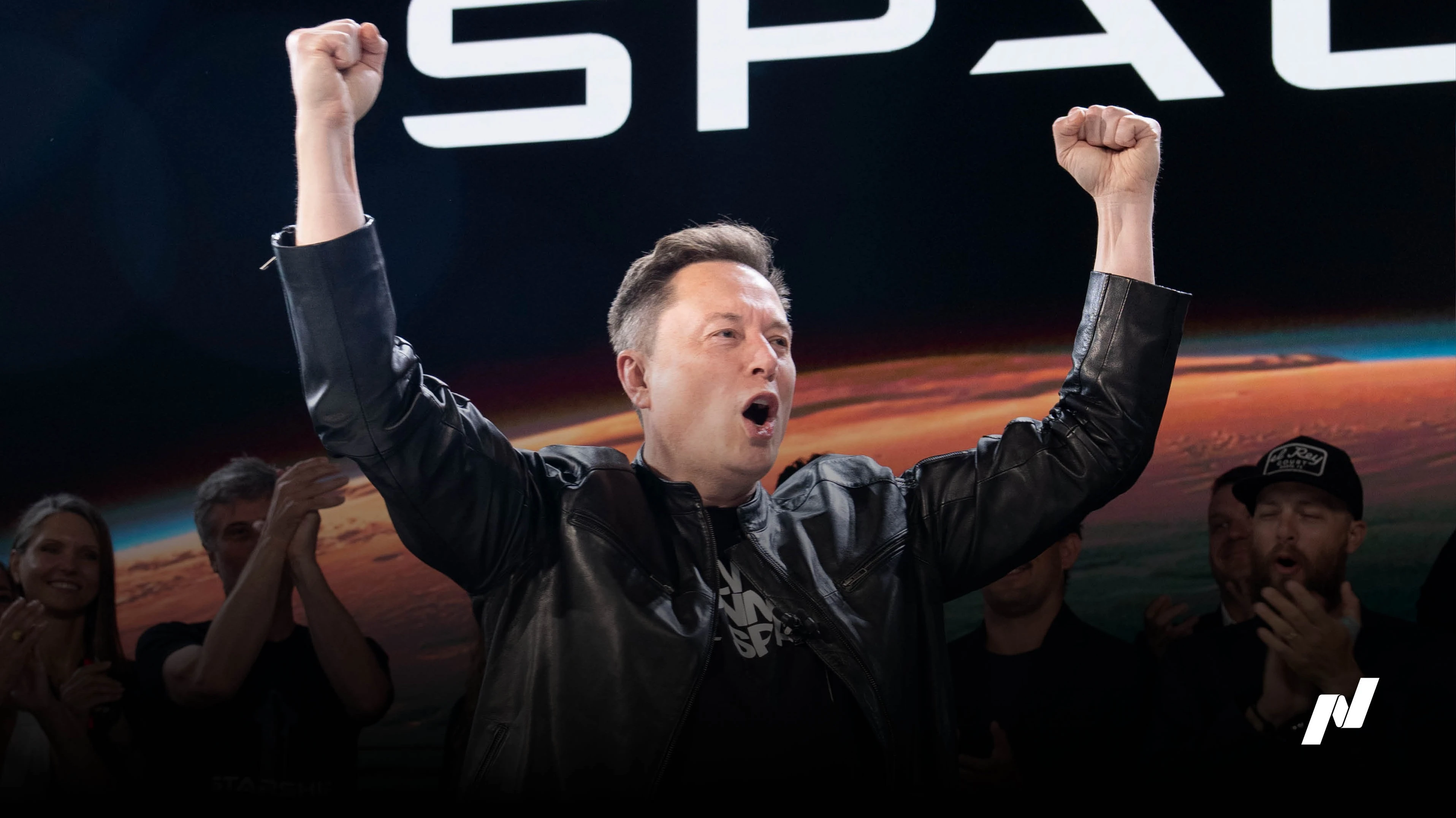
Since its IPO, SpaceX has lost more than $1 trillion in market value / Photo: X/Nasdaq
In SpaceX’s first quarterly report since going public, investors will be more interested in management’s confidence in the company’s prospects than in the numbers themselves. After the results are released on August 4, the market’s attention will focus primarily on Elon Musk’s comments, according to MarketWatch.
Numbers are secondary
“We believe that quarterly results shouldn’t matter. What will matter is the confidence with which management discusses the company’s growth prospects,” MarketWatch quotes a note from Bernstein’s team of analysts to clients. SpaceX management’s forecasts matter more than whether the company’s revenue will exceed market expectations, agrees Cardiff CEO Dean Lulkin.
The current earnings season has already shown that strong numbers aren’t enough. Apple beat expectations, but investors were alarmed by the weak outlook and warnings about mounting supply issues and rising prices for memory chips. Tesla shareholders were concerned by the company’s cautious comments on key technologies and Musk’s capital expenditure plans, MarketWatch notes.
Investors are more interested in hearing from Musk about the progress of the Starship super-heavy-lift rocket, the availability of semiconductors, and the shortage of resources for AI, the publication notes. The Wall Street Journal adds Starlink—which funds SpaceX’s other projects and more than doubled its subscriptions in the first quarter—and rumors of a merger with Tesla to the list of topics for discussion with Musk at the earnings call; in July, Musk declined to discuss them.
Billions for the launch
At Tesla’s quarterly earnings presentation, Musk called for investing “as quickly as we possibly can.” SpaceX also faces significant expenses—partly due to projects it shares with the automaker. Wall Street expects the company to report $13.2 billion in capital expenditures for April–June and a negative free cash flow of $1.9 billion, according to FactSet. According to the consensus, capital expenditures could approach $46 billion in 2026 and $87 billion in 2027, MarketWatch reports.
They have to finance this with debt: SpaceX borrowed $25 billion just a few weeks after its IPO, which raised $86 billion. “They’ll be spending money for an indefinite period of time. The idea of free cash flow simply isn’t part of this story,” Bill Birmingham, managing director of Rex Shares, told MarketWatch. SpaceX’s financial reports, he said, will also show “exactly where and at what price to raise capital.”
End of the local event
As early as August 6—two trading days after the release of the quarterly results—restrictions on the sale of up to 911.5 million SpaceX Class A shares will be automatically lifted. This represents 12% of the company’s total shares—more than the 640 million currently trading on the market. SpaceX employees and some early investors will be able to sell these shares, Axios reports.
A second lock-up release involving an additional 455.8 million SpaceX shares is unlikely to take place on the same day. For the restrictions on their sale to be lifted on August 6 as well, the shares would have had to close at least 30% above the offering price on at least five out of the ten trading days through August 4. However, since July 16, SpaceX shares have not risen above $135 even intraday, according to MarketWatch. Since its peak closing price on June 16, the company’s market capitalization has fallen by $1.2 trillion.
Citing the Locap chart, Zephirin lowered its price target for SpaceX from $310 to $190 on August 3 and maintained its “buy, high risk” recommendation. “The potential scale of the [share] unlock is likely to create a significant technical overhang and increase short-term price volatility,” the investment boutique warned.
Who will have to sell?
Although the end of the lock-up period does not mean that the shares will necessarily be sold, many early investors will still have to sell their SpaceX shares, according to venture capitalist Paul Kedrosky (as quoted by Axios): Some of them used their shares as collateral to buy homes, “private islands, cars—you name it,” he says. In anticipation of this, short sellers are building up their positions, Bloomberg reported. “When lock-ups expire, it really puts pressure on the stock price,” says economist Jay Ritter, known as “Mr. IPO.” According to him, the volume of shares being unlocked in SpaceX’s case is unusually large: at the start of trading, only a tiny fraction of the shares were in free float.
To mitigate the impact, SpaceX has divided the release of insider shares into ten phases: by June 2027, nearly half of its shares will be on the market, with the remainder held by Musk, according to Axios. “Exactly the same thing will happen two more times,” Kedrosky warns —if and when Anthropic and OpenAI go public with similarly low free floats.
This article was AI-translated and verified by a human editor