The price of the Strait of Hormuz: How much Iran will get from duties on a fifth of its oil supplies
Legalizing Iranian fees for tankers passing through the Strait of Hormuz would be a negative for the US dollar, Frontier Investments head Louis Laval has warned

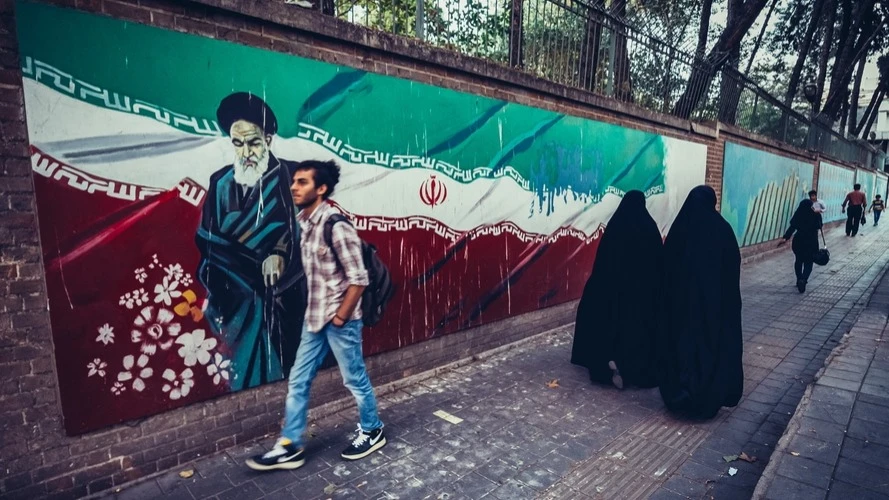
Iran now earns about $5 million a month from transit fees in the Strait of Hormuz, but that amount could grow more than 100 times / Photo: Sebastian Castelier/Shutterstock.com
The Iranian regime is not yet in a position to make much money from tanker passage fees through the Strait of Hormuz, as traffic along this route, which in peacetime provided about 20% of maritime oil transit, remains virtually paralyzed. But if the practice of levying fees continues after a long-term peace is achieved, it will begin to generate billions of dollars a year for Tehran and impose significant costs on oil market participants.
Details
According to the Associated Press, Bloomberg and Alaeddin Boroujerdi, a member of Iran's parliamentary committee on national security, Iran charges $2 million per tanker or $1 per barrel when a ship attempts to pass through the Strait of Hormuz, accepting payment in yuan ($1 equals 6.83 yuan) and cryptocurrency. The world's most popular VLCC supertankers hold 1.9-2.2 million barrels. At prices on April 9, a shipment of 2 million barrels of oil would cost $190 million, and the amount of duty for its transit could be the same $2 million, according to MarketWatch.
Now, with almost zero traffic through the strait, Iran can earn about $5 million a day ($150 million a month), according to Louis Laval, head of Frontier Investments. On April 9, the MarineTraffic service recorded the passage of the first non-Iranian tanker carrying 7,000 tons of fuel oil - just over 51,000 barrels of oil equivalent - from the UAE since the U.S.-Iran truce. "If the traffic normalizes, it will become more significant," Laval said.
According to the PortWatch platform (a project of the IMF and Oxford University), on the eve of the outbreak of war in the Middle East, 53 tankers with 3 million tons, or about 21.5 million barrels of oil, passed the Strait of Hormuz per day. With such transit, a fee of $1 per barrel would bring Tehran $21.5 million daily, about $645 million a month or $7.74 billion a year, MarketWatch calculated.
Why it's important
Revenue from the duties would be "meaningful" but still less than Iran's oil export revenue, which reaches $50-55 billion a year, said Rebecca Babin, senior energy markets trader and managing director at CIBC Private Wealth. However, it's unlikely to be a "choose-one-out-of-two situation": Iran will continue to sell oil on the market, potentially at a smaller discount if sanctions are eased, and transit fees will be "a supplement to that, not a replacement," she pointed out.
Iran's imposition of transit fees would have little effect on its main adversary, the United States, which imports almost no oil from the Persian Gulf by sea, but would be a huge problem for the Gulf countries themselves, warned Nick Redman of Oxford Analytica. Frontier Investments' Laval said it is "difficult to model exactly" how much money the Iranian regime will raise, but "even at the lower end it is real money outside the dollar system" of settlement.
"This is not the end of the U.S. dollar" but is significant as an additional pressure factor, Laval added. The share of the US currency is falling: a 50-year agreement between Saudi Arabia and the US, considered the backbone of the petrodollar system, expired in the summer of 2024, and Russia switched to the yuan back in 2022. "Collectively, this suggests that there is now an alternative settlement architecture. And the Strait of Hormuz may become the first place where it will be publicly stress-tested in a real geopolitical crisis," the expert stated.
This article was AI-translated and verified by a human editor