The U.S. is considering a ban on diesel exports “very seriously.” Who stands to benefit?

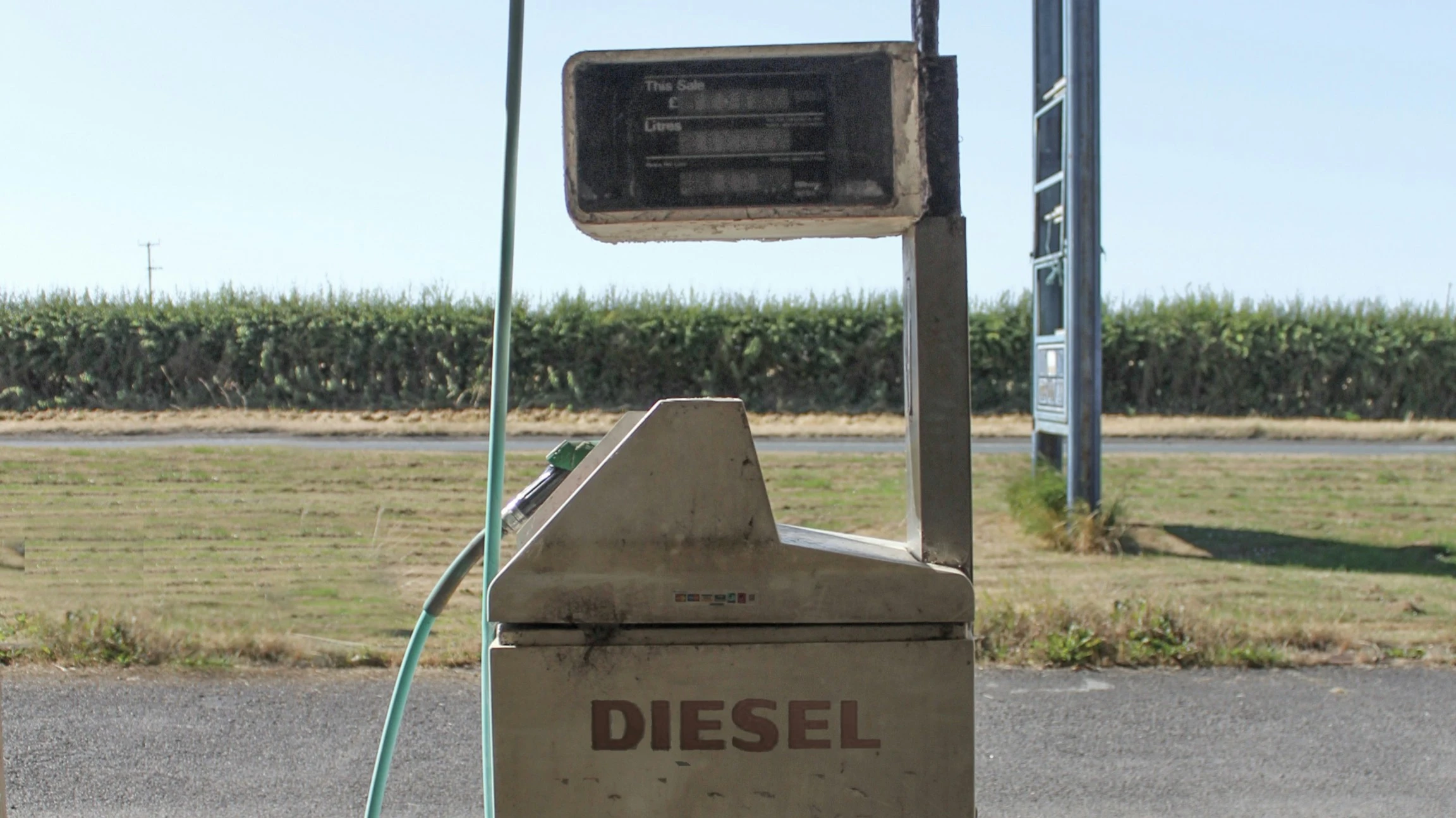
The U.S. government is considering various options for restricting diesel exports / Photo: Rob Wingate / Unsplash
U.S. President Donald Trump has stated that he is “very seriously” considering a ban on diesel fuel from the United States. If that happens, American oil refiners could lose billions of dollars. But who stands to gain from the diesel fuel crisis?
The Controversy Over the Diesel Engine
In a month and a half, the U.S. will hold midterm congressional elections, and the high cost of fuel—triggered by the war in the Middle East—has become one of the main campaign issues. The price of diesel—which keeps the economy running (it powers transportation, construction, and agricultural machinery)— has risen to a record $6.53 per gallon ($1.73 per liter). A month ago, it was $5.6; a year ago, it was $3.7.
Some Republicans have begun calling on Donald Trump to ban the export of diesel fuel from the U.S. On Sunday, he stated that he is still considering such a possibility “very seriously.” “This could often lead to a slight increase in gasoline prices for cars, so we are considering this option very seriously—we may well do so,” the president told Fox News.
There is no consensus in the White House. Five people familiar with the discussions told Politico that the administration is preparing a plan to impose a 90-day ban.
Last week, Treasury Secretary Scott Bessent said that the administration is examining “whether this is feasible in terms of overall refining capacity and whether a full or partial ban would be effective.” Following his statement, the exchange price of diesel in Europe—which sources more than half of its diesel imports from the U.S.— soared 7% on Wednesday.
U.S. Energy Secretary Chris Wright was quick to deny the restrictive plans: “A crude measure like a ban on diesel exports definitely doesn’t work.” He also stated that the administration is working with oil refining companies on voluntary export restrictions.
Associations of U.S. oil, refining, and chemical companies oppose the embargo—they have sent an open letter to Trump. Major cross-industry organizations have also signed it.
Market participants and experts believe that an export ban will lead to a surplus of diesel on the domestic market. This could temporarily lower prices, but at the same time force refineries to cut production. As a result, prices for gasoline and jet fuel may rise, since their production will also decline. In addition, other countries may take retaliatory measures. Global fuel prices will also soar, causing many petroleum products imported into the U.S. to become more expensive. Taken together, these factors will still fuel inflation.
"Catastrophic consequences"
The American Petroleum Institute describes the consequences of a potential ban on fuel exports as “catastrophic.”
Of the 8 million barrels of diesel fuel shipped by sea worldwide each day, the United States accounts for about 20 percent, or roughly 1.5 million barrels—making it the largest source of this type of fuel.
"Removing this volume from the global market will exacerbate the very same global refining crisis that is driving up prices here in the U.S.…," the institute's report states.
Europe and Latin America, which purchase large volumes of U.S. diesel, will face a tough time. According to Eugene Lindell, director of petroleum products market analysis at FGE NexantECA, exchange prices for diesel—currently exceeding $200 per barrel—could soar to $350. Countries “will be competing for the same barrels,” thereby driving up prices. “It’s a vital resource for their economies, and countries like Brazil cannot afford to be without it,” Lindell told the Financial Times.
This resource is particularly important for Europe, where a significant portion of passenger cars also run on diesel. It accounts for nearly 43% of petroleum product consumption in the EU economy—more than in any other region (Brazil ranks second, and Africa third). In the U.S., this figure is less than 20%.
In August, Europe imported 506,000 barrels of U.S. diesel per day, according to Kpler. Any restrictions “could quickly lead to very serious consequences” for Europe, an energy industry representative told Politico.
Therefore, the EU is negotiating with the Trump administration to prevent the ban from being imposed, said European Commission Spokesperson Olof Gill. Meanwhile, Serbia has decided to release 5,000 metric tons of diesel from its state reserves onto the market.
The average price of diesel in the EU has risen to a record €2.23 per liter, with record highs set in 19 countries, according to an AFP analysis of European Commission data. This equates to $2.54 per liter, nearly 47% higher than in the United States.
Since late February, when the U.S. and Israel launched a military operation against Iran—which led to the closure of the Strait of Hormuz—the price of diesel has risen by 40% in Europe and by more than 70% in the U.S., according to AFP. And there is no hope yet for the situation to return to normal: U.S. President Donald Trump stated on September 26 that he had rejected Iran’s latest proposal to reopen the Strait of Hormuz.
"That's a plus for us"
Analysts at Barclays believe that imposing a ban on diesel exports will harm U.S. oil refiners.
Even if the measure is temporary, U.S. oil companies could lose billions of dollars in revenue, notes The Wall Street Journal. A complete ban would force them to cut their average daily production of petroleum products by nearly 2 million barrels per day (12%), according to estimates by S&P Global. At the same time, gasoline production would drop by 750,000 barrels, which could lead to a price increase of $0.25 per gallon (the current price is $4.49).
Specialized companies (such as Phillips 66, which is involved in the refining, transportation, and marketing of petroleum products) and their stocks may be hit harder than international giants such as ExxonMobil and Chevron. After all, these giants are able to offset losses with earnings from other regions and sectors.
Given the protracted nature of the two military conflicts—in the Middle East and in Ukraine (the Russian government has imposed a complete ban on diesel exports since July due to attacks on oil refineries and recently extended it through the end of October) — “combined with growing domestic political pressure, we believe the likelihood of an announcement and/or an attempt to impose a ban [in the U.S.] is increasing, regardless of whether it actually takes effect,” Barclays analysts write.
But if that happens and crude oil exports are not banned at the same time, “economic rent will effectively be redistributed from U.S. refineries to foreign ones,” they add.
Barclays notes that foreign refineries will purchase feedstock from the U.S. and ramp up refining, thereby taking away the profit margin from U.S. companies.
This could provide support for the stock prices of international companies with significant refining operations, such as BP and Shell, as well as regional companies, such as Poland's PGE and Orlen.
Rising diesel prices are affecting transportation companies' businesses, but in different ways, according to analysts at TD Cowen.
Rates charged by trucking companies (especially those with long “empty” runs) may be hit harder, although so far they have generally managed to offset the negative impact through the fuel surcharge.
Companies that use a variety of transportation modes are in a better position—they are 3 to 4 times more efficient than those that rely solely on trucks, according to TD Cowen.
Railroad companies, meanwhile, have already come out ahead by poaching business from trucking companies, according to The Washington Post. Freight trains, although they also run on diesel, are 3 to 4 times more efficient than trucks when measured in “tons per kilometer.”
"This is a plus for us," said Jennifer Hamann, Union Pacific's chief financial officer, recently at the Morgan Stanley Laguna Conference, referring to rising fuel prices. The company's stock has risen by more than 18% since the beginning of the year.
Analysts at Morgan Stanley identified another potential beneficiary in their report titled “Diesel at $6... The Tesla Semi Enters the Picture.”
Tesla's first electric semi-truck with a semi-trailer rolled off the assembly line in April, and since then the company has received a flood of orders, including 2,500 vehicles last week.
Europe also needs to accelerate its transition to electricity to avoid falling into a crisis every time because of fossil fuels, said Dan Jørgensen, the European Commissioner for Energy.

The current situation has become the best advertisement for electric vehicles, whose sales have surged since the start of the war in the Middle East.
This article was AI-translated and verified by a human editor