Top stories for the morning: U.S. eases shutdown, China to allow chip exports for auto companies

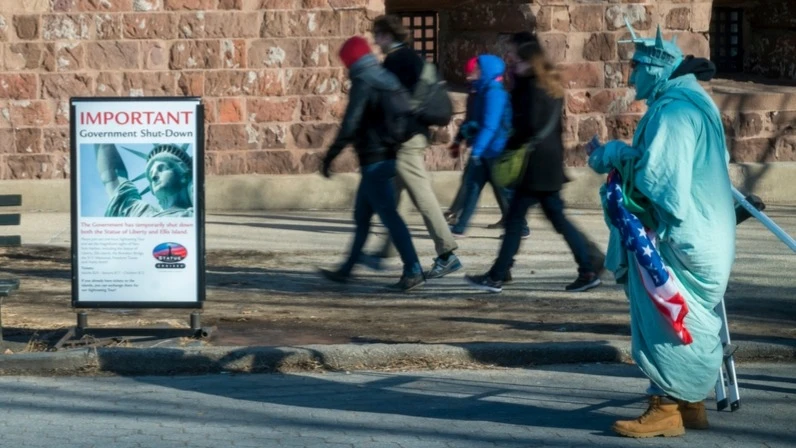
The U.S. Senate has approved the first phase of a deal to end the shutdown. Shares of Wingtech Technology - Nexperia's parent company - jumped after China and the Netherlands agreed to talks to lift restrictions on supplying chips to automakers. On these and other topics - in our review of key events for the morning of November 10.
U.S. Senate approves first phase of shutdown deal
The U.S. Senate has approved the first phase of an agreement to end the government shutdown that has been ongoing since October 1, CNBC reports. The decision was passed with the minimum required 60 yes votes after eight Democrats voted with Republicans. The deal, reached after days of negotiations, includes funding the government through the end of January, reinstating all furloughed government workers and paying salaries for the downtime.
The document does not include the Democrats' requested extension of Affordable Care Act tax credits, but guarantees a December vote on the issue. It also secures funding for the SNAP food assistance program and limits the White House's ability to use temporary resolutions to extend the budget. To take effect, the agreement must be approved by the House of Representatives and signed by President Donald Trump.
Shares of Nexperia's parent company jumped
Shares in China's Wingtech Technology, the parent company of Dutch chipmaker Nexperia, rose more than 6 percent after Beijing agreed to talks with a Dutch delegation, easing fears of a shortage of auto components, CNBC reported. China's Ministry of Commerce said it would allow exports of selected chips from Nexperia's Chinese factory and called on the EU to influence the Netherlands to lift restrictions on the company.
The détente came after the Dutch economy minister signaled the imminent resumption of shipments agreed as part of a U.S.-China trade truce. The country had earlier taken control of Nexperia, citing security risks, prompting retaliation from Beijing. Auto companies including Volkswagen and Honda have warned of the risks of production disruptions, and Barclays analysts note that the current easing may be temporary as the dispute over control of Nexperia has yet to be resolved.
Gold price rises on weakness in the US economy and expectations of Fed policy easing
Gold rose for the second day in a row, approaching $4050 per ounce - signs of a slowdown in the U.S. economy outweighed the message of progress in negotiations to end the shutdown, explains Yahoo Finance. The index of consumer sentiment in the U.S. fell almost to a minimum, strengthening demand for protective assets, the publication notes.
The end of the shutdown would allow the resumption of economic data releases, giving the Fed the opportunity to ease policy if statistics confirm the downturn. Despite a 7% decline in prices since the October peak, gold remains in the plus side by more than 50% since the beginning of the year. Quotes are supported by geopolitical instability and active purchases by central banks, including the People's Bank of China, which is building up gold reserves for the 12th month in a row.
China launches K-visa to attract IT talent
Beijing has introduced a new K-visa for foreign professionals in science and technology, a counterpart to the U.S. H-1B, Yahoo Finance reports. The program, launched last month, is aimed at attracting talent amid restrictions in the U.S., where Donald Trump's administration raised the H-1B fee to $100,000 and tightened rules for students and scientists. The new Chinese visa does not require a job offer in advance and complements the existing R visa.
The initiative is designed to accelerate the development of advanced industries - from artificial intelligence to semiconductors. However, amid high unemployment among Chinese youth (about 18%), the program raises concerns that foreigners will increase competition in the labor market. Despite the relaxations, China remains less attractive for professionals because of the language barrier, censorship and limited prospects for obtaining a residence permit, Yahoo Finance writes.
What's in the markets
- Japan's broad Topix index rose 0.6 percent, while the Nikkei 225 added 1.3 percent.
- Hong Kong's Hang Seng Index climbed 1.4 percent, while mainland China's CSI 300 index was little changed.
- In South Korea, the Kospi index jumped 3.3 percent, while the Kosdaq was up 1.3 percent.
- Australia's S&P/ASX 200 rose 0.8 percent.
- S&P 500 futures added 0.7%, Nasdaq Composite futures added 1.3%, and Dow Jones Industrial Average exchange-traded contracts traded up 0.2%.
This article was AI-translated and verified by a human editor