Volatility in tech stocks has reached its highest level since the dot-com crash


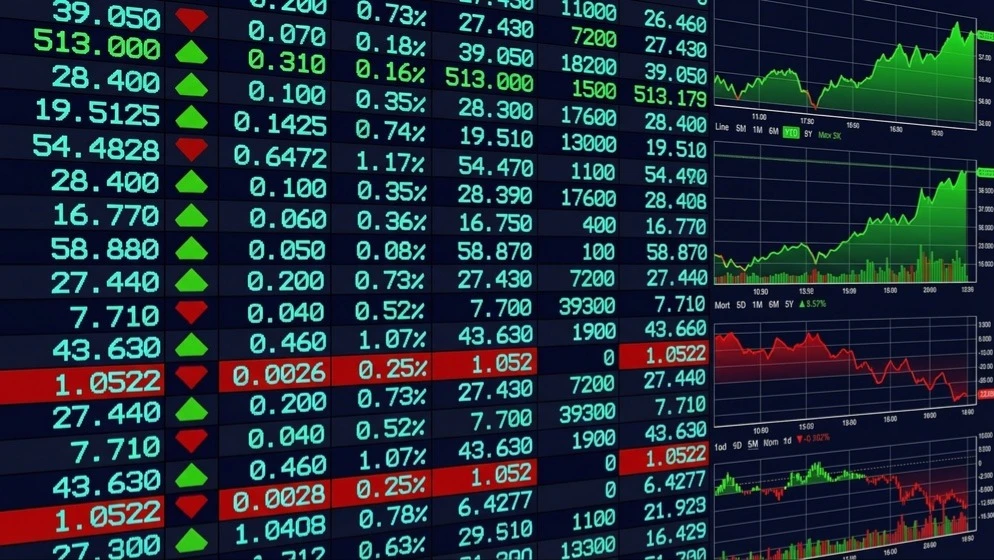
The gap between the Cboe NDX and VIX volatility indices has reached its widest level since 2002 / Photo: rblfmr / Shutterstock.com
The market is pricing in significantly greater volatility over the coming month for the technology-heavy Nasdaq 100—an index of the 100 largest companies traded on the Nasdaq—than for the broad S&P 500, according to Bloomberg. This is evidenced by the widest gap since 2002 between the Cboe NDX Volatility Index—which reflects the cost of options on the Nasdaq 100—and the corresponding measure of implied volatility for the S&P 500, the agency found.
Details
This year, the Cboe NDX Volatility Index has been rising steadily and is currently hovering around 27 points. By comparison, the VIX—a similar measure of expected volatility for the S&P 500 (also known as the “Wall Street fear index”)—stands at around 16 points. This means that the market is pricing in significantly greater volatility in the technology-heavy Nasdaq 100 than in the broad S&P 500: this relative gap has reached its widest level since 2002—the period of the dot-com crash, notes Bloomberg.
What's Happening in the Market
During trading on July 7, the Nasdaq 100 fell 1.4% amid growing uncertainty over whether big tech companies’ massive investments in artificial intelligence would pay off. Meanwhile, the S&P 500 lost 0.3%. In contrast, during the first trading session of the week on July 6, the Nasdaq 100 rose 1.3%, marking its sixth consecutive session with a move of more than 1% in either direction. This is the longest such streak since August 2024, Bloomberg notes. Due to several days of sharp movements, the Nasdaq 100’s realized volatility over the past month has risen to its highest level since the tariff shock a year ago, Bloomberg explains. The volatility could intensify: On Tuesday, Elon Musk’s SpaceX was added to the Nasdaq 100 index, which could potentially add “rocket fuel” to the divergence between major tech stocks and the S&P 500, the agency believes. SpaceX shares plummeted 5.2% during trading on July 7.
The divergence between the two indices is also evident in the degree of synchronization in stock movements. Over the past month, stocks in the Nasdaq 100 have moved more in unison than those in the S&P 500, according to Bloomberg data. This trend could mean that institutional investors will have fewer resources to absorb a future market decline if confidence in the AI boom wanes, the agency explains. In that case, Wall Street will become even more dependent on retail investors, who will have to prop up the market in the event of a sell-off, Bloomberg warns.
What Analysts Are Saying
“It’s quite striking,” Maxwell Greenakoff, head of U.S. equity derivatives research at UBS Group AG, told Bloomberg, describing the heightened price volatility in tech stocks. Back at the end of last year, he predicted that by 2026, the Nasdaq 100 would experience greater volatility than the S&P 500. To bet on increased price volatility in tech companies, traders can buy put and call options on the Nasdaq 100 while simultaneously selling similar contracts on the S&P 500, he said.
“IPOs are inherently more volatile,” wrote Amy Wu Silverman, head of derivatives strategy at RBC Capital Markets, in a client note cited by Bloomberg. Given SpaceX’s size and scale, “the volatility spread between the Nasdaq and the S&P is likely to remain wide until we get closer to SpaceX being included in the S&P [500] as well,” she added. According to a Bloomberg source, clients at RBC Capital are betting on a pullback in the AI rally. Wu Silverman noted that investors are also shifting into sectors such as healthcare and consumer staples. The bank’s equity sales team recommends that investors buy put options on the Invesco QQQ Trust Series 1 ETF and the VanEck Semiconductor ETF to express a “bearish” view on the technology sector.
This article was AI-translated and verified by a human editor