Wizz Air reports higher revenue despite Middle East conflict; shares rising early

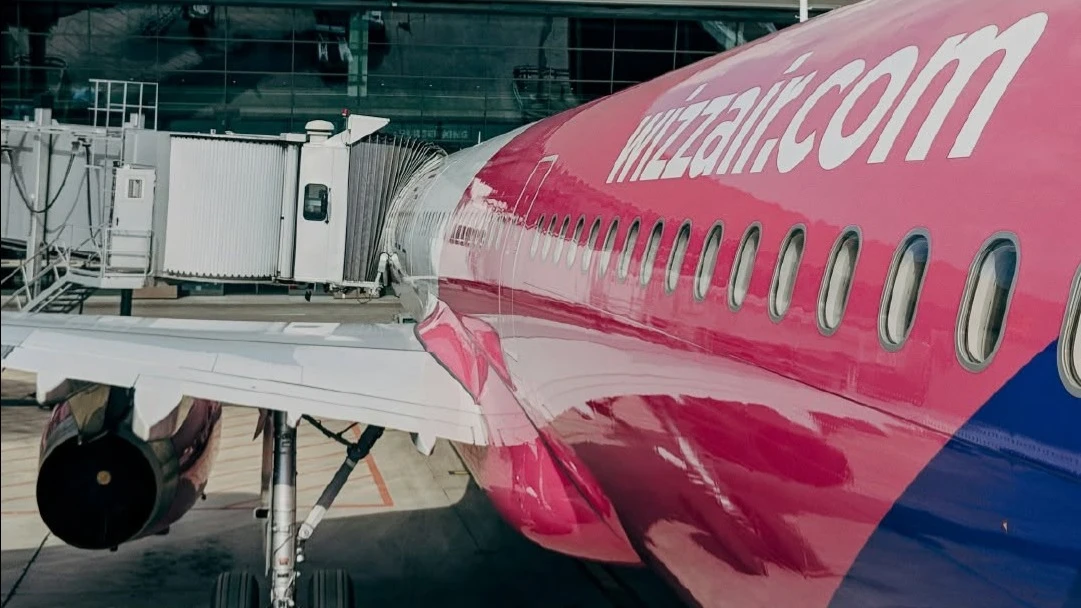
Wizz Air said the Iran conflict had shaved EUR50 million from earnings in its fiscal full year, while promising to take advantage of market dislocations to push for growth / Photo: Facebook / Wizz Air
Wizz Air Holdings shares rose more than 5% in early trading on the London Stock Exchange on Thursday after the budget carrier reported relatively resilient fiscal-2026 results amid a challenging period for the airline industry as a whole and higher fuel costs, Bloomberg reported.
Details
Shares of Hungarian low-cost carrier Wizz Air rose more than 5% on the LSE. As of 10:02 London time (14:02 Astana time), they were trading at GBP10.19 apiece.
The company announced that in its fiscal 2026, ended March 31, revenue increased 8% to EUR5.7 billion, while passenger traffic rose 10% to a record 69.7 million, with a load factor of 90.7%. At the same time, the net profit plunged 99.4% to EUR1.3 million. The conflict in the Middle East could have reduced earnings by EUR50 million, the company estimated in its earnings release.
Despite that, the company’s financial results proved relatively resilient against the backdrop of a difficult period for the airline industry, Bloomberg wrote. Analysts had expected a loss of around EUR50 million, according to Proactive, a financial news site.
Wizz Air declined to provide guidance for fiscal 2027, citing “the lack of visibility across our trading seasons, uncertainty related to the ongoing conflict in Iran and the closure of the Strait of Hormuz.”
Recent company news
In recent years, Wizz Air has lagged behind other low-cost peers in terms of financial performance because of intense competition and engine-related issues that forced part of its fleet to remain grounded, Bloomberg notes.
As part of efforts to improve its financial position, the company closed its Abu Dhabi base in September last year and shifted its focus back toward Central and Eastern Europe.
That strategy will continue in the new fiscal year, CEO József Váradi said. The company also plans to restore full fleet utilization as engine availability improves. As of March 31, 30 aircraft remained grounded, versus 42 a year earlier, according to the earnings release.
Context
The conflict in the Middle East has driven up jet fuel prices, potentially cutting global airline profits in 2026 by half, according to the International Air Transport Association. To offset higher costs, airlines have been forced to raise ticket prices.
Váradi told Bloomberg that he does not expect ticket-price increases during the summer, though they could begin in September and October. He also said 84% of the airline’s fuel needs are hedged for the first half of fiscal 2027, while 60% are hedged for the second half.