A Crisis-Proof Formula for Shaping the Future: Why the Nobel Prize in Economics Was Awarded

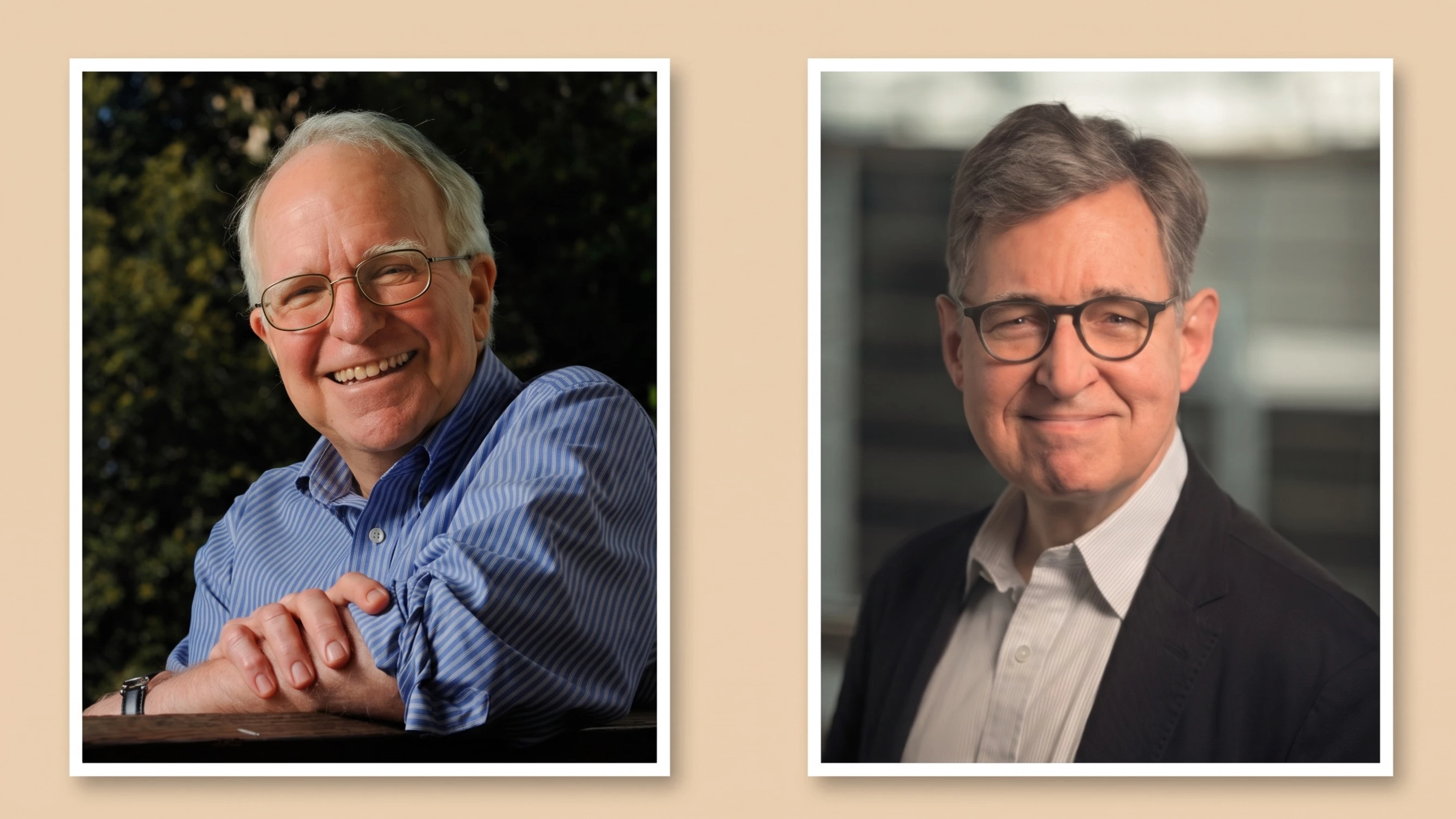
Robert E. Hall and Michael Woodford were awarded the Alfred Nobel Prize in Memory Economics in 2026. Photo: Wikimedia Commons, Columbia University, generated using AI
The 2026 Alfred Nobel Memorial Prize in Economic Sciences was awarded to two Americans—Stanford University professor Robert E. Hall and Columbia University professor Michael Woodford—for “the microeconomic foundations of macroeconomic stabilization,” the Royal Swedish Academy of Sciences announced on October 12. Their work helps explain how policymakers can manage the economy more effectively during times of crisis.
Stabilization Recipe
"This year's prize is dedicated to stability," said Ellen Moons, Secretary General of the Royal Swedish Academy of Sciences , in her opening remarks .
Economists Robert E. Hall and Michael Woodford decided to base their models not on the conventional links between inflation, output, and consumption, but on a microeconomic foundation—an understanding of how individual households and firms influence the economy through their actions. They assumed that households and firms look to the future when making decisions about savings or prices of goods. Governments and central banks can influence their outlook by disclosing their economic policy plans.
In 1977, Hall published a chapter, and a year later, the full study, on how expectations of future income affect consumer spending. In 1979, he studied the natural rate of unemployment and the relationship between labor supply and economic fluctuations. In the late 1980s, he continued to develop models explaining the causes of fluctuations in gross output and the impact of monetary policy on the real economy.
Woodford, for his part, focused on the theoretical foundations of monetary policy, particularly on how the expectations of firms and households influence central banks’ decisions. In a 1997 paper co-authored with former Fed Chair Ben Bernanke, he examined how effectively central banks can rely on inflation forecasts when making decisions. In a 1999 article, Woodford analyzed the principles that guide regulators in their decision-making. These ideas were most fully articulated in his book *Interest and Prices: Foundations of a Theory of Monetary Policy* (2003). In it, he argued that a central bank’s effectiveness depends not only on its current actions but also on how convincingly the regulator explains its policy to the markets.
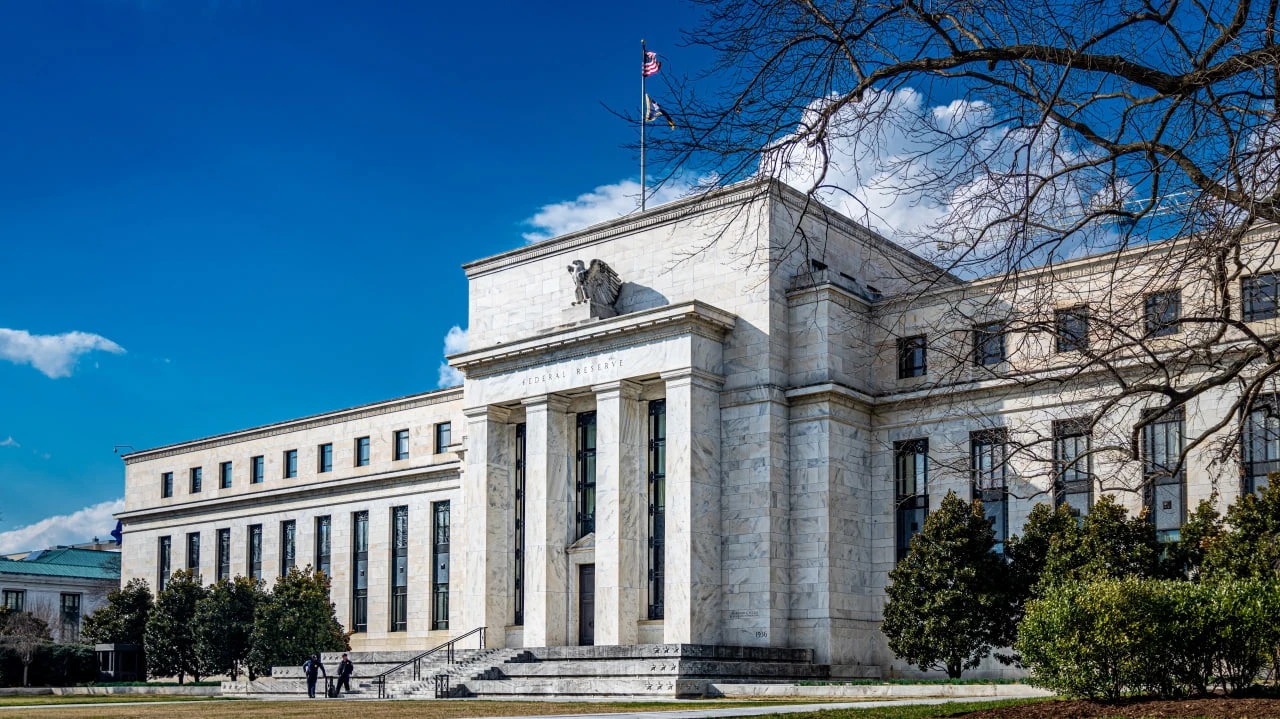
It is noteworthy that the economists received the award at a time when discussions are intensifying worldwide about how central banks can and should manage market expectations. In August, U.S. Federal Reserve Chair Kevin Warsh advocated for more restrained communication regarding the future trajectory of interest rates and for limiting “forward guidance”—signals about the future direction of monetary policy. He argued that regular advance signals could limit the central bank’s own freedom of action and cause investors to focus heavily on the Fed’s messages rather than on economic data. In August of this year, IMF economists also noted that, in the face of frequent economic shocks, central banks should explain how they respond to changing circumstances rather than promise a predetermined interest rate path.
Hall and Woodford’s major scientific achievements do indeed date back quite a long time, but “it is entirely fair to say that both our theoretical understanding and our empirical assessment of Woodford’s New Keynesian paradigm continue to evolve,” Tore Ellingsen, a professor at the Stockholm School of Economics and former chair of the Nobel Memorial Prize Committee for Economic Sciences, told Oninvest.
What messages is the Nobel Committee sending?
Over the past two years, the Nobel Committee has highly praised research that examines long-term growth from various perspectives.
Essentially, they were all asking the same question: why do some economic systems develop while others remain stagnant? In 2024, Daron Acemoglu, Simon Johnson, and James Robinson received the prize for their research on how social institutions influence prosperity.
In 2025, Joel Mokyr, Philippe Aghion, and Peter Howitt were awarded the prize for their explanation of economic growth driven by innovation.
“I see this year’s prize as a clear signal: it is not enough for macroeconomics to study the conditions for long-term economic growth. It must also focus on how to prevent crises and counteract fluctuations in business activity,” says Tore Ellingsen.
The markets didn't predict the winners
As early as the morning of October 12, market assessments and forecasts were far from reflecting the Nobel Committee’s decision. Typically, such assessments indicate who market participants are willing to bet on, but they do not measure the likelihood of the Nobel Committee’s decision.
For example, on the American prediction platform Polymarket, David Otor was the frontrunner, with a 30% probability of winning the prize. He studies how technological change and globalization affect employment, wages, and inequality in the labor market. Ariel Peikes of Harvard, an expert in the economics of industry markets, competition, and quantitative methods for analyzing corporate behavior, received 19% of the bets on the platform. Susan Eithy of Stanford and Michael Woodford, the current laureate, each received 10% of the bets. Eighty’s research focuses on the digital economy, the structure of online markets, and the application of machine learning in econometrics. The remaining candidates each received 7% or less of the bets.
At the American Kalshi, the picture was slightly different: Ariel Peiks was in the lead with 23%, followed by Susan Eite in second place with 11%, while the probability of British economist Richard Blandell—a specialist in econometrics, the labor market, and public finance—winning the prize was estimated at 10%. None of the favorites on this platform were among the actual laureates.
But Woodford was included in a list compiled by Clarivate, a company that analyzes scientific publications and their citation counts and compiles a list of researchers whose work has achieved an exceptionally high level of impact. Since 2002, 89 scientists from this list have gone on to win Nobel Prizes. This year, the company identified the top three economists by influence: Sidney Winter—for his evolutionary approach to the study of organizations; Michael Woodford—for his research on monetary policy; and Hal Varian—for his study of the economics of information technology.
This article was AI-translated and verified by a human editor