Analysts see an opportunity for a turnaround in luxury company stocks. Which stocks do they recommend?

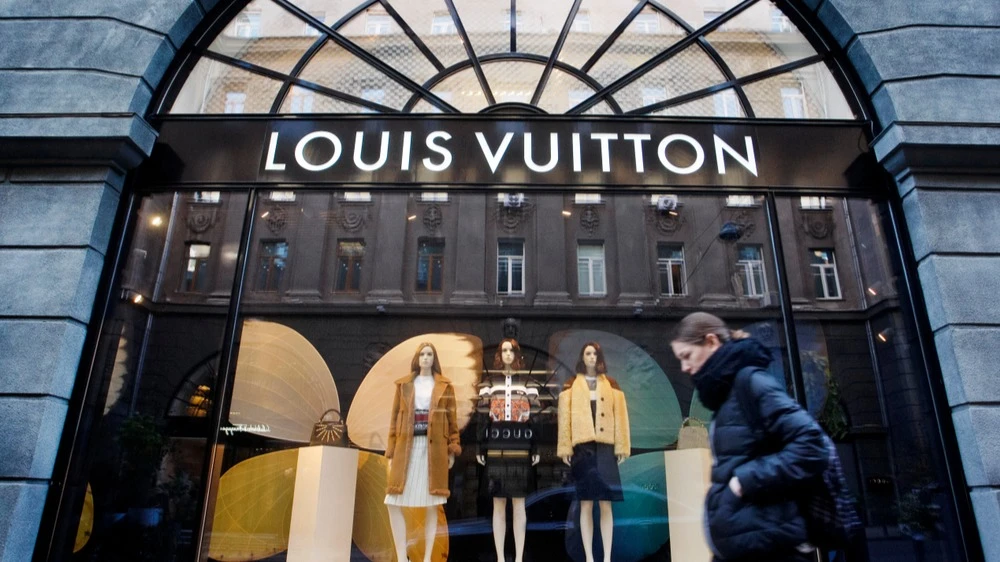
BofA recommends buying LVMH stock / Photo: viewimage / Shutterstock
The prolonged decline in luxury goods stocks may be coming to an end, according to Bloomberg . Signs that consumer confidence and the slowdown in earnings growth have bottomed out offer hope for an improvement in this hard-hit sector. However, analysts warn that a quick rebound is not to be expected—the recovery will be nonlinear.
Details
When consumer confidence is at low levels, as it has been recently, consumer-focused companies tend to outperform the market over the next 12 months, and the luxury sector is usually among the most successful, according to JPMorgan strategists.
The University of Michigan Consumer Sentiment Index fell 11.2% year-over-year in August to 51.7 points. By comparison, during the 2008 financial crisis, the index never fell below 55 points. According to JPMorgan, when consumer pessimism was at such high levels, the European luxury sector outperformed the broader market by an average of 9% and 12%.
The bank's analysts maintain a positive outlook for the global luxury industry, in part based on the expectation that rising consumer wealth will support demand for premium goods in the future.
JPMorgan believes South Korea could become a new driver of growth. Retail sales there are growing so rapidly that the country has already become a more significant market for luxury goods manufacturers than the Middle East, which has been “hit hard” by the U.S.-Iran war.
The situation in China remains challenging for now: economic stimulus measures have failed to take effect, and Beijing’s efforts to control capital flows have dampened demand. However, the bank’s strategists expect the Chinese market to begin recovering as the macroeconomic situation stabilizes.
“If someone doesn’t have any investments in the luxury sector, it might be a good idea to start building a position,” notes Christine Karlsten, senior portfolio manager at Banque Piguet Galland. “This is a bet against the market consensus. Therefore, it is intended for long-term investors, and it may take time to pay off.”
What are the risks?
At the same time, analysts warn that the recovery may prove to be fragile. So far, periods of improvement have been short-lived, and luxury goods stocks continue to lag behind.
Data from Bank of America shows that global industry indicators slowed by 3 percentage points in the first two months of the third quarter compared to the second quarter. This is most evident in the U.S., Japan, South Korea, and Macau—markets that were the strongest in the previous quarter. Meanwhile, the European Union’s tourism sector is holding up better than the rest, according to Bloomberg.
Which companies should you bet on?
BofA named three stocks it recommends buying: LVMH, Hermès, and Richemont. Valuations of luxury companies have returned to their 10-year averages, while shares of industry giant LVMH are trading at a 25% discount to its competitors—making them among the cheapest in the sector, according to Bloomberg.
This points to the merits of a selective approach, the agency notes. The BofA index tracking shares of “hard” luxury goods manufacturers—namely watches and jewelry—has outperformed the “soft” luxury goods index—which covers handbags and clothing—by more than 40 percentage points since the beginning of April. This reflects the more stable earnings performance of jewelry brands during the Iran crisis, Bloomberg emphasizes.
As a result, Pandora and Richemont—which owns Cartier—were among the top performers in the luxury sector in terms of stock performance in 2026. Meanwhile, shares of fashion industry giants LVMH and Hermès are lagging behind, having lost 30% and 27% of their value, respectively.
Analysts at Bernstein agree that jewelry remains one of the most attractive categories due to a combination of strong growth rates, lower market saturation, and opportunities to raise prices. This strengthens the investment case for Richemont: investors continue to underestimate how much the company is “structurally better positioned compared to the luxury sector as a whole,” the analysts wrote.
This article was AI-translated and verified by a human editor