Apple's Lawsuit Could Slow Down OpenAI's Plans to Launch Devices — Bloomberg

Apple's lawsuit against OpenAI could negatively impact the development of a new device from the creator of ChatGPT, according to Bloomberg / Shutterstock.com / M21Perfect
Apple’s lawsuit against OpenAI over alleged theft of trade secrets could slow down the ChatGPT developer’s expansion into the hardware market, according to Bloomberg. According to the news agency, the legal dispute could slow down hiring, product development, and interactions with suppliers.
On July 10, Apple accused OpenAI of systematically stealing confidential information to develop its own gadgets. The Cupertino-based company is demanding that the defendant pay damages and redesign future products so that they do not incorporate any of its technologies. And although the proceedings could take months or even years, the resulting uncertainty could already complicate OpenAI’s work, the agency warns.
One of the most serious consequences could be difficulties in recruiting specialists from Apple, Bloomberg notes. Most of the allegations against Apple regarding the theft of trade secrets involve its employees who have moved to OpenAI or attempted to join the company. As a result, even Apple engineers participating in new job interviews at OpenAI could draw the attention of the Cupertino-based company’s security team. The agency notes that OpenAI has already hired more than 400 former Apple employees, offering many of them substantial compensation packages, which has forced Apple to significantly increase bonuses to retain its staff.
The lawsuit may also affect the development culture within OpenAI. Former Apple employees will likely be more cautious when discussing their previous work, and managers will likely avoid technical questions that could touch on confidential information. In addition, the developer of ChatGPT is expected to have to strengthen internal controls, conduct additional legal reviews, and divert management and engineers to work with lawyers, which could slow down the creation of new products.
Bloomberg also points to a third obstacle: electronics suppliers may be reluctant to expand their cooperation with OpenAI for fear of straining their relationship with Apple or becoming embroiled in legal disputes.
According to the agency's source, OpenAI still plans to unveil its first gadget later this year and launch it on the market in 2027, although it acknowledges that the legal dispute could complicate the development of an entire line of devices.
What OpenAI Is Developing
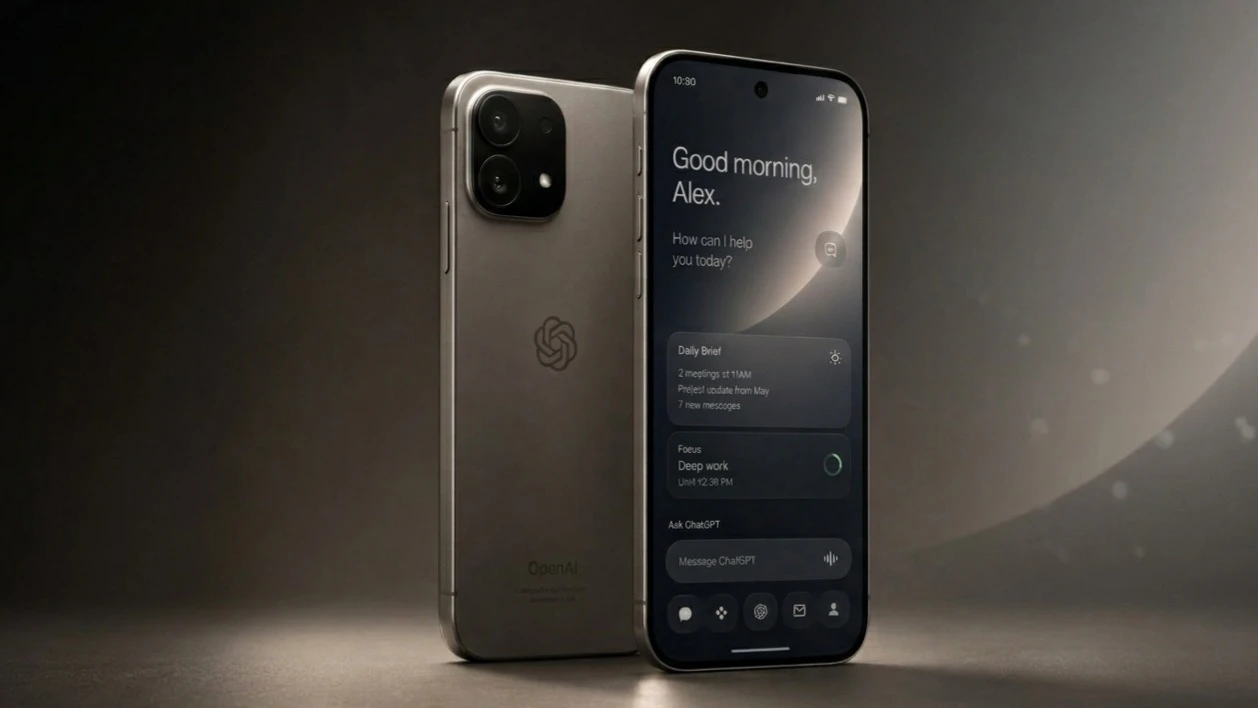
OpenAI is developing its own AI-powered hardware device, which is expected to offer a new way to interact with AI beyond traditional smartphones, sources told The Information in September 2025. According to their information, the company was considering several form factor options, including a compact, screenless gadget with contextual awareness—the ability to analyze its surroundings using a camera, microphone, GPS, and other sensors.
OpenAI CEO Sam Altman said in January 2026 that the future device would be a more “low-key” alternative to a smartphone, and that users would be surprised by its simplicity, Axios reported. Chris Lihane, the company’s director of global affairs, stated at the time that device development was one of OpenAI’s key priorities for 2026, and that they expected to unveil their first gadget in the second half of the year.
According to analyst Ming-Chi Kuo, mass production could begin as early as 2027. OpenAI has not confirmed this information.
This article was AI-translated and verified by a human editor