Investors' bets on AI have bolstered the dollar. Why has this now become a risk for the currency?

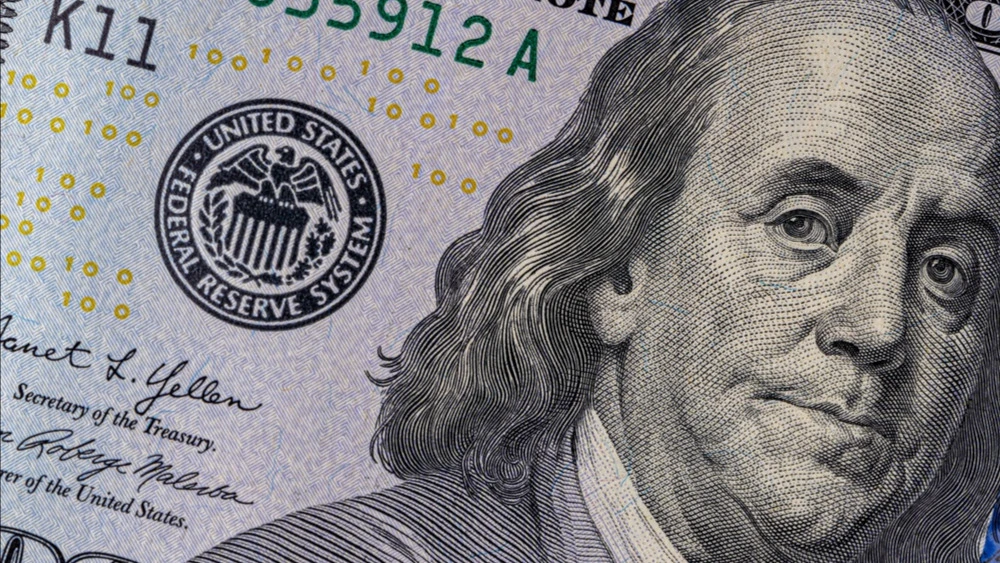
Foreign investment in U.S. AI-related stocks has influenced the dollar’s exchange rate, according to Apollo Global Management / Photo: Tamakhin Mykhailo / Shutterstock.com
The dollar’s recent gains may be at risk due to a sell-off in artificial intelligence stocks, said Torsten Slock, chief economist at Apollo Global Management, in a note cited by Bloomberg.
Foreign investors seeking to invest in the AI sector drove a record net inflow of capital into the U.S. market, but most of them chose not to hedge their currency exposure, according to Slock.
“Since most foreign investors in stocks do not hedge currency risk, the conclusion is simple: if the U.S. economy disappoints, the resulting decline in these inflows will pose a significant downside risk to the U.S. dollar,” the analyst wrote in a Bloomberg report. This means that the U.S. currency has a “hidden dependence on the AI bet,” Slock believes.
The Bloomberg Dollar Spot Index has risen 1.4% since the start of the year. The U.S. currency benefited from the AI boom and the subsequent record rally in the U.S. stock market, which attracted foreign capital, according to Bloomberg. Foreign investors first converted their local currencies into dollars and then bought U.S. stocks. At the same time, higher interest rates in the U.S. relative to other major economies made hedging against currency risks too expensive, the agency explains. As a result, the dollar became even more dependent on fluctuations in stock prices, Bloomberg concludes.
According to Slock’s logic, if investors lose faith in the AI play and start selling stocks, the dollar could also weaken. Doubts about large-scale investments in AI infrastructure and about when these expenditures will begin to yield returns have already led to stocks trading without a clear direction after reaching a historic high in early June, Bloomberg reports.
At the same time, traders expect the U.S. Federal Reserve to raise its benchmark interest rate as early as September. Such a move would be a positive factor for the dollar: other major economies are considered less stable, so their central banks are less inclined to tighten monetary policy, Bloomberg explains.
This article was AI-translated and verified by a human editor