"British Buffett": how the manager of the world's most profitable hedge fund invests
"My approach has always been to maximize profits and give the money to charity," Chris Hohn told the Financial Times
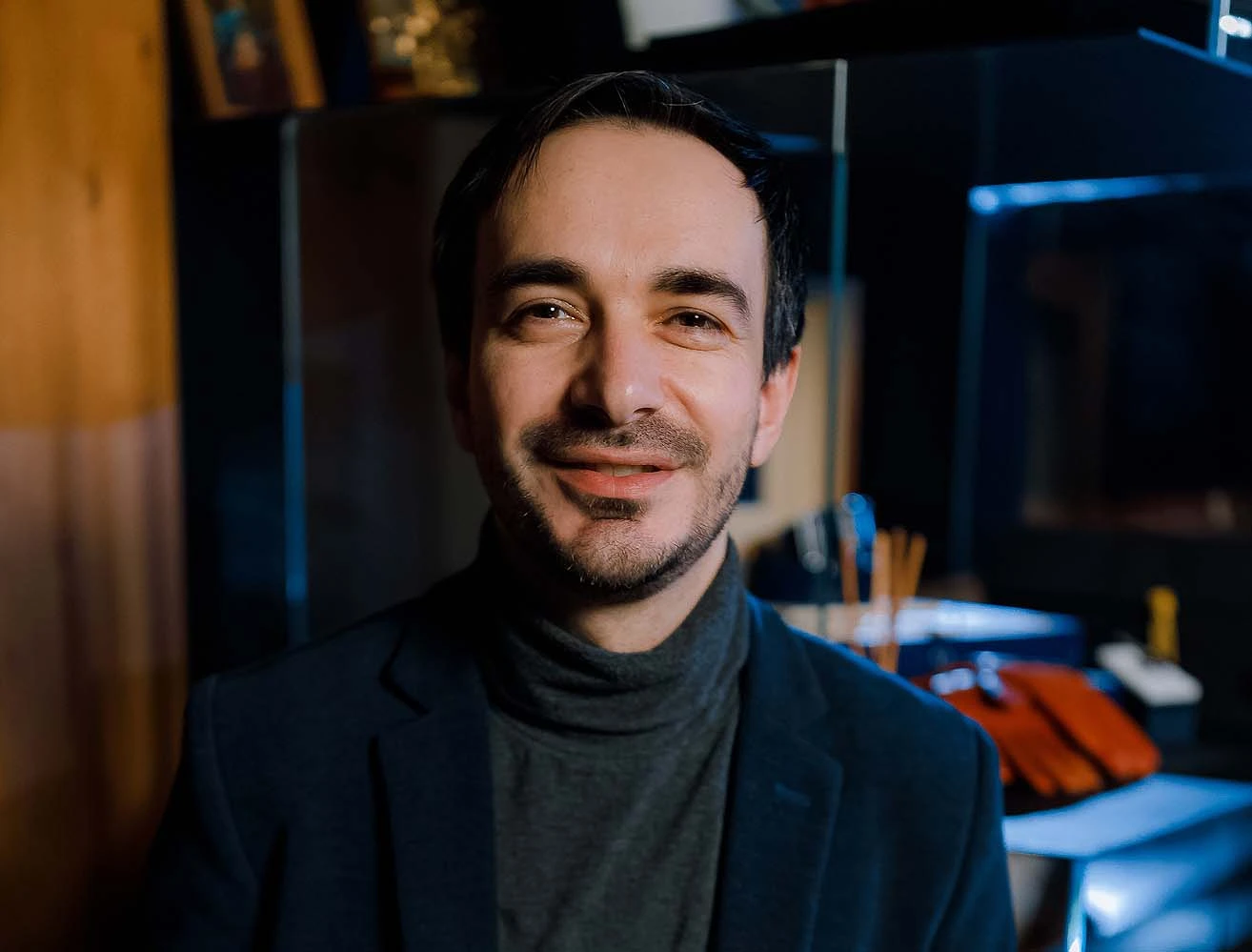
![The Financial Times calls 59-year-old Chris Hohn perhaps the closest British investor [in strategy] to Warren Buffett / Photo: Youtube/Norges Bank Investment Management](https://cdn.oninvest.com/uploads/r/3840x-/cropped-image-6a10a612e3a9e.webp)
The Financial Times calls 59-year-old Chris Hohn "perhaps the closest British investor [in strategy] to Warren Buffett" / Photo: Youtube/Norges Bank Investment Management
The hedge fund of British billionaire Chris Hohn's TCI Fund Management set a new record for profitability in 2025: it brought clients $18.9 billion. Moreover, it became the fifth most profitable hedge fund of all time, writes the Financial Times (FT).
However, unlike large hedge funds like Citadel and Millennium, which employ thousands of people, TCI has managed to achieve similar results "with just half a dozen analysts and one influential portfolio manager," the newspaper notes. Hong has built his success story on a series of giant multibillion-dollar bets: his fund now has about $77 billion under management, invested in just 15 positions around the world.
The FT calls 59-year-old Hawn "perhaps the closest British investor [in strategy] to Warren Buffett". How the fund under his management achieved such results - Financial Times found out from Hon himself, his acquaintances and analysts. Oninvest has collected the main points from this material.
What TCI Fund Management is known for
Hon founded TCI Fund Management in 2003, making it mandatory to donate a portion of its profits to The Children's Investment Fund Foundation, a charity established the year before. Since then, the structure of the fund has changed: charitable giving is no longer mandatory and automatic, but is left to Hong's discretion.
Like Buffett, Hohn relies on large companies with a wide economic moat - that is, sustainable competitive advantages that protect their businesses from competitors. But unlike Buffett, he rejects a range of industries, including banks, utilities, media and insurers. There are probably only a little over 200 companies in the world to invest in, Hong says, and because of the uncertainty created by AI and climate change, that number is shrinking.
"Chris likes to buy global monopolies or duopolies," explains TCI analyst Ben Walker. Hohn's investment style is also partly driven by a desire for control, he says.
Like Buffett, Hon perceives himself not as a speculator, but as an "owner" of shares, and it is by this logic acts as an activist investor, protecting his interests in the company, writes the FT. For example, Hohn doesn't like shorting stocks because someone who has lent an investor shares to short a stock can demand them back at any time, and that would result in closing positions at a loss, the FT writes. "I don't like having my fate dependent on other people," Hon emphasizes.
In the mid-2000s, TCI, managed by Hohn, was involved in activist campaigns, such as for the breakup of Dutch bank ABN Amro on the eve of the 2008 financial crisis. And around the same period, the fund tried to push for changes at U.S. railroad company CSX and Japanese electricity wholesaler J-Power. These campaigns did not always end in success for the fund, writes the FT.
"Over the last 20 years, I've learned that it's better to find a great company with quality management and good corporate governance than to try to find a bad company and change its management or sell it," Hon summarized.
What is Hon investing in
Infrastructure assets form the core of TCI Fund Management's portfolio: they account for 31% of the portfolio. Among them are two Canadian railroad companies, Spanish Ferrovial, which manages transportation infrastructure, and French construction and concession group Vinci. "Railroads, toll roads, airports, cell towers," Hong lists. - Will AI be able to compete with a toll road ... or an airport? Probably not."
Perhaps the most telling investment of Hong is a stake in GE Aerospace, says the FT. He has invested in the shares of this company 18% of the entire fund, which is about $ 14 billion. This is such a large position that it is difficult to find analogues among other hedge funds, explains the edition. "Airlines are a very competitive industry: thousands of carriers, many new players. But in the production of aircraft engines, not a single new entrant has emerged in 50 years," the investor explains his position. - We are studying the barriers to entry [the company's business area] very carefully."
Still, GE Aerospace shares have fallen about 7% since the beginning of the year as war with Iran has hit the global aviation industry.
As of the end of March, the fund also maintained large positions in shares of rating agencies S&P and Moody's: they accounted for 17% of the portfolio. Visa shares also accounted for 13% of the portfolio. The securities of these companies have fallen in value since the start of the year as investors question how viable their business models will be in the new AI era, the FT notes. Speaking of rating agencies, Hohn notes that the real investment here is trust. "Investors have to trust [the rating], issuers have to trust it, regulators have to trust it. All this debt is held by insurance companies, pension funds and banks, and you need a single source of trust." - explained the investor and emphasized that he had discussed investments in Moody's with the "prophet from Omaha," as Warren Buffett is often called.
"Buffett told me [about Moody's]: if the financial crisis didn't kill it, nothing will anymore," Hon emphasized. - He made me promise that if either of us ever sold Moody's stock, we would sell it to each other.
The TCI had lost 4.3% by the end of April - its worst start to a year since 2022, says the FT. Against this backdrop, Hon admits, what once seemed like a solid backstop may start to look like weakness. But, he says, it would be a mistake to assume that investors with concentrated portfolios are doomed to failure. He cites Buffett as an example. "The most famous investor with a concentrated portfolio is Warren Buffett. Anyone familiar with his work knows that he has often talked about concentrated investing. No one questions his genius," Hon emphasized.
"Lecture on Spirituality" and philanthropy
Several people close to Hon say that with his immense intellect it can be difficult for him to build relationships with people, writes the FT. "He is not constrained by traditional social norms," one former foundation employee told the publication. - He is not afraid to offend people." Hong himself describes himself as someone who is "not constrained by traditional norms", such as the "save your money" or "run if something happens to a stock".
In 2023, along with his second wife Kylie, a Harvard graduate and scholar with a doctorate in Slavic languages, Hon co-founded LightEn, which he says is the UK's only charity specializing in spiritual education. The organization is built around two retreat centers. One, where discussions are already taking place, is located off the coast of Mallorca, Spain. The other is being built on a 480+ acre site in North Carolina. Kylie Hoehn hopes to have it up and running by next year.
"Humanity is on the wrong path and the state of consciousness in the world is not what it should be," argues Chris Hoehn. - We should choose peace over war. We should choose love over hate."
"The worst thing about meeting Chris is that you'll have to listen to an hour-long lecture on spirituality, and if you're his friend, you'll also get 40 references about spirituality or the next life," an insider close to Hon joked in a conversation with the FT.
"My approach has always been to maximize profits and give the money to charity. A charity can make the biggest impact when it has the most money," Hohn told the FT. - 'I think we need to move towards a world where there will be more conscious investors - where they might be saying: part of my portfolio might be focused on making money. But the other part should be about making an impact on the world."
______________________
In the "Guru Portfolios" section on Oninvest you can track the structure and changes in the portfolios of the world's largest investors and funds. The service allows you to analyze the largest positions, new ideas and changes in asset shares based on 13F reports, as well as compare the dynamics of portfolios over time.
This article was AI-translated and verified by a human editor