Highlights of the week: SpaceX development plans, Nvidia reporting, new Nebius competitor

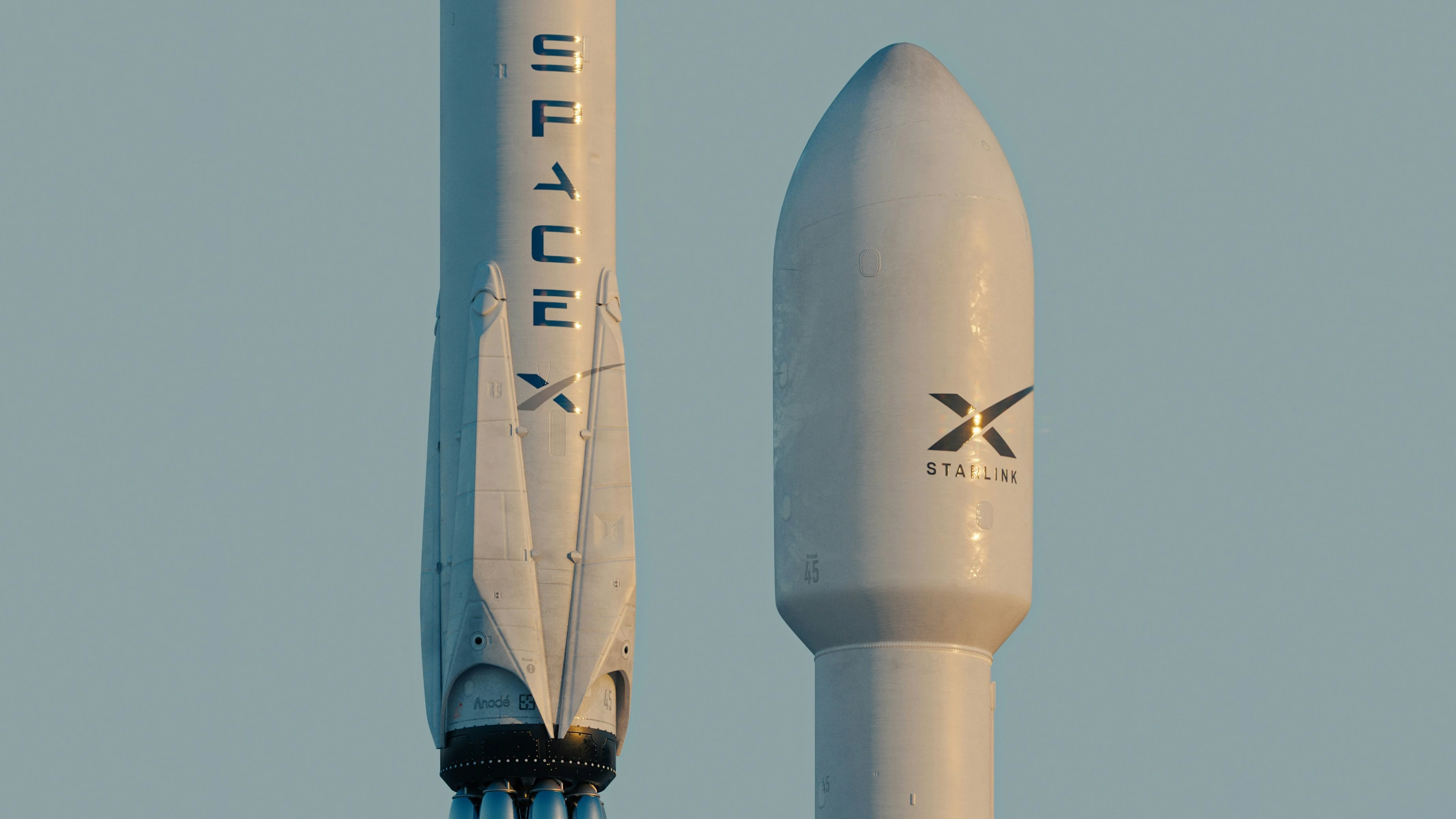
SpaceX has published a prospectus for its IPO. Its main source of revenue is Starlink. Photo: Anirudh / Unsplash.com
SpaceX published a prospectus for its IPO. Nvidia reported quarterly results in which it reported explosive growth in AI infrastructure sales. Samsung avoided a strike that could have exacerbated a global shortage of AI memory chips. Elon Musk lost in court against OpenAI. About the main events from May 18 to 22 - in our review.
SpaceX prospectus: what the company said before the IPO
SpaceX has published a prospectus for its IPO. The placement is expected in June and may become the largest in history - the company expects to raise at least $80 billion.
The prospectus shows that its founder and CEO Elon Musk owns about 5.1 billion SpaceX shares and about 350 million more options. If the IPO gives the company a valuation of up to $2 trillion, it could make Musk the world's first trillionaire, Bloomberg writes. Even at the company's lower valuation of $1.75 trillion, the businessman is likely to surpass that milestone - thanks to stakes in Tesla and other assets. On Friday, Ma. 22, his fortune, according to Bloomberg Billionaires Index data, was $728 billion.
Musk will be able to get a part of SpaceX shares if it reaches a capitalization of over $7.5 trillion and creates a permanent colony on Mars with at least 1 million people. In total, according to Bloomberg, including Tesla, Musk has "at stake" shareholder rewards of about $1.8 trillion.
According to the prospectus, SpaceX plans to trade on Nasdaq under the ticker SPCX. The company's revenue last year grew by 33% to $18.7 billion. However, it recorded a net loss of almost $5 billion - due to a sharp increase in costs for Starship, the satellite Internet system Starlink and AI-infrastructure. Starlink remains the main source of revenue - it accounts for about 70% of the company's revenue.
What else is there to read about it?
- Details about the state of affairs in SpaceX - in the material "Musk's salary, loss of profits and risks for 38 pages: what SpaceX disclosed before the IPO".
- What pays attention to Wall Street and what fears before the company's release on the stock exchange - in the material "Bet on 50 years ahead: what analysts say about the historic IPO SpaceX".
- Who else can earn on this IPO - in the material "Reward for loyalty. Who IPO SpaceX IPO will bring billions?".
US consumer sentiment is at a new all-time low
In the United States, the consumer sentiment index - a leading indicator calculated each month by the University of Michigan, - fell to a new all-time low in May. It now stands at 44.8 points - slightly below the previous historic low recorded in June 2022, the university said.
At the same time, inflation expectations for the coming year increased to 4.8% from 4.7% a month earlier. For comparison: before the war in Iran in February they amounted to 3.4%, follows from the materials of the university.
The Fed has already signaled that it is less inclined to cut rates because of inflationary pressures, CNBC reminds us. Yields on 30-year U.S. Treasury bonds this week reached their highest since 2007, and 10-year Treasury bond yields reached levels not seen in more than a year.
NATO discusses helping ships pass through Hormuz
NATO is discussing the possibility of helping commercial ships pass through the Strait of Hormuz if Iran does not lift its blockade by early July, Bloomberg has learned. According to the agency, some of the alliance countries support the initiative, but some allies fear direct involvement in the conflict.
The NATO summit will be held in Ankara on July 7-8.
So far, the alliance has no clear plan to ensure the safety of shipping, and the U.S. had previously first announced its own escort operation in the strait, but then scrapped it, citing progress in talks with Iran.
Musk lost his lawsuit against OpenAI
On May 18, a jury in the Federal District Court of Northern California dismissed Elon Musk's lawsuit against OpenAI and its head Sam Altman. They made the decision unanimously after less than two hours of deliberation. The court agreed with the jury's opinion.
Musk accused OpenAI of abandoning its original mission of creating AI for the benefit of humanity for commercial gain and demanded that its restructuring be canceled.
OpenAI responded by claiming that the billionaire supported the transition to a for-profit model and attempted to gain control of the company, and created a competing xAI after he left. The trial lasted almost three weeks.
What else is there to read on this topic?
- ChatGPT developer expects $1 trillion valuation at IPO - details in "OpenAI may file for IPO on Ma 22 and go public in September - media".
Samsung has lifted the threat of an AI chip shortage
Samsung Electronics said Ma. 20 that after days of negotiations, the company's management reached a tentative agreement with the union on wages and a collective bargaining agreement.
The strike was scheduled to run from Ma 21 to June 7. Samsung's employees were trying to get it to spend more of its AI boom revenues on labor compensation. In particular, it was a requirement to allocate 15% of operating profits to employee bonuses and to spell out this obligation in labor contracts.
The potential production halt could have exacerbated a global shortage of memory chips used in AI servers, smartphones and electric cars.
Under the terms of the tentative deal, Samsung will launch a ten-year bonus program for the semiconductor division tied to business profitability. Previously, the parties had already agreed to abolish the bonus cap of 50% of annual salary.
Nvidia reports failed to impress investors
Nvidia on Ma 20 reported results for the first quarter of fiscal 2027: its revenue rose 85% to $81.6 billion, and sales of its data center AI hardware jumped 92%. Diluted earnings per share came in at $1.87, with market consensus calling for $1.76. Nvidia has beaten Wall Street 's revenue and earnings expectations for 14 consecutive quarters.
The company also significantly raised its quarterly dividend - from $0.01 to $0.25 per share - and expanded its $80 billion share repurchase program. For the second quarter, Nvidia expects its revenue to be $91 billion, plus or minus 2%.
After the report, its shares fell by almost 1.5% on the post-market, and the next day lost in price by almost 1.8%. Investors, in particular, are concerned about the company's dependence on major clients like Alphabet and Meta, and the fact that the tech giants may eventually reduce spending on Nvidia's AI chips.
Google and Blackstone are creating a competitor to Nebius and CoreWeave
Google and Blackstone are launching a joint venture in AI and cloud computing with investments of up to $25 billion. Blackstone will have a controlling stake in the joint venture. Google will provide the project with its tensor processors designed specifically for neural networks and software. The partners plan to launch data centers with a capacity of 500 megawatts by 2027.
The project will be a direct competitor to Nebius, CoreWeave and other AI infrastructure providers running on Nvidia chips. For Google, this is the first major step towards commercializing its own AI processors outside of its own ecosystem.
Nebius has found an alternative power source for its data center
Arkady Volozh's Nebius Group announced on May 20 that it has signed a contract with Bloom Energy to supply one of its data centers with 328 megawatts of capacity this year. Under the agreement, Nebius will pay up to $2.6 billion. Its implementation will take place in three phases, each with a ten-year delivery period, Barron's writes.
Bloom Energy systems will be placed directly at Nebius facilities. This will allow faster startup of AI power and reduce dependence on the external power grid.
The deal underscores the growing problem of power shortages for AI infrastructure.
Nebius shares rose by 14.65% the day after the deal was announced, and by almost 157% since the beginning of the year. Bloom Energy shares rose in price by more than 8% on May 20, and by another 9% the next day. Since the beginning of the year its capitalization has increased by almost 250%.
Cartier owner has weathered the downturn in the luxury market better than competitors
Switzerland's Richemont, owner of the Cartier brand, reported revenue growth above analysts' forecasts: its sales for the fiscal year ended March 31 rose 11%, unaffected by currency exchange rates, to €21.4 billion.
Sales in the markets of the Americas increased by 17% year over year, excluding currency exchange rates, in the Middle East and Africa - by 13%. But in the last quarter of the fiscal year, due to the war in Iran, revenue in this region (it brings 9% of Richemont's sales) fell by 3%, according to the company's materials.
Sales of the jewelry division, including Cartier, rose 14% year over year to €16.5 billion.
Richemont showed a more stable position compared to its competitors - LVMH, Kering and Hermes, Bloomberg wrote. Vontobel analyst Jean-Philippe Bertschi called the Swiss company "one of the favorites in the luxury sector".
What else is there to read on this topic?
- How did Ralph Lauren report? Details in the material "Shares of Ralph Lauren jumped by 12%. The brand reported a sharp increase in sales in China".
- Burberry's business is showing the first signs of recovery, whether it is worth buying its shares - in the material "Trench instead of hype: will Burberry become the most interesting company in the European luxury".
This article was AI-translated and verified by a human editor