The ECB Is Prepared to Raise Rates for the Second Time This Year Due to the Impact of the War — Reuters
The ECB has more room to further raise borrowing costs than the U.S. Federal Reserve

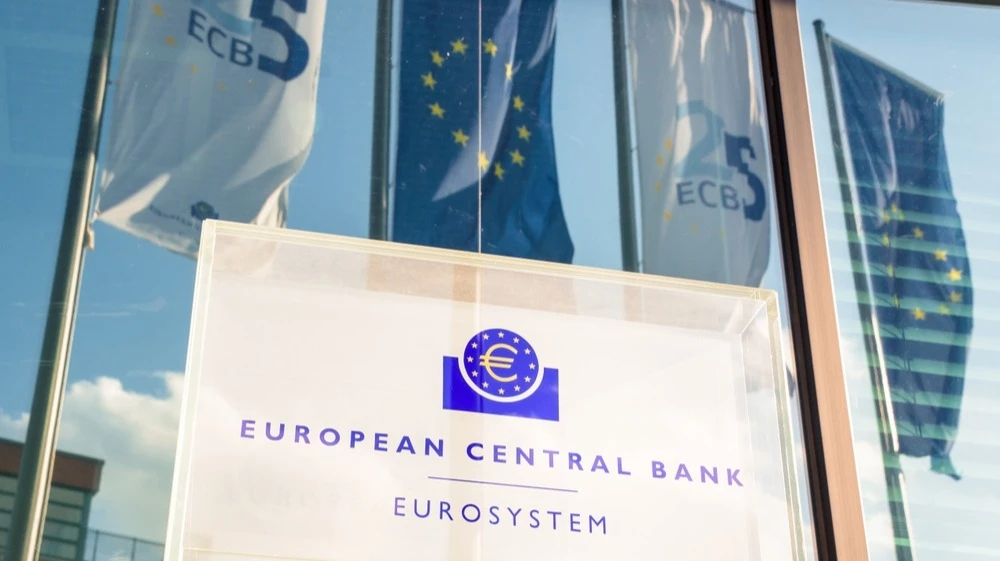
Due to rising prices for Middle Eastern energy resources, the European Central Bank raised interest rates in June for the first time since 2023 / Photo: olrat/Shutterstock.com
The European Central Bank (ECB) is prepared to raise interest rates at its September meeting to limit the economic fallout from a U.S.-Iran war, but is reluctant to signal further rate hikes, three sources told Reuters.
According to their data, against the backdrop of the ongoing conflict in the Persian Gulf, inflation at around 3%, and signs of stability in the eurozone economy, members of the ECB’s Governing Council believe it is necessary to raise the rate from 2.25% to 2.5%.
The September increase had already been factored into the assumptions underlying the ECB’s June economic forecasts. According to sources, it is intended to demonstrate the regulator’s determination to prevent a repeat of the sharp surge in inflation that occurred in 2022. The ECB currently considers rising natural gas prices—which are of particular importance to the eurozone, given its dependence on imported energy—as well as high gasoline prices at gas stations to be the main drivers of inflation.
At the same time, long-term inflation expectations remain in line with the ECB’s 2% target. Therefore, the central bank’s policymakers do not see a need to signal a future rate hike as early as September, according to the agency’s sources.
An ECB spokesperson declined to comment.
Context
The ECB began countering inflation caused by rising energy prices before the Federal Reserve (Fed), notes The Wall Street Journal. In June, it raised rates for the first time in nearly three years, seeking to prevent war-driven energy price hikes from triggering widespread inflation. In July, as markets had expected, the European central bank kept its rate at 2.25%. Despite the war in the Middle East, which has been ongoing since late February, the U.S. central bank left rates unchanged for the fifth consecutive time at its last meeting in July.
The ECB has more room to further raise borrowing costs: the gap between its rate and those of other major central banks exceeds 1 percentage point. At the same time, the rate remains within a range that many economists consider neutral for the economy—that is, neither stimulating nor hindering growth, according to the WSJ.
The Federal Reserve’s target range for the federal funds rate is 3.5–3.75 percent, while the Bank of England’s rate is 3.75 percent. According to the WSJ, Wall Street has almost fully priced in the likelihood of a 25-basis-point Fed rate hike by December.
What's next?
Preliminary data on consumer price index (CPI) trends in France and Spain for August will be released this Friday, and eurozone data will be released next week. These figures will serve as an important guide ahead of the ECB’s September rate decision.
“Rising prices for oil and European natural gas mean that the emerging acceleration [in business activity in the eurozone] may soon face a test in the form of rising inflation,” the WSJ quotes Ricardo Amaro, a leading economist at Oxford Economics. “Our calculations show that inflation in the eurozone could exceed 3.5% later this year if current energy prices persist,” he noted.
“It is increasingly likely that the European Central Bank will, as we expect, raise its rate to 2.5% in September and continue to maintain a hawkish stance thereafter,” Amaro added.
According to LSEG, the market puts the probability of a 25-basis-point increase in the ECB's deposit rate in September at 95 percent. Market participants expect one or two rate hikes by the end of the year, including the one in September, Reuters reports.
This article was AI-translated and verified by a human editor