Dow down, S&P 500 and Nasdaq up, Brent up 7% ahead of long weekend
On Friday, April 3, stock exchanges in the U.S. will be closed

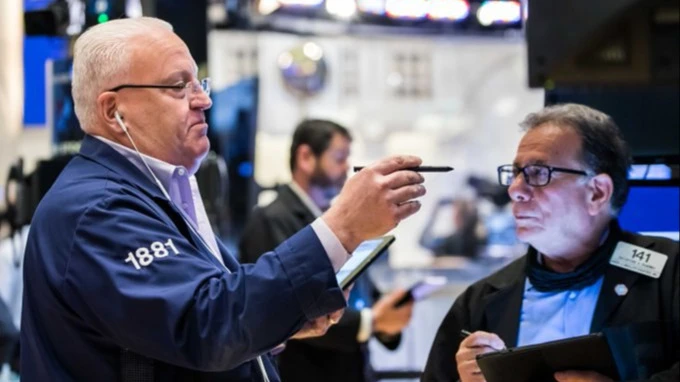
Gold fell in price, the dollar strengthened, and oil rose after Donald Trump's speech / Photo: X / NYSE
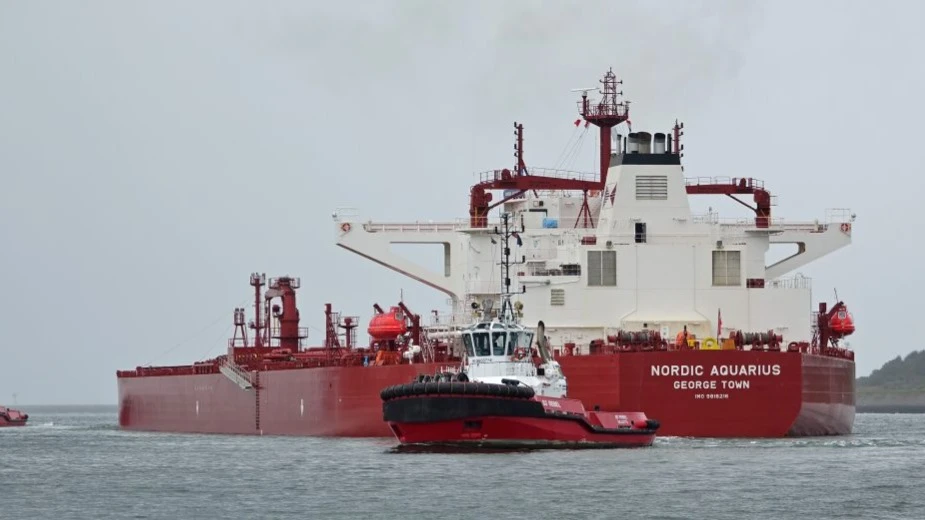
Two of the three major U.S. stock indices - S&P 500 and Nasdaq Composite - managed to overcome the fall and get into the plus at the end of trading on April 2. They managed to do so despite the growth of Brent crude oil by 7%. Investors on Thursday were concerned about the statements of US President Donald Trump, who threatened Iran with new strikes and did not declare the nearing end of the war. On the other hand, Iranian state media reported work on a protocol to "monitor" ships passing through the Strait of Hormuz, crucial for oil and gas supplies from the Persian Gulf.
Details
- The S&P 500 broad market index rose 0.11% on April 2.
- The blue-chip index Dow Jones Industrial Average lost 0.13% on Thursday.
- The Nasdaq Composite Technology Sector Index added 0.18%.
- The Russell 2000 index of small and mid-capitalization companies rose 0.7%.
- The CBOE Volatility Index declined by 2.7% and fell below 24 points. The psychological mark indicating high volatility is considered to be 20 points.
- June futures for Brent crude oil rose by 7.4% to $108.6 per barrel, while May contracts for U.S. WTI crude oil rose by 11.4% to $111.6 per barrel.
- The dollar strengthened 0.37% to 100.02 points against a basket of other world currencies.
- Gold fell 1.8 percent to $4671.
- Bitcoin was losing 1.6 percent, dropping to about $66,930, the CoinGecko service shows.
What influenced the stock
US President Donald Trump's address on Wednesday evening (3:00 CET on Thursday) did not bolster investors' hopes for a speedy end to the US war with Iran. Instead, Trump said the war will continue for at least a few more weeks. "Within the next two to three weeks, we're going to take them back to the stone age where they belong," the US president said. Because of this, stocks in the U.S. were cheap for much of the trading day, while oil prices rose. The Dow was down 1.4% at the low of the day, while the S&P 500 and Nasdaq Composite were losing 1.5% and 2.2% respectively.
Shares began to recover losses after Iran's state-run IRNA news agency reported citing Deputy Foreign Minister Kazem Gharibabadi: the country is working with Oman on a protocol to "monitor" ships passing through the Strait of Hormuz, CNBC wrote. This initiative implies that shipping companies would have to pay duties to Tehran, Garibabadi explained in an interview with Sputnik. However, Bloomberg notes that the Strait of Hormuz is officially considered international waters, and any attempt by Iran to control the movement of ships will be opposed by Western powers and Arab countries of the Persian Gulf.
One of the most important indicators of global prices for real oil supply from the North Sea region - Dated Brent - exceeded $140 per barrel on Thursday. This is the maximum since 2008, notes Bloomberg.
Shares of the largest asset managers declined after Blue Owl Capital reported a surge in withdrawal requests from two of its private credit funds in the first quarter. Investors requested a total of $5.4 billion. Bloomberg called the surge in investor demands an unprecedented $1.8 trillion for the market.
Hedge funds in March sold off global stocks at the fastest pace in 13 years, Bloomberg cited data from the prime brokerage division of Goldman Sachs. The main driver was the activation of short sales, which emphasizes fears of further vulnerability of the market against the background of ongoing hostilities in Iran, emphasizes Bloomberg. The MSCI All-Country World Index fell 7.4% in March, posting its worst monthly performance since 2022. By comparison, the S&P 500 lost only 5.1%.
Thursday was the last trading day of the shortened week: on Friday the markets are closed due to Good Friday. However, traders will be watching the March employment report, which will be released in the morning.
What the analysts are saying
- "I think investors react impulsively: they want the news to be good, but then they reflect on it a little longer and conclude that the uncertainty is still too great - hence the high volatility during the day," Melissa Brown, managing director of investment solutions research at SimCorp, told CNBC. She doesn't expect oil prices to fall anytime soon. But even if they then start to fall, gasoline will get cheaper more slowly, which means the economy will continue to experience inflationary pressures, Brown explained.
- "Investors in the equity market seem to be thinking more about the opening of the Strait of Hormuz right now than the risk of oil staying expensive for a long time," Adam Turnquist, chief technical strategist at LPL Financial, told Bloomberg. - And since it's oil that's driving risk appetite right now, the rebound in the stock market looks unsustainable."
- "Given the fast-moving news backdrop, markets have so far remained neutral despite the president's tough tone in yesterday's address and the surge in oil prices," Dennison Veroux, chief investment officer at Palisade Capital Management, emphasized in a Bloomberg commentary. - At any moment, progress or failure in the war with Iran can swing the markets in one direction or another, and so far investors take the president's timeline for the end of the war as a working scenario".
- "As long as assets are flailing at every news headline, until there is a clear agreement with an acceptable plan to open the [Strait of Hormuz], there will continue to be downward pressure on economic growth and upward pressure on inflation," Max Gohman, deputy chief investment officer at Franklin Templeton Investment Solutions, explained to Bloomberg. That's bad news for both stocks and bonds, he noted.
- "The news around the Blue Owl doesn't make the situation any better, but the fact that the president didn't give specifics on several important issues in his speech yesterday only adds to the uncertainty surrounding the war with Iran," Matt Maley, chief market strategist at Miller Tabak, told Bloomberg.
This article was AI-translated and verified by a human editor