ECB keeps interest rate unchanged for the fourth time in a row

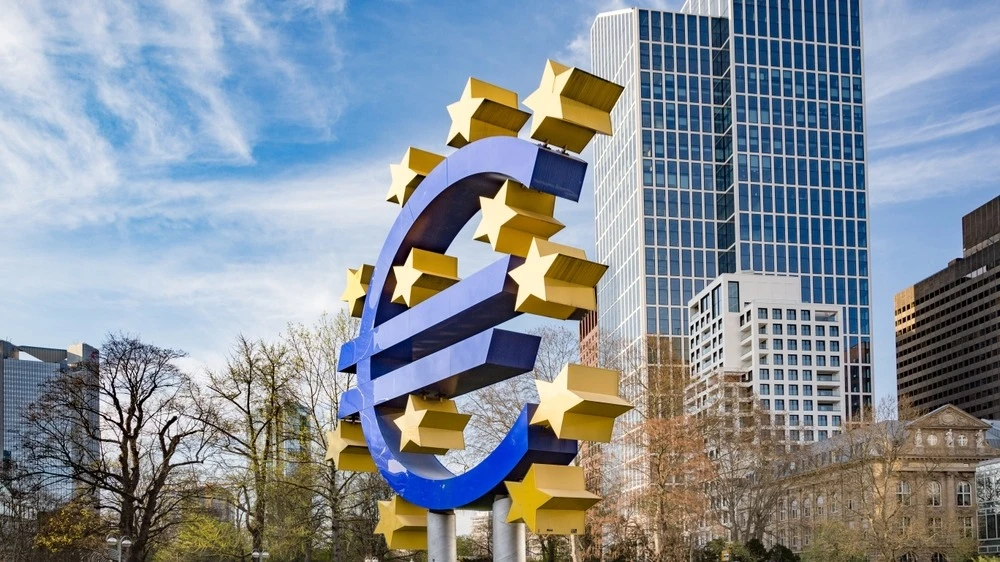
The European Central Bank, as expected, on Thursday, December 18, kept the interest rate unchanged and raised some forecasts for economic growth and inflation, which is likely to strengthen investor forecasts for the absence of further rate cuts, writes Reuters. The ECB keeping the rate unchanged can be considered a signal of confidence in the current state of the eurozone economy: growth exceeds expectations, and inflation, despite external trade shocks, remains close to the regulator's target benchmarks, the agency notes.
Details
The European Central Bank (ECB) on December 18 kept the interest rate unchanged for the fourth time in a row, at 2%: the eurozone economy is holding its ground amid global trade turmoil, and inflation remains stable, Reuters notes. This decision coincided with the expectations of market participants.
"Economic growth is expected to be stronger than in the September forecasts, primarily driven by domestic demand. The Governing Council does not commit to following any particular rate trajectory," the ECB said in a statement.
The new estimates put inflation at 1.9% in 2026 - up from the previous forecast of 1.7% - while it is expected to be 1.8% in 2027, down from the September estimate of 1.9%. The first forecast for 2028 assumes price growth of 2% by the end of the forecast horizon, Reuters writes.
Forecasts for economic growth, now clearly on a higher trajectory, were also raised, to 1.4% this year from 1.2% expected three months ago. Growth is expected to remain at a comparable level in 2026, the agency reports.
What's in the markets
European STOXX 600 index added 0.3%, German benchmark DAX showed a similar growth - +0.3%. The euro also rose slightly.
Context
The latest data on economic growth in the countries of the currency bloc exceeded the expectations of the ECB, reported earlier Reuters. The indicators were supported by exporters, who managed to cope with U.S. duties more effectively than expected, as well as domestic demand, which compensated for the decline in the industrial sector.
Meanwhile, consumer prices in the eurozone rose by 2.2% year-on-year in November, exceeding the European Central Bank's target for the third consecutive month. The regulator's benchmark is 2%. The actual value was higher than the consensus forecast of Reuters, which assumed the preservation of the rate of price growth at the level of 2.1%.
Between mid-2024 and mid-2025, the regulator has already conducted eight rounds of rate easing, cutting borrowing costs in half. The rate has not changed at the last three ECB meetings.
But the Bank of England on December 18 reduced the interest rate after a tense vote, at the same time making it clear that the pace of further policy easing may slow down, writes Reuters. Against the background of a sharp slowdown in inflation and the forecast of economic stagnation in the second half of 2025, five members of the Monetary Policy Committee supported the reduction of the key rate from 4% to 3.75%. The rate cut matched analysts' expectations.
What's next?
ECB representatives now have no desire to adjust the cost of borrowing, notes Bloomberg. Officials are increasingly convinced that the eurozone economy, which unites 20 countries, will remain stable, and inflation in the medium term will be kept close to the target 2%.
"The fog of economic uncertainty has cleared somewhat, especially on the trade side. This will give the [ECB] Governing Council more confidence that the current stance is comfortable and will likely remove any remaining bias towards policy easing," Reuters quoted Lorenzo Codogno, founder of LC Macro Advisors, as saying.
"I would expect [ECB chair] Christine Lagarde to avoid talking about raising rates," said Spyros Andreopoulos, founder of consultancy Thin Ice Macroeconomics.
Nevertheless, separate statements by ECB board member Isabel Schnabel, chief economist Philip Lane and Lagarde herself on the risks to inflation have fueled speculation of a possible rate hike closer to the end of next year.
Financial markets are already laying down a moderate probability of a rate hike late next year or early 2027, Reuters writes. However, most economists surveyed by the agency expect the ECB to keep rates at the current level in 2026 and 2027, with their estimates of the possible rate level in 2027 varying significantly - from 1.5% to 2.5%.
"The reality is that the threshold for rates to move either way in the next few meetings is quite high," Isabel Mateos y Lago, chief economist at BNP Paribas, observed.
This article was AI-translated and verified by a human editor