Ekman's Strategy: Where Should You Invest If Stock Exchanges Might Close for 10 Years Tomorrow?
Why isn't the billionaire investor investing in Micron and Elon Musk's companies, but is buying Microsoft instead?

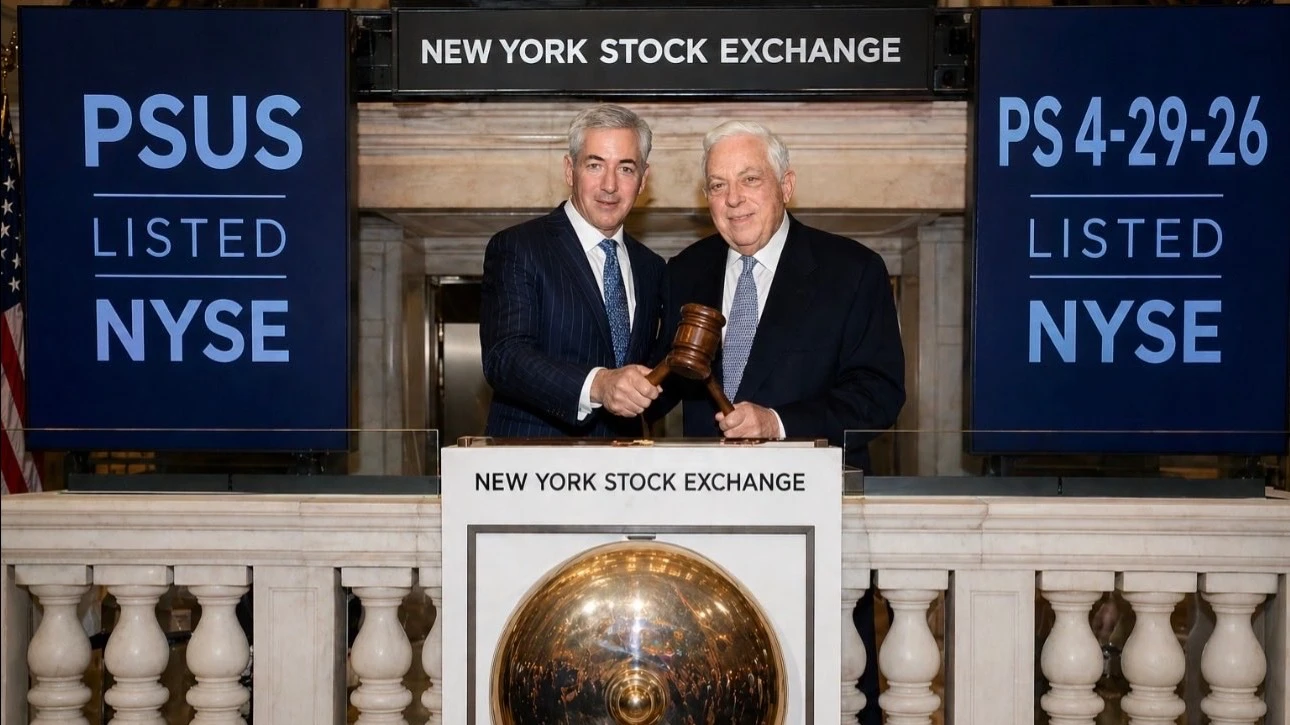
Pershing Square invested nearly all of the funds it raised in just 12 companies / Photo: X / BillAckman
Bill Eckman, whose net worth Forbes estimates at $8.8 billion, explained how he builds the portfolio of Pershing Square, the hedge fund he founded. In an interview with the investment platform Interactive Investor, he explained why he is buying Microsoft and Howard Hughes and selling Tesla, Micron, and SpaceX.
Ekman selects companies with sustainable growth whose future performance can be predicted with a high degree of certainty, and he seeks to buy them at an attractive price. For him, it is important that returns come from the business itself, rather than from the potential to sell the shares at a higher price later on.
“Our approach to investing can be described as follows: we act as if the stock market might close tomorrow for an entire decade. We aim to own businesses in which we’ll still be very happy to be shareholders five or ten years from now, because we earn more than 20% annually, including compound interest.”

Pershing Square's portfolio is highly concentrated: according to the latest data, the fund has invested nearly all of the capital it has raised in just 12 companies.
What Bill Eckman Is Buying
Microsoft
Microsoft’s position in the enterprise software market is “extremely difficult to undermine,” according to Ekman. Microsoft 365 is used by about 450 million customers, with the basic package costing approximately $20 per user; replacing the products included in it with third-party solutions would, in his estimation, be significantly more expensive. In addition, Ekman is banking on Azure: he notes that Microsoft’s cloud business is growing rapidly thanks to demand for computing power for AI.
"Microsoft is currently trading at its lowest valuation in the past ten years—just 21 times annual earnings. And historically, this is one of the lowest ratios in the company’s history. At the same time, we’re dealing with a relatively fast-growing business that has a compound annual revenue growth rate of 15%, and profit growth approaching 20%, and where artificial intelligence, in our view, serves as a powerful driver for further business growth.”

Howard Hughes
“The only asset we’ve effectively classified as perpetual is our stake in Howard Hughes, since that company is itself becoming an investment vehicle. Over time, we’ll be able to deploy its capital for further investments. For us, it’s simply another tool for making investments. Everything else consists of liquid securities, and we can make decisions about buying or selling them on a day-to-day basis.”

Through Howard Hughes, Ekman hopes to bring his long-standing idea of creating a diversified holding company to fruition. He has already acquired a significant stake in the real estate developer and plans to develop it along the lines of Warren Buffett’s Berkshire Hathaway—as a structure through which he can own various businesses and channel capital into new investments.
What Bill Eckman Doesn't Invest In
Tesla
Ekman is not investing in Tesla due to the company’s high valuation and fierce competition in the automotive market. He believes that Tesla’s current valuation can only be justified if the company achieves significant success in robotics and other new areas, but it is impossible to predict whether that will happen.
“It’s all about the combination of price and predictability. Our portfolio consists of companies for which we can forecast cash flows over a very long-term horizon with a very high degree of confidence. In my view, it’s extremely difficult to do this for Tesla and even for Nvidia, even though they’re excellent companies.”

Ekman emphasized that he holds Elon Musk in high regard and drives a Tesla himself, which he considers an excellent car.
SpaceX
Ekman also speaks highly of SpaceX: he believes the company holds a near-monopoly in the market for low-cost space launches, and, in his words, Musk is able to build infrastructure and equipment faster and more cheaply than competitors. However, the head of Pershing Square is not investing in SpaceX because he cannot predict the company’s future.
“Markets have a long history of getting carried away by the latest fad. Space is, once again, a new frontier, and it’s really exciting everyone. But is there even a single space company available for investment today for which anyone can realistically forecast cash flows over the next three years, let alone the next twenty?”

Micron
Pershing Square is not investing in Micron, despite its sharp rise in profits. Ekman believes that the company’s results depend largely on favorable market conditions, but, he says, it is difficult to say how long the huge demand for memory chips will last.
“The history of chipmakers is a history of tremendous volatility, as they constantly shift from periods of imbalance—when excess demand meets limited supply—to times when supply becomes excessive and demand is limited. We, however, prefer businesses that we can forecast with much greater confidence, which is precisely why we do not own Micron shares.”

______________________
In the “Guru Portfolios” section on Oninvest, you can track the composition and changes in the portfolios of the world’s largest investors and funds. The service allows you to analyze the largest holdings, new ideas, and changes in asset allocations based on 13F filings, as well as compare portfolio performance over time.
This article was AI-translated and verified by a human editor