Goldman has lowered its forecast for the yen: the bank expects it to reach 165 per dollar and sees an opportunity in the carry trade
BofA attributes the yen's weakness to record interest from global funds in Japanese stocks

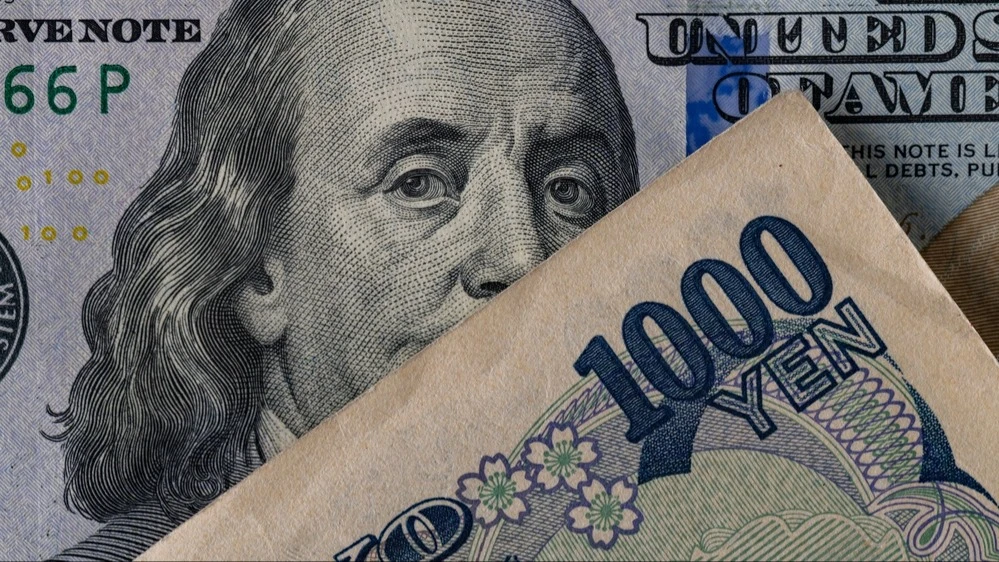
One of the main reasons for the yen's growing weakness is the interest rate differential in favor of the dollar / Photo: Ruslan Lytvyn/Shutterstock.com
Goldman Sachs has lowered its forecast for the Japanese yen: it now expects 165 yen per dollar instead of the previous 155, according to Bloomberg. According to the agency, this is one of the most “bearish” forecasts on Wall Street. The investment bank also considers the yen suitable for carry trades—transactions in which investors borrow a cheap currency and invest the proceeds in higher-yielding assets.
Goldman strategist Karen Fishman attributed the forecast revision to Japan’s fiscal problems, the country’s central bank’s overly cautious rate hikes, and high yields on U.S. Treasuries. “All of this strongly suggests that pressure on the currency will persist, even though, in our view, it is extremely undervalued,” Fishman said. In three months, the bank forecasts the dollar at 162 yen, and in six months, at 163 yen. The previous forecast was 160 and 158 yen, respectively.
In trading on June 6, the yen fell by about 0.6% to 162.3 per dollar. The Japanese currency is near its lowest level since 1986.
Goldman Sachs considers the yen a convenient funding currency for carry trades, according to Bloomberg. The interest rate differential between the U.S. and Japan makes such trades more attractive. As a result, the yen is depreciating particularly rapidly in overseas trading—at hours when it is already late at night in Japan, notes Nikkei Asia.
Why is the yen weakening?
Last week, the Japanese currency fell to a nearly 40-year low, and the 160-yen-per-dollar level is increasingly becoming the new normal for the market. The broader trend began back in 2022: over the past four and a half years, the yen has lost nearly 30% against the dollar. Since the fall of 2025, the sell-off has accelerated due to expectations of accommodative economic policies from new Prime Minister Sanae Takaichi, Nikkei Asia notes.
The Bank of Japan has already begun winding down its economic stimulus program and raised its interest rate to 1% in mid-June. In theory, this should support the yen, but real interest rates (adjusted for inflation) remain low, notes the Nikkei.
AI Rally Hits the Yen
Bank of America pointed to a less obvious source of pressure—foreign investors holding Japanese stocks. BofA strategist Shusuke Yamada believes that part of the capital outflow is due to foreign funds hedging currency risks. In the first half of 2026, foreign investors poured a record 9.7 trillion yen ($60 billion) into Japanese securities, surpassing the historic high set during the “Abenomics” era in 2013 (named after former Prime Minister Shinzo Abe).
The main flow of funds in January–June went into AI-related stocks: ranging from industry giant Tokyo Electron to less obvious beneficiaries, such as Fujikura, a manufacturer of optical fiber for data centers, and Ajinomoto, which holds a virtual monopoly on the market for dielectric films used in chip production, according to Nikkei.
This article was AI-translated and verified by a human editor