Not everyone believes the dollar will strengthen in the future: what will determine its exchange rate
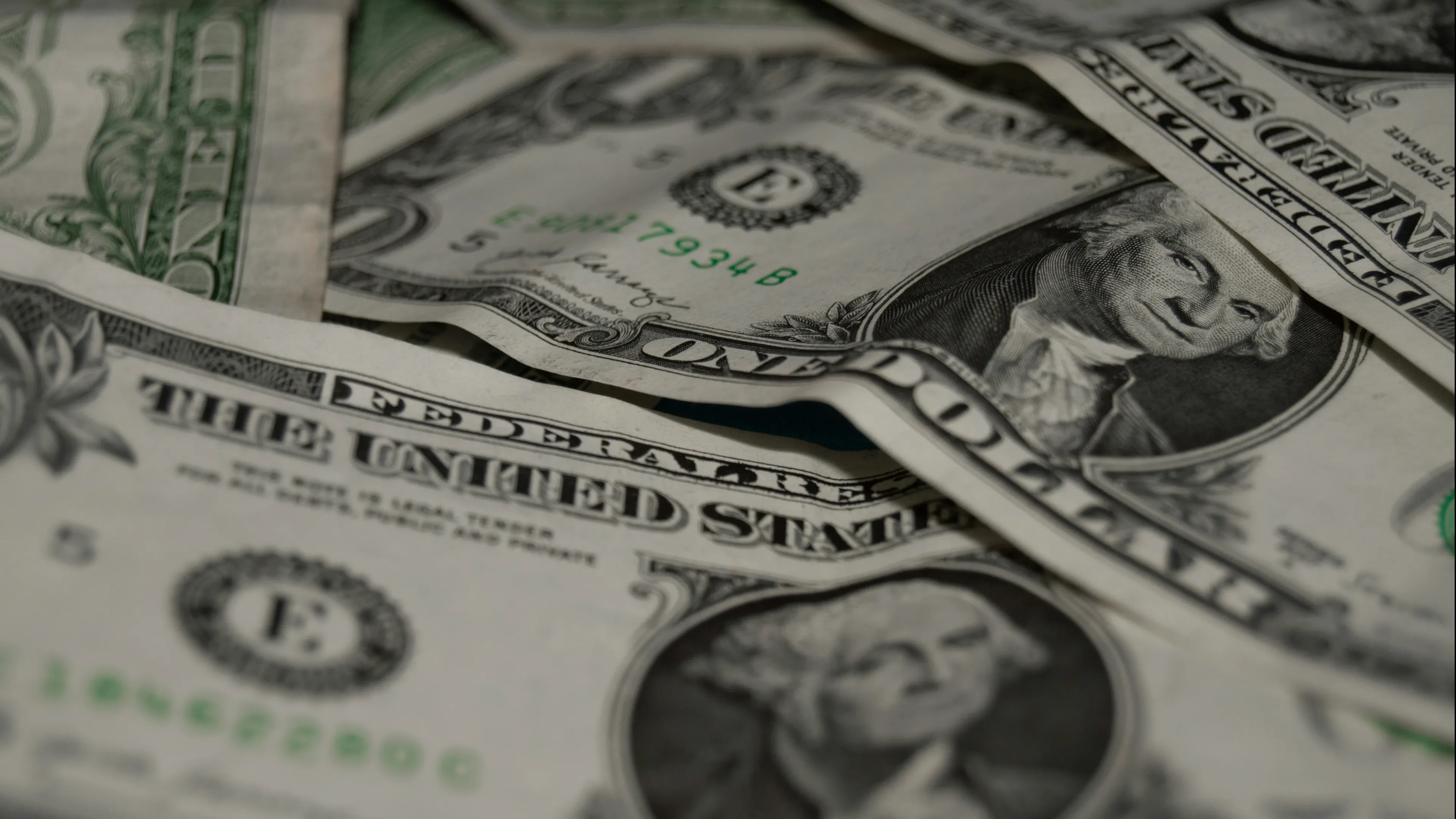
The market is still dominated by the view that the dollar will continue to strengthen, but there is no longer a consensus on this issue. Photo: Niconor Brown / Unsplash.com
The market typically prices in expectations rather than actual events, and the dollar’s performance confirms this. Over the past two years, investors have revised their forecasts for the U.S. currency several times. In June, the number of bets on its appreciation rose to a one-and-a-half-year high, but not everyone in the market believes in a sustained rally.
Playing on Expectations
Starting in October 2024, as Donald Trump’s chances of winning the presidential election became increasingly clear, the dollar began to strengthen: and how else could the market react to the rise of a politician returning to the White House under the slogan “America First”? In mid-January 2025, the dollar index and the dollar’s exchange rate against the euro reached their peaks (109.7 points and $1.02, respectively).
But investors began to reassess their expectations fairly quickly. They started to wonder what exactly Trump’s nationalist policies would mean for the dollar and U.S. markets. By late winter and spring, when he was already president and imposing import tariffs left and right, the “sell America” strategy was in full swing.
But then the situation changed again. The U.S. stock market recovered from the crash triggered by the imposition of global tariffs in April. This was driven by the AI boom and an investor strategy known as TACO, which assumes that the U.S. president verbally threatens partners with extreme measures but does not actually implement them. Treasury yields fell amid expectations that the Fed’s monetary policy would be more accommodative than that of other major central banks, as inflation was slowing. And a new paradigm emerged: “buy America, sell the dollar.”
This strategy reached its limit in the foreign exchange market in late January 2026, when the dollar index fell to 96.2 points and the euro strengthened to $1.2. As recently as February, hedge funds were still holding their most “bearish” positions on the dollar during Trump’s second term, but the war in the Middle East turned the tide.
In March, hedge funds’ net position on the dollar turned “bullish” (expectations for a rise in the dollar outweighed expectations for a decline), and by the end of June, bets on its further appreciation had reached their highest level in a year and a half.
And the dollar again
JPMorgan analysts attributed the recovery in the dollar to a resurgence of investor confidence in the “exceptionalism of the United States,” the Financial Times notes.
Since the start of the war with Iran, the dollar index—its exchange rate against a basket of six global currencies—has risen by 3.2% to 100.8 points, while the euro has fallen by 3.4% against the dollar to $1.14 (as of July 3). The yen, meanwhile, fell to a 40-year low. Investors believed that the U.S. economy would weather the sharp rise in energy prices better than the economies of Europe and Asia. However, even the end of the acute phase of the conflict—with oil prices falling back to pre-war levels—did not weaken the dollar, as markets focused on the resilience of the U.S. economy.
The appeal of the U.S. stock market, bolstered by SpaceX's high-profile initial public offering and the buzz surrounding AI, is also driving an influx of capital from international investors.
“If you’re a foreign investor, you may not like U.S. policy or the current administration, but what level of risk-adjusted return are you willing to give up?” Stephen Englender, global head of foreign exchange research at Standard Chartered, told the FT.
The U.S. Federal Reserve’s monetary policy also plays a significant role. In January, investors expected the Fed to cut rates two or three times as inflation slowed and the labor market cooled. It was also assumed that Kevin Warsh, the new Fed chair, might yield to Trump’s demands to cut rates. This would have led to a drop in yields on dollar-denominated assets and, as a result, a weakening of the U.S. dollar.
But these expectations were not met. Inflation continues to significantly exceed the Fed’s 2% target: in May, core inflation—excluding food and energy prices— stood at 2.9%, up from 2.8% in April. And at his very first meeting in June, Warsh made it clear that he would not tolerate high inflation. In March, April, and May, the number of new nonfarm jobs significantly exceeded analysts’ consensus forecasts.
All of this has led a number of investors to speculate that the Fed will have to tighten monetary policy and raise interest rates as early as July.
However, as early as June, the number of new jobs fell short of market expectations— by nearly half— for the first time since spring .
Weaker labor market data have dampened investors' expectations of an imminent rate hike; they now do not rule out the possibility that, if a hike does occur, it will not happen until late this year or early next year.
The Fed may not adopt a more hawkish stance—which would further support the dollar— warns James Knightley, chief international economist at ING. The latest labor market data was disappointing, and the expected slowdown in consumer inflation in July “should strengthen the case for a prolonged pause in Fed policy,” he believes.
However, the outlook for Fed policy is not the only factor affecting the dollar. The market has stopped anticipating further tightening of the ECB’s monetary policy after the ECB raised its benchmark rate in June. Thus, the difference in expected interest rate trends continues to favor the U.S. dollar.
The Danger Posed by the Dollar
“We felt that the ECB should not have raised rates [in June], and its actions most likely further weakened the euro due to their negative impact on economic growth,” Jeff Yu of Bank of New York Mellon told Bloomberg. The bank now sees the possibility of the euro falling to $1.1, although it does not plan to “actively trade on this.”
Bloomberg notes that JPMorgan Chase and Morgan Stanley have made a similar forecast—that the euro will weaken against the dollar to $1.1 by 2027.
"The euro-dollar exchange rate could easily reach $1.1 as medium-term investors close their short positions on the dollar, while speculators may 'add fuel to the fire' as momentum builds," the Morgan Stanley report states.
A sharp rise in the dollar exchange rate in the second half of 2026 could be one of the most “painful” developments for the market, according to HSBC analysts.
They forecast a gradual strengthening of the dollar through the end of this year and into the first half of next year, but warn: its rise could become “explosive” if the Fed signals that it is prepared to tighten monetary policy more aggressively than markets expect, or if geopolitical tensions flare up again.
"A strengthening dollar will be painful, but in our view, such 'painful trading' in the foreign exchange market could lead to a period of even more explosive dollar appreciation," according to HSBC.
The prevailing view in the market remains that the dollar will continue to strengthen, but there is no longer a consensus on this issue.
For example, currency strategists at Credit Agricole and TD Securities no longer share this view. A number of analysts, including Stephen Jen, CEO of Eurizon SLJ Capital, believe that investors have already largely exhausted the potential for profit from betting on a further strengthening of the dollar, Bloomberg reported.
Bank of America lowered its forecast for the euro from $1.2 to just $1.15, noting that it now holds a neutral stance on this currency pair.
This article was AI-translated and verified by a human editor