Era of cheap airfares may be coming to an end due to war in the Middle East - FT

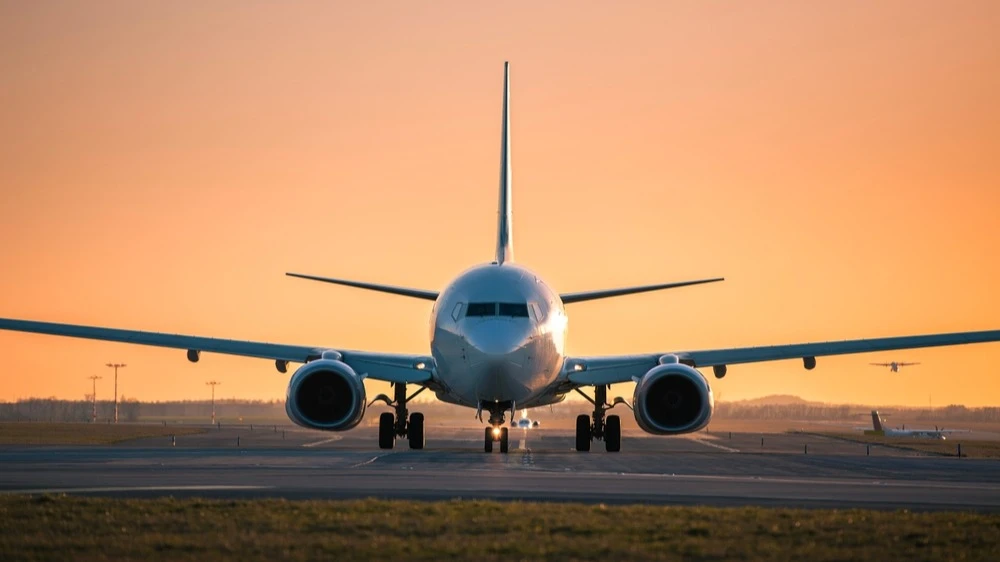
The airline industry has canceled thousands of flights in response to the conflict in Iran. Photo: Jaromir Chalabala/Shutterstock
The sharp rise in jet fuel prices due to the war in the Middle East raises the possibility that the era of cheap flights is coming to an end, says the Financial Times. Experts surveyed by the publication expect low-cost carriers, especially in Europe, to raise prices amid the cancelation of thousands of flights by larger competitors. This crisis may also lead to the fact that some low-cost airlines will cease to exist.
The end of cheap airfare
In response to the conflict in Iran, the airline industry has canceled thousands of flights that would have become unprofitable because of the need to use more expensive fuel. And the longer the conflict continues, the more routes will become unprofitable, says the Financial Times (FT).
The number of flights will decrease, which will increase airlines' fixed costs. This will force them to raise prices even more to compensate for losses, which will ultimately discourage passengers. None of this bodes well for the future of budget travel, especially in Europe, where, thanks to fierce competition and market deregulation, tickets across the continent in the off-season can sometimes cost as little as £17 (roughly $21)
Premium airlines will reduce their short-haul flights in favor of long-haul flights, confirms Andrew Charlton, head of consulting agency Aviation Advocacy. This will reduce competitive pressure and allow low-cost carriers to raise prices systematically.
"As traditional carriers continue to 'rationalize' their short-haul networks, low-cost carriers will have the freedom to raise fares. By citing fuel costs, they may get to the point where they start facing lawsuits for misleading consumers," Charlton argues. No airline wants to be cheap - they all want to be profitable says he. "The era of budget air travel was only a temporary phenomenon. The times of flights for £20 are absolutely coming to an end," says the expert.
So far, according to Google Flights data, air carriers in Europe are cutting prices for summer flights to stimulate demand, the FT wrote. The war in the Middle East has forced passengers to postpone booking tickets: they fear that a shortage of jet fuel will disrupt their vacation plans. Between April 9 and May 6, the cost of airfares for a week in July fell on 27 of the 50 largest European routes to the Mediterranean, the newspaper found.
Big crisis: analysts' opinion
Consolidation will make the industry more resilient but will weaken the competition that keeps fares affordable. This raises the possibility that the era of cheap air travel is coming to an end, the FT writes.
Every few years, the sector is shaken by another crisis, which, like a wall-ball, brings with it a sharp spike in consolidation. The last major shock to global aviation was the Covid-19 pandemic, when the skies emptied. Many airlines received government bailouts and downsized. Since then, the industry has lived on a wave of profit.
- "We've seen quite a few crises - 9/11, a pandemic. This is the 'next Covid.' He predicts bankruptcies, mergers and a more accelerated 'write-off of old airplanes,'" said Andrew Lobbenberg, an airline market analyst at Barclays.
- "I have a feeling that a wave of mergers could affect even the biggest airlines," said Tony Fernandes, co-founder and CEO of Malaysian low-cost carrier AirAsia.
- "The structural changes we are seeing ... will only increase. The strong will become even stronger and the weak will become even weaker," Lufthansa CEO Carsten Spohr said earlier.
Context
The European aviation sector has been consolidating for decades, with many smaller operators either going bankrupt or becoming part of one of three "mega-players": Air France-KLM, Lufthansa and International Airlines Group (IAG) - owner of British Airways, the FT notes.
IAG Holding, whose portfolio also includes Iberia, Aer Lingus and Vueling, this year dropped its bid for a stake in Portuguese airline TAP. Nevertheless, the group, which has significant cash reserves and one of the strongest balance sheets in the industry, is open to new acquisitions.
"We are constantly studying the market," CEO Luis Gallego said during an investor conference call. "You've seen the example of Spirit in the US. Some airlines will face difficulties, they will have to reduce capacity, and this could be an opportunity for us." Moreover, he told investors that two rival airlines have already approached IAG themselves with offers of cooperation.
"We are looking for options where we could apply our group's business model and improve the performance of the companies," he said, adding: "Having more companies in the group is not a prerequisite for us."
Who may not survive the crisis
In early Ma, Spirit Airlines went bankrupt in the US, becoming the first in a string of collapses that top management expects to sweep the world.... Many in the industry are now wondering: who will be next after Spirit? Fears are growing in the US about JetBlue and Frontier, two competitors of the now defunct Spirit, the FT points out.
No sooner had the conflict started than investors started betting against the weakest airlines. The volume of "short positions" (an investment strategy to capitalize on falling share prices) in Hungarian low-cost carrier Wizz Air rose to almost one-sixth of the company's total share capital.
Investors have for years expressed concern that Wizz has too many planes on order, including long-haul airliners that were not needed after a failed attempt to enter the Middle East market. Moreover, the company operates in the toughest price segment, where it faces Ryanair, the ultra-efficient Irish carrier whose fanatical focus on cost-cutting makes it one of the industry's most formidable rivals.
Last month, Wizz Air co-founder and CEO Jozsef Varadi called a special meeting for London journalists to emphasize the company's financial strength.
"This is probably the most important chart today," he said when a slide appeared on the screen showing the company had €2 billion of cash left to fund operations. - There's a lot of noise around, but I don't want to comment on market rumors because all these bets [against us] are just false and unfounded."
This article was AI-translated and verified by a human editor