Fourth day of war, stocks down, Trump offered tanker protection: online


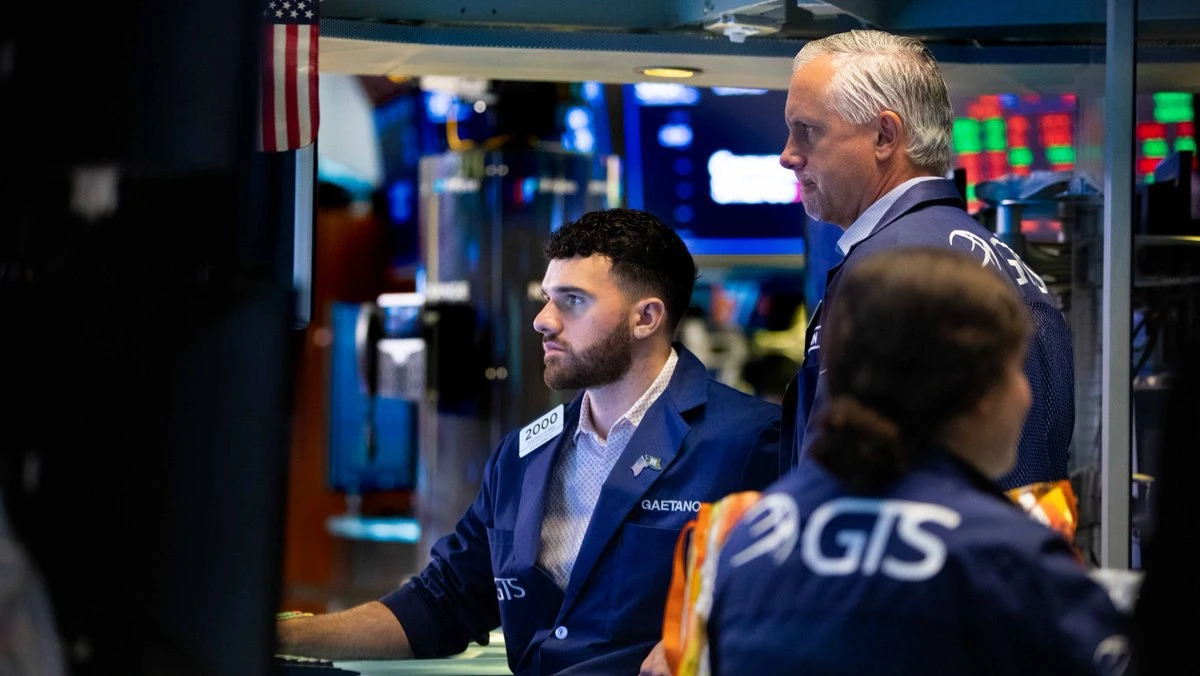
U.S. stocks fall due to rising energy prices amid blockage of the Strait of Hormuz / Photo: X / NYSE
By evening, US stocks managed to partially compensate for the sharp decline in early trading amid fears of a prolongation of war in the Middle East. Investors were slightly calmed by US President Donald Trump, who promised to escort tankers through the Strait of Hormuz by the US Navy if necessary - this will help to curb oil prices. What was happening in the market during the day was followed in this online.
22:00 CET: Trading in New York is complete. After a panic sell-off in the morning hours, when the drop reached 2.5%, stocks managed to partially recover, but still ended the day in negative territory.
- The S&P 500 index was down 0.9 percent, the Dow Jones blue-chip index was down 0.8 percent and the tech-heavy Nasdaq was down 1 percent.
- The VIX fear index rose by 8.4% to 23.2. Any index value above 20 usually indicates an increase in market volatility and uncertainty among investors.
- Gold was cheaper by 3.8%.
- Brent futures for delivery in May added 3.8%.
- The dollar index rose 0.7%.
21:40 CET: Earlier today, two Fed officials said that the escalation in the Middle East has introduced a new uncertainty factor for the regulator. Federal Reserve Bank of Minneapolis President Neel Kashkari, who had previously forecast one quarter percentage point rate cut this year, said at a Bloomberg Invest conference that he is now less certain about that scenario. "Given geopolitical events, we need to get a lot more data," he said.
FRB of New York President John Williams said the regulator needs to see how sustainable the rise in oil prices will be because of the geopolitical crisis.
20:57 CET: The cost of oil has sharply reduced gains on Trump's statement. The S&P 500 index of US broad equity markets is down 0.8%, the tech-heavy Nasdaq is down 0.9% and the Dow Jones is down 0.6%.
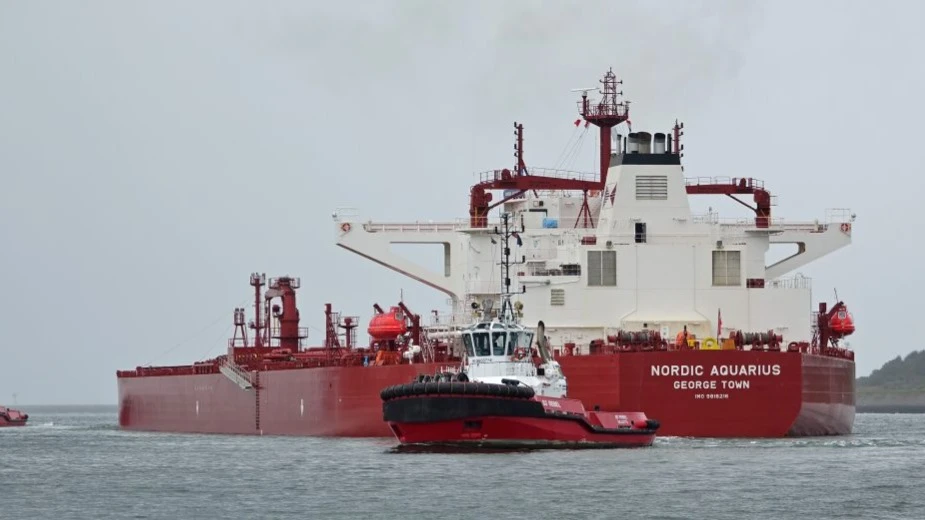
20:55 CET: Trump has unveiled his plan to reduce fuel prices. He promised that the US would ensure tanker traffic through the Strait of Hormuz and did not rule out that the armed forces could be used for this purpose. Trump also directed the U.S. Development Finance Corporation (DFC), the U.S. development bank, to provide financial security guarantees for all shipping in the Persian Gulf.
"IMMEDIATELY, my directive to the International Development Finance Corporation to provide - at a very reasonable cost - political risk insurance and guarantees to ensure the financial security of ALL maritime trade, especially energy shipments passing through the Persian Gulf (...) If necessary, the U.S. Navy will begin escorting tankers through the Strait of Hormuz as soon as possible. The United States will ensure the FREE flow of ENERGY in the WORLD, no matter what it takes," Trump wrote in a post on the Truth Social platform.
20:25 CET: Why hasn't the cost of oil reached $100 as some analysts predicted? Oil has risen in price by more than 15% since hostilities began, but the market reaction remains markedly weaker than during past oil shocks, writes the Financial Times. For example, the 1973-1974 Arab oil embargo drove prices up 260%, the aftermath of the 1979 Iranian revolution by about 160%, and Iraq's 1990 invasion of Kuwait by 180%.
The reasons are twofold: first, developed economies are far less dependent on Middle Eastern oil today than they were in the 1970s. The US has become the world's largest oil producer, and new volumes are coming from Guyana, Brazil and Canada. Second, the market may take into account the approaching US midterm elections. In the run-up to the vote, the Trump administration has an incentive to keep prices down by selling off oil from the US strategic reserve, the FT writes.
According to analysts, prices will depend on the duration and scale of supply disruptions. The baseline scenario for Wang Zhuwei, director of oil trade research at S&P Global Energy, is $80-90 per barrel if passage through the Strait of Hormuz can be restored relatively quickly. If the blockade lasts longer, prices will exceed $100, he believes.
20:08 CET: Bond and equity markets are not pricing in a scenario in which the Strait of Hormuz is closed for an extended period of time, Temos Fiotakis, head of global emerging market currencies and macro strategy at Barclays, said in an interview with Bloomberg TV.
He explained that China, the largest importer of hydrocarbons, is pressuring Iran to restore passage through the strait. Beijing on Tuesday urged all parties to the conflict to ensure the safe movement of ships, and is behind the scenes urging Iranian officials to refrain from steps that could disrupt gas exports from Qatar or other shipments through the strait, Bloomberg wrote.
"That's probably why markets don't go so far as to factor three or four weeks of lockup into prices. But if this risk is realized, the markets are not fully prepared for it now," the strategist warned.
19:29 CET: More than $2 million was withdrawn from Iranian cryptocurrency exchanges in the first hour after the bombardment of Iran began on February 28, according to data from US blockchain research firm Chainalysis. Chainalysis attributes this to both the actions of ordinary Iranians who transferred money in response to increased risks and the operations of exchanges and state-affiliated entities.
19:21 CET: Trump admits oil prices have risen because of the war, but says they will fall once the campaign is over.
He also described the "worst" scenario of events: "I think the worst-case scenario is this: we will finish and then someone as bad as the previous one will come to power. We don't want that to happen."
According to Trump, he wants to see a man at the head of Iran who will put power back in the hands of the people.
19:15 CET: Trump is at the White House commenting on the decision to strike Iran. According to him, he was convinced that Tehran was preparing to strike first. "We were negotiating with these crazy people. My view was that, they were going to attack first," he said(quoted in WSJ). Asked whether Israel's plans to attack Iran had forced Trump himself to act, the president said, "No. I may have been the one who forced Israel to act."
19:09 CET: In an environment of high oil prices and inflation, more balanced portfolios may show more resilience - marking a return of a market where individual stock selection matters, says Bloomberg Intelligence mutual fund analyst David Cohen.
"After a year of hiding behind momentum in tech giant stocks, active managers may finally have a chance to justify their commissions. If tensions over Iran keep oil prices and shipping costs high, and inflation expectations and interest rates remain firm, this will put pressure on growth-oriented funds - with a high concentration of expensive technology securities and a weak presence in the energy and defense sectors," he said.
19:00 CET: The next 18-24 months will be "painful" for investors as markets will have to deal with geopolitical risks and the threat of disruptive artificial intelligence, Soros Fund Management chief investment officer Dawn Fitzpatrick said. "Market participants are facing enormous uncertainty. There's a lot of fatigue at the back end of it all," she said at a Bloomberg Invest conference in New York
18:45 CET: The iShares MSCI Spain ETF, an iShares MSCI Spain ETF tracking company stocks in Spain, is down more than 5.6% after US President Donald Trump threatened to cut off trade with the country. He criticized Madrid for refusing to allow the U.S. military to use Spanish bases for attacks on Iran.
"Spain has behaved terribly," Trump told reporters. - They have wonderful people, but they don't have strong leadership," Trump added. "That's why we're going to stop all trade with Spain. We don't want to do any business with Spain."
18:40 CET: Shares of memory makers, which have been among the best performers in 2026 amid shortages due to the AI boom, also collapsed on Tuesday. Quotes for Micron collapsed 7.3 percent, Western Digital Seagate was down nearly 6 percent, SanDisk was down 5.7 percent and Seagate was down 4.8 percent. Semiconductor equipment makers Applied Materials, Lam Research and ASML are also getting cheaper.
18:30 CET: Microsoft was the only one to avoid the decline of the "Magnificent Seven". Microsoft rose by 0.9%, while Nvidia shares fell by 1.3%, Alphabet by 1.7% and Amazon by around 1%. The Roundhill Magnificent Seven ETF, which tracks the dynamics of this group, lost 1.3%.
18:05 CET: European trading closed strongly down, with the Stoxx 600 composite index down 3.2%. Shares in all sectors fell in price. Even the Stoxx Aerospace and Defense index, which includes the region's largest defense companies, lost more than 3%. Among the most affected - manufacturers of luxury goods. Quotes LVMH fell by 3.5%, and Kering, which owns the brand Gucci, - by 6.4%.
17:55 CET: Shares of software developers have moved into positive territory, outperforming the broad market. The iShares Expanded Tech-Software Sector ETF (IGV) adds 0.9% while the S&P 500 falls 1.3%.
17:38 CET: US stocks are cutting back on their declines, with the Dow Jones and Nasdaq down 1.7% and the S&P 500 down 1.6%. The fear index is down to 16 points.
17:17 CET: Gold has failed to maintain its safe haven status - it's down 4% after four days of gains. Here's how Bloomberg explains it: a sharp rise in energy prices due to the war in the Middle East will accelerate inflation. That in turn will make it more likely that the Federal Reserve will refrain from cutting rates longer. As a rule, a higher rate, as well as a stronger US dollar, reduces the attractiveness of gold, which does not yield interest.
17:10 CET: Goldman Sachs economists still forecast Brent to fall to $60 by the fourth quarter, but note the increased risks. They estimate that if oil rises by $10 and does not fall by the end of the year, GDP growth will slow by 0.1 percentage points year-on-year in the fourth quarter and inflation will accelerate from 2.4% in January to 2.7% in May, with a further slowdown to 2% by December.
17:05 CET: Analysts at Rystad Energy have raised their Brent price forecast for this year from $60 to $64 per barrel. Their forecast assumes that the Strait of Hormuz will be effectively closed to oil tankers for about two weeks, which will reduce supplies to the global market by about 10-11 million barrels per day. But it is difficult to give forecasts now because of the growing geopolitical risk, analysts note.
17:00 CET: Donald Trump said in a phone interview with Politico that the US has an "unlimited supply of munitions" and that defense companies are "working at an accelerated pace to produce everything they need." In turn, Tehran, he said, is running out of launchers. Trump suggested the war could last four or five weeks or end in a few days, and reiterated that he would be open to dialog with the new Iranian government.
In the first 57 hours of Operation Epic Fury, the U.S. hit more than 1,000 targets in Iran, weakening Tehran's missile capabilities and sinking 11 naval vessels, Bloomberg writes.
16:52 CET: Investors are selling everything: each of the 11 sectors of the S&P 500 is down more than 1%. The last time this happened was last April.
16:45 CET: " It's not yet time to buy on recessions," writes Canadian economist David Rosenberg, founder of Rosenberg Research. He believes we should wait until the fear index rises above 50 points - it did so a year ago after the trade war started, and at least 12 times in total since the mid-1990s. "This is usually the ideal time to start investing. Unless the war with Iran is resolved sooner," Rosenberg writes.
Earlier we published recommendations of other famous investors. For example, Steve Iceman, who became the prototype of one of the characters in the movie "The Downgrade," said on March 2 that investors should ignore the war. Mark Mobius believes that the risks of the U.S.-Israeli military campaign dragging on should not be underestimated. Co-founder of Oaktree Capital Management, billionaire Howard Marks advises to avoid emotional decisions.
16:35 CET: Brent and WTI crude futures are up more than 8%. "For me, a lot depends on the oil price," Barron's quotes Deutsche Bank analyst Jim Reed as saying. - Any sustained bounce will undoubtedly trigger a more significant decline in risk appetite, but without that, markets are likely to refocus on macroeconomic data and artificial intelligence pretty quickly."
16:25 CET: The day before, the S&P 500 and Nasdaq were able to recover their declines, which were the first reaction to the war, and move into positive territory at the end of trading. What changed on Tuesday? Investors started to get rid of stocks and bonds en masse amid fears that the conflict in the Middle East will drag on, which could lead to higher inflation, Barron's writes.
Investor attitudes toward the scope and duration of the war have changed dramatically following U.S. Secretary of State Marco Rubio's words that the strongest strikes against Iran are yet to come, as well as Iranian drone attacks on the U.S. Embassy in Riyadh, the closure of the Strait of Hormuz and the evacuation of State Department employees from Bahrain, Iraq and Jordan, explained Bespoke Investment Group co-founder Paul Hickey.
"Monday was one of the strangest trading sessions I've seen in decades in the market: stocks somehow managed to turn in a rally and close in the plus side despite the uncertainty caused by the US-Israeli war with Iran and all the risks it poses to the region," said Global Head of Macro Strategy at Saxo Bank, John Hardy. - However, the market reaction overnight was telling: the US dollar continues to be a safe haven even as US Treasuries came under heavy pressure yesterday".
The Bloomberg Dollar Index, which shows the dollar's ratio to a basket of major currencies, rose 1 percent, the sharpest increase since Ma 2025.
16:15 CET: The VIX index, which measures the expected volatility of the S&P 500 and is known as Wall Street's barometer of fear, rose by 5 points to approach 24. A rise in the index above 20 usually indicates rising market volatility and increased uncertainty among investors.
16:10 CET: Based on early trading, Tuesday could be the worst day for the Dow Jones since April 2025, CNBC reports. The blue-chip index collapsed 2.4%, leading the decline in the top three major indices. The S&P 500 and Nasdaq Composite fell 2.1 percent each.
This article was AI-translated and verified by a human editor