From Children's Events to "18+": Will a New Audience Be the Driver of Build-A-Bear's Growth?
Despite a drop of nearly 50% since the beginning of the year, Wall Street analysts believe that the stuffed animal manufacturer's stock could rise by nearly 90%

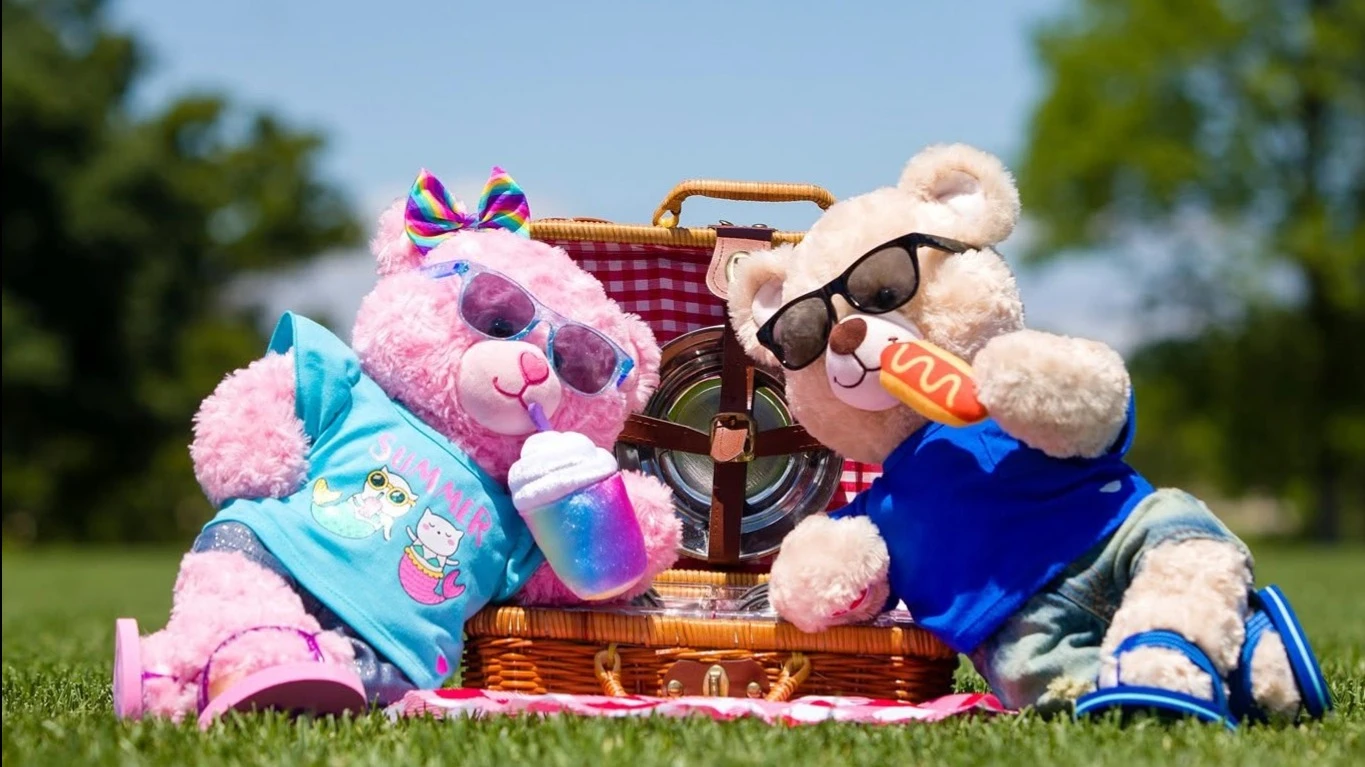
Since the beginning of 2026, Build-A-Bear shares have lost nearly 50% of their value / Photo: Facebook / Build-A-Bear
Build-A-Bear built its business on selling stuffed animals and its unique “build-your-own-bear” concept. However, nearly three decades later, the company is targeting not only children but also adult fans of the brand, capitalizing on nostalgia and expanding its presence in the entertainment industry. How the maker of “plush friends” found new drivers for its business—and why analysts see potential for a 90% rise in its stock price after it lost nearly half its value—is covered in this Oninvest article.
How the bears Who Make Millions Got Their Start
The idea behind Build-A-Bear Workshop—not just buying a stuffed animal, but creating one yourself—was conceived by the company’s founder, Maxine Clark, in the late 1990s. Clark—then the successful president of the major shoe retailer Payless ShoeSource— recalled that a neighbor’s daughter couldn’t find the right toy for her collection in a store and said it would be easy to make one herself. Clark latched onto the “do-it-yourself” concept for her business, and just one year later, in 1997, the project was launched. At Build-A-Bear, children could choose a teddy bear, pick out clothes for it, and receive a “birth certificate.” Now, 30 years later, Build-A-Bear’s market capitalization exceeds $400 million, the company operates more than 650 stores in over 30 countries worldwide, and its product lineup includes both its own brands and licensed ones, such as Disney, Pokémon, and Star Wars.
The President's Bear
From the very beginning, the chain grew largely thanks to Clark’s experience in retail. The entrepreneur developed a detailed business plan for Build-A-Bear covering the next decade: “I even factored in the teddy bear’s 100th anniversary, which was to be celebrated in 2002.” By that time, Clark had planned to open—and did open—her 100th store on Long Island, because it was U.S. President Theodore (Teddy) Roosevelt who became the “godfather” of the teddy bear. While out hunting, the president refused to shoot a bear that had been caught for him—a story of compassion that was eagerly picked up by newspapers and cartoonists. Inspired by these images, a store owner in New York came up with the idea of making a teddy bear and introduced it as “Teddy’s Bear,” playing on the president’s nickname—Teddy.
Build-A-Bear successfully expanded its business in shopping malls in the early 2000s, and its workshops became a popular venue for children’s parties and birthday celebrations. The company went public in 2004 and raised approximately $150 million. The brand’s success depended heavily on shopping center foot traffic, so the 2008–2009 financial crisis hit the business hard: comparable sales fell at double-digit rates. The loss in 2009 amounted to $12 .5 million. Despite closing underperforming stores, the company posted a loss of $49.3 million in fiscal year 2012. Following this, Build-A-Bear appointed a new CEO: Sharon Price John, who had previously built her career at the well-known toy brands Mattel and Hasbro.
Nostalgia, Cruises, and Champagne
“When I joined in 2013, the brand wasn’t broken—the business was,” Price John told CNBC. The new CEO focused on a strategy of profitable growth, and it worked. The company began investing in online sales and diversifying its sales beyond shopping malls—workshops appeared on Carnival Corporation cruise ships, in hotels, and in bustling entertainment venues, helping to create, as the company put it, unforgettable experiences.
Build-A-Bear experienced a new surge in popularity in the 2020s, driven by the rise of the nostalgia trend and growing popularity among adult fans (kidults) who had created their first “stuffed animal friends” as children. Price John noted that Build-A-Bear had become more than just a store: “It’s truly an emotional, memorable experience that creates tremendous value for the brand,” John said.
The company has always targeted families with children as its primary audience, but it has managed to diversify its customer base: more than 40% of its products are purchased by adults and teenagers, according to The Wall Street Journal. To attract customers in the “18+” age group, the company developed a special “After Dark” collection for Valentine’s Day. A teddy bear dressed as a stripper or a lion in a bathrobe holding a bottle of champagne—these designs elicited a mixed reaction from the brand’s fans. The CEO told the WSJ at the time that the company wanted to take changing consumer preferences into account when developing new toys, and the romantic teddy bears were a hit with shoppers. So the collection was expanded with new characters like the “Cuddly Cougar.” The name contains a play on words: “cougar” refers not only to the animal but also to a woman who dates younger men.
A Record-Breaking Year and Changes
Last September, the company’s stock reached an all-time high—about $76—on the back of strong half-year results: despite unfavorable macroeconomic conditions, the company’s revenue grew by nearly 12%, — to a record $252.6 million, according to CNBC. That fall, the company expanded its team by hiring Carmen Flores, a former executive at The Lego Group, as senior vice president of e-commerce and digital experience. For the full year 2025, Build-A-Bear reported a 6.7% increase in revenue to $529.8 million, growth across all business segments, and the opening of more than 60 new stores worldwide.
However, as early as the first quarter of 2026, Build-A-Bear’s revenue fell 2.4% year-over-year to $125.3 million. The online sales segment saw the sharpest decline—26%—while sales through partners and international franchises, by contrast, rose 34%. Adjusted pre-tax profit fell by 14% to $16.9 million—excluding a one-time tariff refund of $7 million. The quarter fell short of the company’s expectations, and Build-A-Bear lowered its revenue forecast by 3–4% to $530 million–$550 million.
On June 11, Price John stepped down from her position; the company described the changes as planned, and John remained on the board of directors. At Build-A-Bear, she was succeeded by Chris Hurt, the chief operating officer and head of customer experience, who has been with the company for more than 11 years.
What Analysts Are Saying
Analyst Eric M. Beder of Small Cap Consumer Research notes in a report from late May (available to the Oninvest editorial team) that the company’s revenue in the first quarter of 2026 fell short of expectations due to weak retail sales, however, EBITDA, which reached $20.7 million, and earnings per share (EPS) of $1.03 significantly exceeded Wall Street’s consensus estimates. M. Beder highlighted Build-A-Bear’s partnership with Walmart. Price increases in the retail business also played a role, “offsetting the negative impact of rising store operating costs,” adds M. Beder, who expects business momentum to improve in the second half of 2026. Small Cap Consumer Research reaffirmed its “buy” rating and maintained its price target at $65—nearly double the current share price.
D. A. Davidson analyst Keegan Cox emphasized in a report (available to the Oninvest editorial team) that he is typically skeptical of claims of “acceleration in the second half of the year,” which the company anticipates: “However, it appears the company has the necessary conditions in place to realize this scenario.” In the long term, D. A. Davidson believes that the international store network could double from the current approximately 215 locations. D. A. Davidson reaffirmed its “Buy” rating and $60 price target.
Since the beginning of the year, Build-A-Bear shares have lost nearly 50% of their value. On Marketwatch, the company has four ratings, all of which are “buy.” The average price target is $61.25, which is about 89% higher than the current price.