How to make money in the volatile oil market: strategies, ETFs and risk hedging

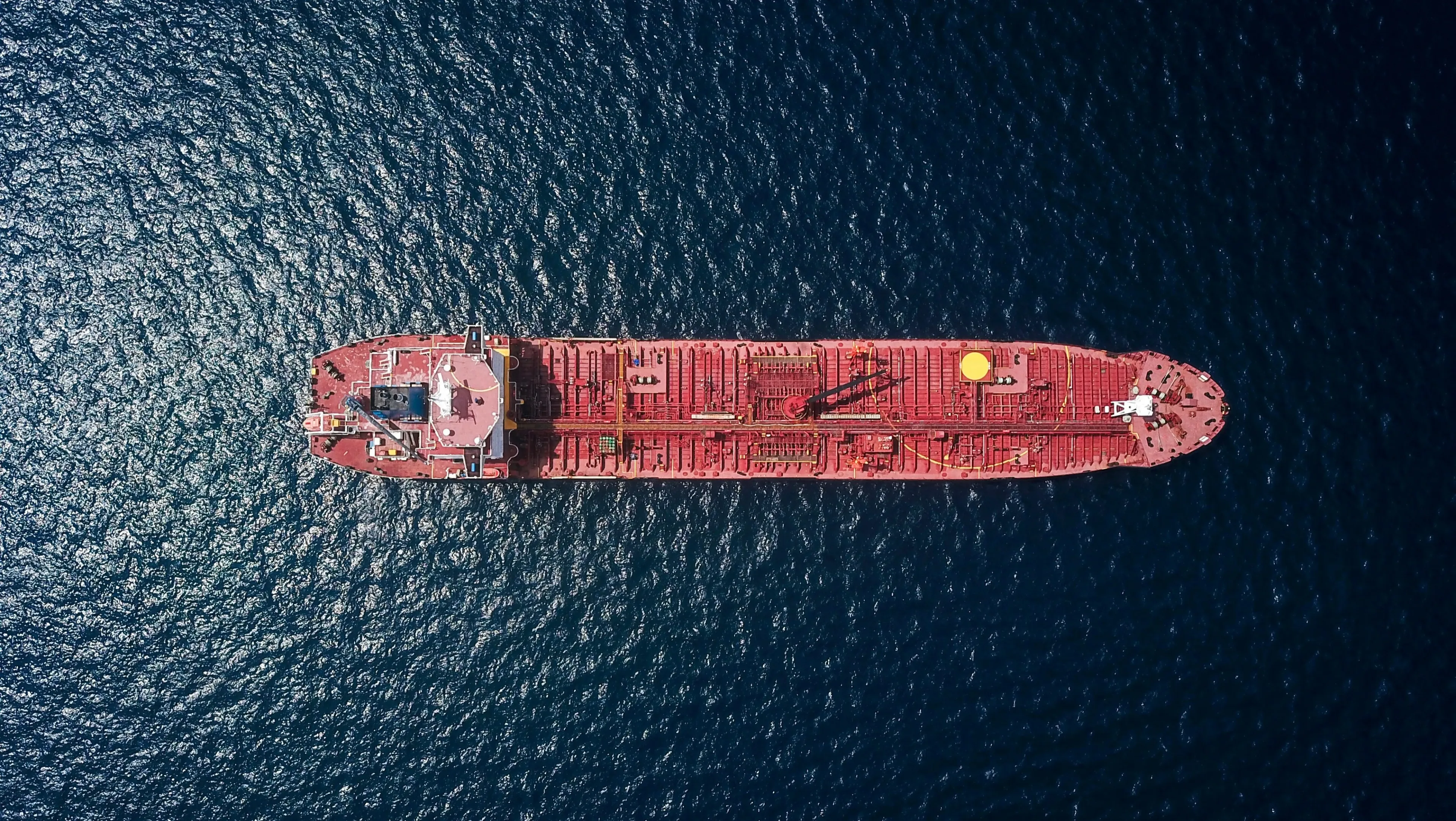
With the outbreak of war in the Middle East, investors from many countries began to trade more actively and earn more on the Brent and WTI oil futures market. Photo: Shaah Shahidh / Unsplash.com
The US-Iran war and the de facto blockade of the Strait of Hormuz have turned the oil market into one of the most volatile in the world. What strategies are used on Wall Street today to make money on the oil market, and which of them are available to private investors? Alexey Golubovich, analyst at Arbat Capital Advisory Services Limited (UK), answers.
How do speculators trade?
With the outbreak of the US-Iran war and the actual blockage of the Strait of Hormuz, volatility and the geopolitical risk premium have become permanent components of the oil market. In May, the price of Brent futures ranged from $91 to $115, and North Sea WTI from $86 to $98. In June, Brent futures traded in the range of $93-97.87, WTI - $92-96.
Investors from many countries - hedge funds, traders and oil company divisions - have become more active in trading and making more money in the Brent and WTI oil futures market. Those who know how to capitalize on the volatility arising from news about the conflict in the Middle East can apply strategies of buying and short-selling oil futures for very short-term speculation.
Speculators in the oil futures market for Brent on ICE and WTI on NYMEX and CME are trading on news from the Gulf, Washington and Israel.
Particularly strong growth in futures volumes - up to hundreds of thousands of new contracts per day - was observed in spring, when players were building up positions before the escalation in the Strait of Hormuz region. In May, the market pledged price fluctuations of 5-10% per day and 10-15% per week, which was reflected in the cost of futures. Volatility was accompanied by the situation when near-term contracts were more expensive than far-term ones (backwardation).
Traders were more likely to use simple strategies tied to the news background, so-called headlines-driven trading, reacting to media headlines.
On the news of escalation, attacks, mutual threats between the US and Iran, oil prices soared to $100 per barrel and higher. Traders opened long positions or bought call options.
Reports of de-escalation, including talks on opening the Strait, caused prices to fall - up to 15% in a day. And traders opened short positions or put options and closed long positions.
There was also trading on volatility: market players bought oil options with the expectation of strong intraday price fluctuations (straddle / strangle strategies, in which you make money on strong price fluctuations in either direction).
Hedge funds, on the other hand, prefer the spread trading strategy - it consists of trading on the price difference between Brent and WTI prices, and on spreads between futures for different months, also to reduce risks from highly unexpected government announcements.
How market strategies have changed
By early June, companies dealing with physical oil began to change their trading strategies. Producers and refiners are now more actively insuring against price fluctuations, while oil traders are betting on possible supply disruptions and increased volatility. Prices increasingly reflect the risk premium. At the same time, arbitrage strategies continue - traders make money on the difference between Brent and WTI, as well as on the divergence of futures and swap prices.
The dynamics of funds' and traders' investments in futures since the beginning of the blockade of the Strait of Hormuz can be divided into several stages.
- In March-April , hedge funds and other market participants actively built up net long positions, bringing them to their highest levels over the past four years. The growth of geopolitical risk premium amid reports of attacks and mined straits stimulated speculative purchases of oil futures.
- In May, the situation changed: some investors started to reduce long positions and increase short positions, waiting for negotiations on the opening of the spill, and many market participants switched to trading on Brent-WTI price spreads instead of betting on the dynamics of one oil grade.
By the end of last month, a mixed picture emerged: investors continued to hedge long positions, while speculators were partially locking in profits.
- By early June, the market positioning was no longer as bullish as it had been a month earlier. However, many participants were still counting on a possible price rebound in case of a new escalation of the conflict. And their bet played out: on Sunday, July 7, Iran attacked Israel with missiles. August Brent crude futures eventually jumped in price by more than 4.5% - on Monday morning they were trading at $97.3.
Since the beginning of the conflict between the United States and Iran, the market has been increasingly suspicious of individual players taking advantage of leaked information from the authorities of the countries involved in the conflict. In early Ma, Reuters , citing traders and analysis of stock exchange data, reported a series of bets on a $7 billion drop in the price of oil in Ma and April. All of them were made before major US decisions on Iran, which were announced by US President Donald Trump.
In the US, the US Commodity Futures Trading Commission (CFTC) is investigating such trading activity. It launched its own investigation in April. In May, the WSJ wrote that the CFTC was interested in the transactions of at least three companies - London-based Qube Research & Technologies, Forza Fund and TotalEnergies Totsa. Shortly before Trump's March 23 announcement that he had decided to postpone strikes on Iran's energy infrastructure, trading spiked in the market during off hours. Within minutes, players had traded more than $800 million worth of oil futures. After oil prices subsequently fell to 13%, at least five companies made $5 million or more each.
How do you measure the results of a trade?
Europe's largest oil companies have significantly improved their financial performance against the backdrop of the war with Iran. BP's profit more than doubled in the first quarter of 2026 compared to the same period last year - to $3.2 bln. Shell showed an increase in quarterly profit by 23% year-on-year to $6.9 bln, TotalEnergies - by 29% to $5.4 bln.
American oil companies (Exxon, Chevron, ConocoPhillips) expect profit growth at the end of the second quarter.
Wall Street banks, including Wells Fargo, JPMorgan and Citigroup, also reported a rise in trading revenue - thanks to volatility. Citi reported record quarterly revenue for the past decade. Its fee income from stock market trading rose 39%. JPMorgan's quarterly earnings jumped 13%, thanks to record trading revenues and a rebound in deal activity. The "market" division's revenues rose 20%, including a 21% increase in fixed income and a 17% increase in equity trading.
What's a private investor to do?
One option is to combine a portfolio of futures with oil stocks during such a volatile market. It is better - and safer - to use U.S. oil and gas equity ETFs - XOP, XLE, and USO, which tracks the futures price of North Sea WTI and related products.
It is better to form your own trading strategy in such conditions based on the analysis of Commitments of Traders (COT) reports of the U.S. Commodity Futures Trading Commission. They are issued on a weekly basis.
These reports contain information on long and short positions in oil and oil products (options and futures) of oil producers, managers and other market participants. They also include information on bets on the Brent futures contract (code 06765T), which is traded on the NYMEX floor. But here it is important to understand that the data on it does not fully reflect the positioning of market participants on this oil grade. In this case, it is better to use similar reports of ICE Futures Europe Commitment of Traders, because the main volumes of Brent are traded on the ICE floor.
For short-term investments in oil futures (from a few days to 2-3 months maximum) in conditions of high volatility and uncertainty, one should proceed from the following main factors of price formation:
- near-term oil contracts are significantly more expensive than long-distance contracts due to physical supply shortages;
- sharp price hikes of up to 15% per day are possible on the news about the development of the conflict in the Middle East. In addition, a collapse in oil prices cannot be ruled out if there is a breakthrough in the peace talks between the US and Iran.
It is important to keep in mind that you should not hold large positions for more than a week without hedging. You should also keep an eye on the transition of current futures contracts into next months' contracts, as sharp price fluctuations are possible during this period.
You can use strong price dips to buy futures contracts and other assets.
It is better to fix the profit in installments - for example, half when the futures price grows by 10% or more.
It is also possible to consider short selling (short) after sharp price spikes caused by overly optimistic statements of politicians or expectations of a quick resolution of the situation, if the fundamentals do not support such growth.
In such a market environment, more conservative ("volatility neutral") strategies are also possible. They include:
- buying call and put options simultaneously with close strike prices for 1 to 4 weeks, under the expectation of strong market movement in either direction on possible important news (new negotiations or reaction to military incidents);
- selling a near option contract and buying a far option contract. This strategy can be profitable if the difference between near and far contracts remains stable.
Special attention should be paid to risk management. For each position it is recommended to set a stop-loss in advance at the level of 3-7% of the entry price, adjusting it depending on the current market volatility.
Does not constitute an investment recommendation.
This article was AI-translated and verified by a human editor