Interparfums: How a Small-Cap Company Is Capitalizing on the Love for Luxury and David Beckham

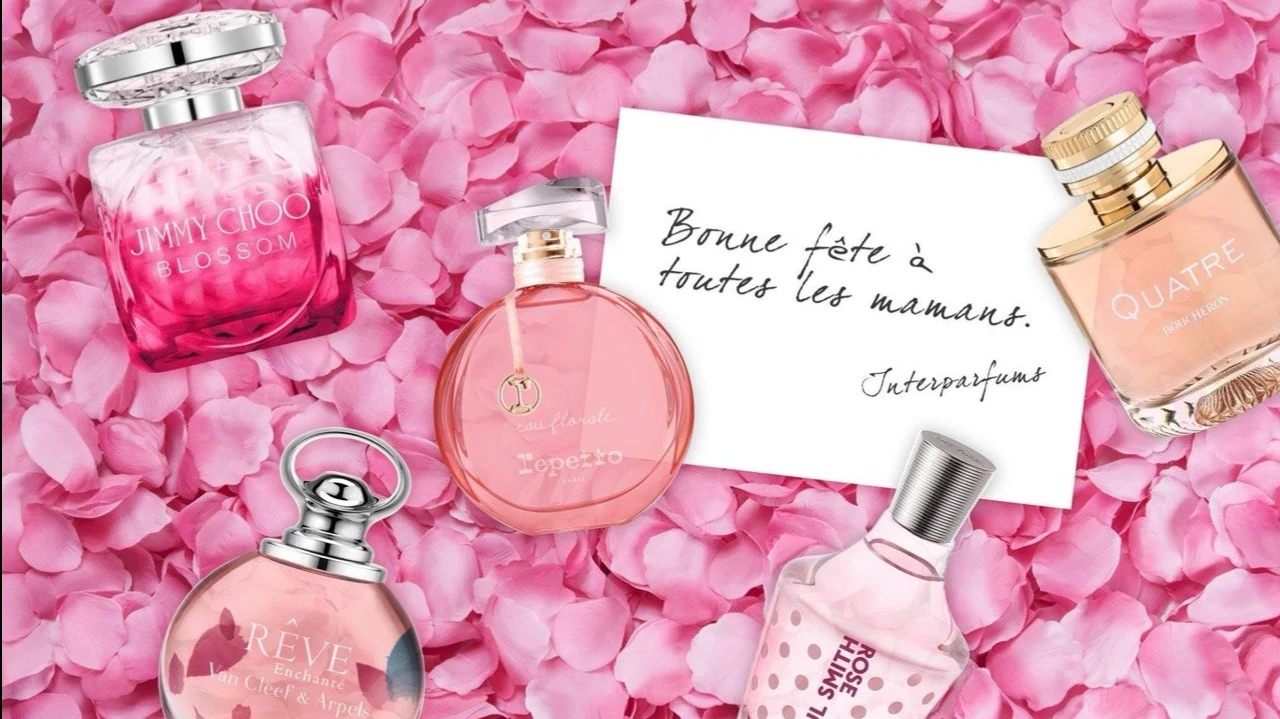
Interparfums shares are currently trading at a 16.5% discount compared to a year ago, but their value has risen by 36% since the beginning of 2026 / Photo: interparfumsinc.com
Interparfums manufactures perfumes under license for well-known fashion houses and luxury brands, but the company itself usually remains in the shadow of its star partners. Its clients include Montblanc, Jimmy Choo, Coach, DKNY, Guess, Kate Spade, and another dozen or so big names. Fragrances from David Beckham and Longchamp are on the way. How does a small company make money from the most affordable luxury goods, and how does it plan to sustain its growth? Find out in this Oninvest article.
Brand for Rent
Interparfums began in 1982, when Jean Madar and Philippe Benassen—graduates of the French business school ESSEC—were researching the market in search of their own business idea. The idea struck them while they were conducting research for a clothing company that wanted to launch a perfume. The entrepreneurs decided to enter the industry themselves. At first, they sold mass-market fragrances, but gradually realized that to grow, they needed brands with a history. At that time, licensing in the fragrance industry was rare: brands typically produced their own fragrances.
Interparfums’ current market capitalization is approximately $3.58 billion. The company’s portfolio includes more than two dozen brands, among them Montblanc, Jimmy Choo, Coach, DKNY, Guess, and Lacoste, and it distributes its products in more than 120 countries worldwide.
Perfume — Affordable Luxury
From the very beginning, Interparfums did not have its own production facilities. The company works with a fashion brand that has signed a licensing agreement to produce a perfume to develop an overall concept—from the fragrance itself to marketing—then outsources production and handles the distribution of the finished product.
Since licensing agreements are signed for years and decades and can be renewed indefinitely, Interparfums keeps interest in the brand alive by regularly releasing limited-edition and seasonal versions of existing fragrances and launching new blockbuster — the flagship fragrances of the line — while allocating about 20% of its revenue to advertising.
One of the company’s key drivers is the growing interest in fragrances among both men and women: “Perfume is an affordable way to ‘invest’ in your favorite luxury brands without buying their more expensive products,” explains Jean Madar, Chairman of the Board of Directors and CEO of Interparfums.

Burberry: A British-Style Divorce
Interparfums expanded its business in Europe and the U.S. and went public quickly—in 1988— but in an interview with the Fragrance Foundation, Philippe Benassen, head of the company’s European division, called the contract with the British fashion house Burberry, signed in 1993, the “real turning point”: “From that moment on, our strategy became clear—we would leverage the brand’s strength and bring its history into the world of perfumery.” The partnership with Burberry propelled the company into the luxury fragrance market and became the main driver of Interparfums’ growth for the next two decades.
The contract with Burberry was renewed several times, but in 2012, the British group decided to regain control of its fragrance business. The fashion house believed that it would be more effective to develop this division on its own. Burberry paid Interparfums €181 million to terminate the licensing agreement.
For Interparfums, 45–50% of whose revenue depended solely on Burberry, this posed a challenge. The share of other brands in its portfolio was highly fragmented. But Interparfums did not seek a new “anchor” and instead continued to develop its brand portfolio.
In the end, Burberry's departure was not a disaster for Interparfums. In the third quarter of 2013, Interparfums’ revenue excluding Burberry rose by 45% to $126.8 million, but including Burberry, it fell by 23.8% (the brand exit effect). The company saw the emergence of several new bestsellers that are now driving sales: the men’s fragrance Montblanc Legend and the women’s fragrance Flash by Jimmy Choo, which delivered sales growth of 57% and 56%, respectively.
The American Dream
In 2015, Interparfums signed a deal with Coach, an American brand in the affordable luxury segment known for its iconic leather bags. The partnership proved successful: as early as the following year, Coach Eau de Parfum hit the shelves, becoming the flagship women’s fragrance, and a year later, the men’s version was launched. The success of Coach for Men came as a surprise even to Interparfums itself: by 2017, Coach’s sales had grown by 149%, reaching $57.5 million.
Coach proved to be one of Interparfums' most reliable growth drivers. Consumers loved and recognized this "casual luxury" brand and began eagerly purchasing its fragrances, which were associated with that same image.
People buy it in large bottles
The post-COVID years have been very successful for the company. “Customers have started buying not just one fragrance, but two—and in large bottles,” said Philippe Benassen. His partner Madar added in an interview with Forbes that women used to wait until they had finished their old fragrance before buying a new one—which took about two years. Now it has become fashionable to have “a variety of different fragrances to match different moods and aspects of one’s personality”. The growing popularity of perfume among men also played a role—the company was around back when many men used nothing but deodorant.
As a result, in 2021, the company’s net revenue was 22% higher than its pre-pandemic 2019 level in Europe and 26% higher in the U.S., and in 2022, it was 24% higher. But then growth began to slow—the fragrance business began to return to its usual growth rates.
David Beckham takes the field
For the full year 2025, Interparfums’ revenue grew by 2% to $1.49 billion; the company called the result a record. Diluted earnings per share (EPS) rose 2% to $5.24. Both figures exceeded the company’s own forecast.
In the first quarter of 2026, revenue increased by 2% year-over-year to $345 million, and net income also rose by 2% to $43 million. Among the leaders in sales growth were Roberto Cavalli (+32%), Coach (+30%), Montblanc (+14%), and GUESS (+11%). The company maintained its full-year sales forecast at last year’s level—$1.48 billion—given the geopolitical situation in the Middle East and slowing demand in Western Europe and the Asia-Pacific region.
In January of this year, Interparfums added new brands to its portfolio: the company signed 20-year licensing agreements with soccer player David Beckham’s fragrance brand and with the Nautica brand. The licenses will take effect at a later date. Interparfums expects that the partnership will elevate the status of the David Beckham line by increasing the celebrity’s direct involvement in the process. Coty, the previous creator of David Beckham’s fragrances, has been sued by his representatives: it is accused of damaging the brand’s image, including through the use of inappropriate retail locations (such as gas stations).
What Analysts Are Saying
Lauren Romeo, a portfolio manager at Royse, a fund specializing in small-cap investments, believes the company has “excellent long-term prospects.” This is partly due to its substantial marketing budget: “Interparfums generates nearly $1.5 billion in annual revenue and typically allocates about 21% of sales to advertising and promotion. This scale of marketing investment, combined with partnerships with strong brands, significantly increases the likelihood of success for new product launches in an industry where more than 1,500 new fragrances are introduced annually—and about 90% of them fail.”
Among the company’s other strengths, Romeo notes the premium pricing of luxury brands combined with the absence of in-house manufacturing, which ensures a gross margin of over 60%, stable free cash flow, and an average long-term return on invested capital (ROIC of about 35%). The fund manager believes that the company’s growth will resume in 2027, as plans include not only the launch of major new fragrances from leading brands but also the development of its own luxury brands—Solferino and Goutal. Romeo estimates this segment to represent an additional potential market worth approximately $5 billion.
In their June report (available on Oninvest), TD Cowen analysts Jonna Kim and Oliver Chen do not expect the company to make a breakthrough this year, but believe that 2027 will be a turning point for the company—with plans to launch new brands and accelerate growth. The first fragrances from the Parisian fashion house Longchamp and Off-White—a brand that bridges streetwear and luxury and is known for its collaborations—will hit the market. TD Cowen’s recommendation is “buy,” with a target price of $110. This is approximately $5 less than the company’s current share price.
Overall, Wall Street is optimistic: all seven analysts covering the company recommend buying its stock (five “buy” recommendations and two “overweight” recommendations), according to MarketWatch. The average price target is $114.2.