June could be the worst month for Microsoft stock since 2000
The day before, the company announced its decision to raise prices on Xbox consoles. The stock continued to fall


Microsoft's stock fell 21.6% in June. Photo: Maksim Ladouski/Shutterstock
Microsoft’s stock fell 21.6% in June, approaching its worst monthly performance since 2000. This decline reflects a broader outflow of capital from the “Magnificent Seven” group of companies and profit-taking by investors amid massive AI spending by big tech firms, according to MarketWatch. News on Thursday that Xbox game console prices would rise due to higher component costs put additional pressure on Microsoft’s stock price.
Details
At the close of trading on June 25, Microsoft shares fell 3.5% following the company’s announcement that it would raise prices on Xbox game consoles. As a result, starting August 1, the price of the 512 GB Xbox Series S will increase by $100 to about $500, while the 1 TB models will go up by $150. The price of the base model Xbox Series X will now start at approximately $750. “Last October, we raised the prices of Xbox consoles in the U.S. by $20 to $70,” the company stated in its blog. “We had hoped that another price increase wouldn’t be necessary <...> [But] the prices of storage and RAM for consoles have more than doubled,” Microsoft noted. The company now expects the cost of components to “double again” by the fall of 2027.
Against this backdrop, Microsoft shares fell to 485th place out of 503 in the S&P 500 index on Thursday based on performance since the start of the month, according to Dow Jones Market Data. In addition, Microsoft shares have posted the weakest performance among the “Magnificent Seven” in June, MarketWatch notes, emphasizing, however, that all seven leading tech giants are down this month.
Microsoft's stock has fallen 27% since the start of the year. However, in Friday's premarket trading, it is up 1%.
What People Are Saying in the Market
Yi Fu Li, an analyst at Benchmark Company, believes that the pressure on Microsoft’s stock is linked to the overall weakness of the technology sector. According to him, the market is seeing a trend toward profit-taking as investors try to assess the scale and payback period of big tech companies’ increased spending on artificial intelligence. MarketWatch notes that Alphabet, Amazon, Meta, and Microsoft alone plan to allocate a combined total of about $700 billion to the development of their AI projects this year.
At the same time, Li emphasized that Microsoft has a “sustained positive free cash flow.” This confirms that the company is “focused on the long term” rather than simply reacting to short-term demand. The strategist noted that Microsoft remains one of the “best ways” to invest in the AI sector and views the current decline in its stock price as a good buying opportunity.
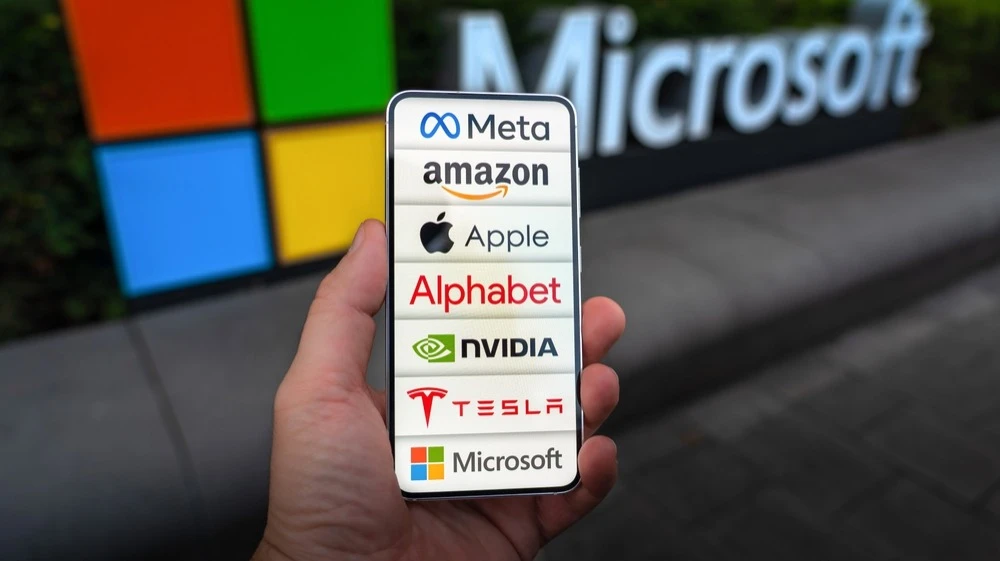
“However, in Microsoft’s case, there is an additional factor,” noted Ishan Majumdar, an analyst at Baptista Research. “Since Microsoft’s capital expenditure forecast for fiscal year 2026 is approaching $190 billion (an increase of more than 60% year-over-year), and free cash flow has declined by about 10%, the market is reevaluating the stock: it is shifting from a company with steadily growing cash flow to a story focused on heavy infrastructure,” he explained (as quoted by MarketWatch).
Analyst Baptista added that investors who held positions in Microsoft, viewing it as a source of stable free cash flow, are now “forced to endure a cycle of high capital intensity that they did not sign up for.”
At the same time, Majumdar agreed with Li that Microsoft’s fundamental business metrics remain unchanged. “With a forward P/E ratio of about 22x compared to the sector average of 32x, the valuation gap is hard to ignore,” he noted, concluding that the current sell-off looks more like “a reassessment of the path to profitability than a verdict on the tech giant’s business itself” (quoted from MarketWatch).
The Wall Street consensus forecast also confirms the experts’ optimism. The overwhelming majority of Wall Street analysts—59—maintain a “Buy” (Buy and Overweight) for Microsoft shares, while three recommend “Hold.” At the same time, there are no “Underweight” or “Sell” ratings at all.
This article was AI-translated and verified by a human editor