March could be the best month for the US dollar in more than six months. What are the risks?

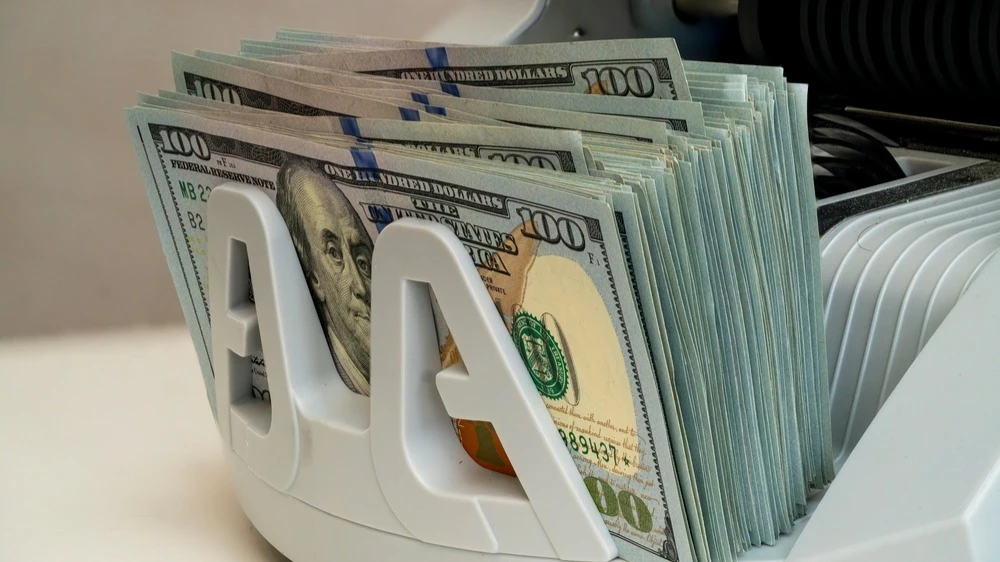
The US dollar may record its best March performance since July last year amid war in the Middle East / Photo: Stockology Denis Grishyn / Shutterstock
The US dollar is on its way to its best monthly performance since July 2025. The conflict in the Middle East forced investors to change their tactics in favor of the U.S. currency, Bloomberg writes.
Details
Bloomberg Dollar Spot index (reflects the dynamics of the dollar against a basket of world currencies) in March added more than 2% - it was supported by investors' demand for the U.S. dollar as a protective asset amid the ongoing conflict in the Middle East. Also the growth of quotations of the American currency was promoted by the decrease in expectations of the Fed's rate cut after the jump in energy prices.
Thus, March may become for the U.S. dollar the best month since July 2025 (then the dollar's growth against a basket of currencies of other countries amounted to 3.4% on the back of strong U.S. macroeconomic indicators, the revision of Fed rate expectations and Washington's trade agreements, noted in late July Reuters), writes CNBC.
Context
The growth that the U.S. currency has been showing since the start of the conflict in the Middle East has been a sharp reversal for it - in the run-up to the escalation of the war in late February, the U.S. dollar had declined for four consecutive months, Bloomberg recalls.
On March 27, strategists at JPMorgan Chase took a bullish stance on the dollar for the first time in a year. Banks such as Goldman Sachs and Deutsche Bank started 2026 with forecasts for a weaker U.S. dollar - largely based on expectations that the Fed would continue to ease policy. But now speculators in the futures market have switched to betting on the U.S. currency's rise, whereas in mid-February their sentiment was the most bearish in about five years, Bloomberg writes.
"Short positions on the dollar in early 2026 were unprepared for this development [weeks-long conflict in the Middle East and a spike in energy prices]," said Stephen Englander, head of G10 currency research at Standard Chartered Bank. While traders are closing short positions on the U.S. currency and energy prices remain high, Inglander maintains his forecast for further dollar strength, which he maintained as far back as early 2026. He estimates that the U.S. currency could end the year at around $1.12 per €1 - rising to its highest level since Ma (€1 is now worth around $1.15).
The Bloomberg Dollar Index is down about 8% in 2025, posting its biggest drop since 2017. Demand for the U.S. currency was weakened by three Fed rate cuts last year, as well as U.S. President Donald Trump's trade wars, which raised concerns about possible outflows from U.S. assets.
What are the risks to the US dollar
The war in the Middle East is heightening investor concerns about possible long-term capital outflows from the U.S. and the declining role of the dollar - both amid Trump administration policies and the country's worsening fiscal outlook due to military spending, Bloomberg notes.
The U.S. dollar's position as the central currency of the global financial system has been unchallenged for decades. But Deutsche Bank this month noted that the war is testing its role as the main currency in the global oil trade, pointing to a possible shift toward greater use of the Chinese yuan.
The relevant question remains whether the markets' attention will shift to the risks of U.S. economic growth amid rising energy prices, Bloomberg notes, emphasizing, however, that the U.S. looks relatively protected due to its status as a major oil producer.
As strategists at Goldman Sachs noted on March 24, increased worries about slowing U.S. economic growth are "likely to restrain broad-based dollar strength". In Morgan Stanley, in turn, March 25 indicated that the U.S. dollar will weaken as economic risks increase.
The crisis in the Middle East will trigger a jump in U.S. inflation to 4.2% this year, the highest among G7 countries, according to an interim forecast by the Organization for Economic Cooperation and Development (OECD) presented on March 26.
This article was AI-translated and verified by a human editor