March could be the worst month for gold in 17 years
Despite rising on Tuesday amid hopes of an end to the war in the Middle East, the metal has lost about 16% of its value over the month

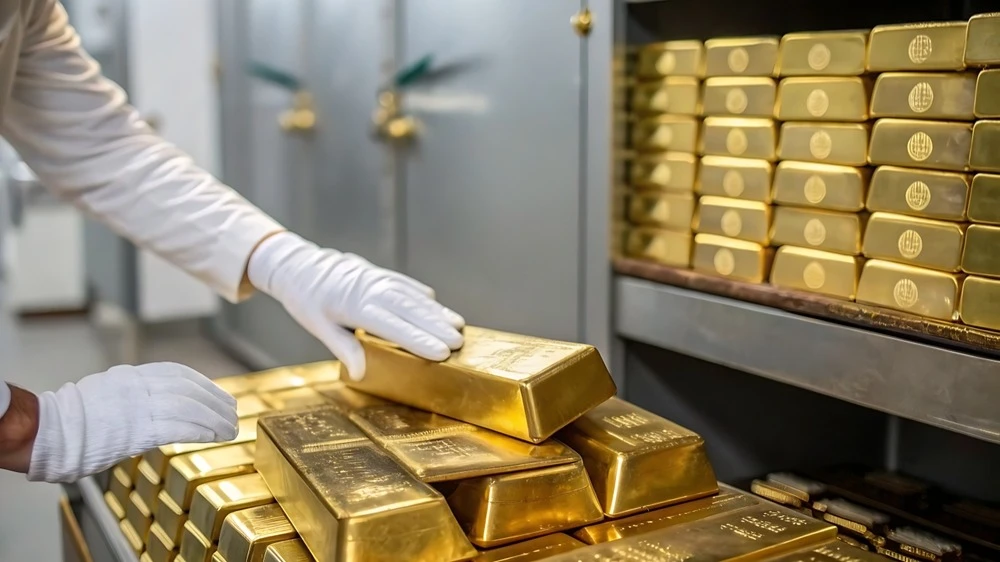
Spot gold rose by 1.7% in trading on March 31 / Photo: Royal studio 1 / Shutterstock.com
On Tuesday, the price of gold rose amid reports by The Wall Street Journal that US President Donald Trump is ready to end the war with Iran even if the Strait of Hormuz remains closed. However, this growth will hardly help the precious metal to recover its monthly losses - gold is preparing to end March with the worst performance in more than 17 years, writes Reuters. Demand for the metal last month was pressured by lower expectations of easing monetary policy in the U.S., rising energy prices and strengthening of the U.S. dollar against the backdrop of the war with Iran.
Details
Spot gold rose by 1.7% on March 31, reaching $4589 per ounce, the highest since March 20. U.S. gold futures for delivery in April rose 0.6% to $4560.
Gold prices are growing for the second day in a row. On March 31, support for precious metal quotations, among other things, was provided by the publication of The Wall Street Journal, which said that U.S. President Donald Trump told aides that he was ready to complete the military campaign against Iran, even if the Strait of Hormuz remains largely blocked, notes Bloomberg.
However, on the whole, in March, the value of gold, traditionally considered a hedging instrument for inflation and geopolitical risks, fell by 16%. Thus, at the end of March, gold may record the most significant monthly decline since October 2008. Nevertheless, the precious metal grew more than 5% during the quarter, taking into account the historic high of $5594.82 reached on January 29.
"The current rebound in gold prices can be described as a 'dead cat bounce' - that is, very little growth," said independent analyst Ross Norman (quoted by Reuters). - 'If Donald Trump can get out of what threatens to be a protracted conflict, we could see oil prices and the dollar decline, which would be positive for gold. But so far we have not come to that," he added.
What the market is saying
Gold has fallen 16% since the U.S.-Israeli war against Iran began on February 28. Meanwhile, the U.S. dollar is heading for its biggest monthly rise since 2024, making gold denominated in the U.S. currency more expensive for buyers, Reuters explains. In addition, the month-long war in the Middle East has caused oil prices to spike, raising the risk of a global recession.
"Markets are trading purely on headlines, although in reality there has been little change [in the situation in the Middle East]. This suggests that if a peace agreement appears on the horizon, gold will rise sharply. Conversely, if a ground invasion by U.S. forces [in Iran] begins, gold will go in the opposite direction," said David Wilson, director of commodity markets strategy at BNP Paribas SA (quoted by Bloomberg).
In addition, an important factor that influenced the cost of precious metal in the last month Reuters calls the expectation of market participants "hawkish" monetary policy in the U.S. amid rising inflation rates due to rising energy costs. According to CME FedWatch Tool data, market participants have almost completely ruled out the likelihood of rate cuts in the U.S. this year, although at least two cuts were expected before the war began in late February, Reuters writes.
However, not everyone agrees with this position: "We think this is excessive," said analysts at UBS Global Wealth Management on March 30. - We still expect Fed policy easing this year" (quoted by Bloomberg). Also in Goldman Sachs on March 31 said that they still expect gold prices to rise to $5400 per troy ounce by the end of 2026. The strategists cited continued buying by central banks and the expectation of two more U.S. interest rate cuts this year as arguments, Bloomberg points out.
This article was AI-translated and verified by a human editor