Morning in New York: Investors Remain Cautious

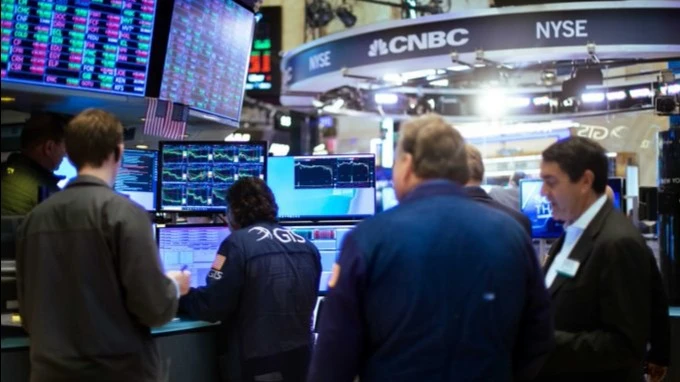
Freedom Broker assesses the risk-reward balance for the upcoming session as neutral, with average volatility / Photo: X / NYSE
A daily review and forecast of events in the U.S. stock market by Mikhail Denislamov, Deputy Director of Capital Markets Research at Freedom Broker.
We expect
The upcoming session will take place against the backdrop of a further deterioration of the situation surrounding key energy routes in the Middle East. The U.S. continues to carry out strikes on Iranian targets. Secretary of State Mark Rubio stated that Washington remains open to negotiations, while Tehran is not yet willing to engage in serious dialogue. An incident in the Red Sea has added to the risks: three tankers carrying Saudi oil bound for China and India turned back following threats from the Houthis. This creates the risk of supply disruptions along yet another route. Against this backdrop, oil prices are rising again, which supports the energy sector but increases pressure on the transportation sector and consumer industries that are sensitive to fuel costs.
Today’s macroeconomic calendar is virtually empty. The only significant release will be the MBA mortgage applications data for the week ending July 17. During the same period last year, the figure fell by 2.7%. These data will have a limited impact on trading activity. The focus will be on foreign policy factors, oil prices, and corporate earnings reports.
Alphabet’s (GOOGL) quarterly results, which will be released after the close of the main trading session, could boost investor sentiment. The ideal signal would be an upward revision to capital expenditure guidance—enough to confirm demand for infrastructure but not enough to raise concerns about a budget race. Even more important will be comments on the return on investment—specifically, the growth of Google Cloud, the adoption of its proprietary AI chips, and the impact of AI on search advertising. Market participants are likely to react more negatively to an excessive increase in spending than to cautious forecasts. With the emergence of low-cost Chinese and open-source AI models, investors are concerned not with the demand for computing power itself, but with the cost of monetizing it. Alphabet needs to demonstrate that its revenue is growing in line with its investments and that AI is protecting the search business—not merely driving up the cost of competition. The launch timeline for the new Gemini is also crucial.
Tesla’s (TSLA) earnings report will be of great significance, as the company’s stock remains one of the most interesting plays in the cyclical consumer goods sector. The sector ETF XLY has been trading in the red since the start of the year, and its ratio to SPY, according to our data, has fallen to its lowest level since 2011. Positioning here is significantly easier than in the technology or energy sectors. Tesla’s deliveries in the second quarter exceeded expectations. The most significant points in the financial report will be margin trends, as well as expenses and the launch timeline for the Cybercab.
Before the start of the main trading session, GE Vernova (GEV), AT&T (T), Philip Morris International (PM), CME Group (CME), Moody’s (MCO), TE Connectivity (TEL), and Otis Worldwide (OTIS) will report their quarterly results. After the market closes, Tesla (TSLA), Alphabet (GOOGL), IBM (IBM), Texas Instruments (TXN), ServiceNow (NOW), CSX (CSX), and United Rentals (URI) will report their earnings.
Futures on U.S. stock indices are showing a downward trend. We assess the risk balance for the upcoming session as neutral, with volatility at average levels. The market is being supported by renewed interest in the semiconductor sector and companies related to AI infrastructure. At the same time, higher oil prices and the continuation of U.S. strikes against Iran are holding back market participants’ willingness to take on more risk ahead of the market open.
What to Watch for in the Pre-Market
— Super Micro Computer (SMCI) shares are up 16% following an update to its forecast for the fourth quarter of fiscal year (FY) 2026. The gross margin guidance was raised from 8.2–8.4% to 15–17% due to improvements in the customer base and product mix. The company expects revenue to be closer to $11 billion. The order backlog has reached a record high, and new orders for the quarter exceeded $60 billion.
— Rocket Lab (RKLB) shares are up about 4% after the company was awarded a $266 million contract through 2028 by the U.S. Air Force. The agreement calls for the launch of 12 suborbital rockets, with the option for six additional missions. The work will be carried out at the Pacific Spaceport Complex.
— Weatherford International (WFRD) shares are up about 1% following the release of its second-quarter earnings report. Despite a decline in revenue and earnings, the company reported strong free cash flow, maintained an adjusted EBITDA margin above 20%, and continued to return capital to shareholders through dividends and share buybacks. Management also noted that the long-term investment thesis remains intact, although the situation in the Middle East continues to weigh on activity in the short term.
— Pegasystems (PEGA) shares are down nearly 15% following the release of its second-quarter results. The company reported an increase in cloud service contract volume and record cash flow for the first half of the year. At the same time, the company noted that due to sharp changes in the AI market, customers are postponing their decisions, causing the growth in annual contract volume to slow significantly. Management also warned that pressure on this metric may continue through the end of the year.
The Market on the Eve of...
Trading on July 21 on U.S. stock exchanges ended in positive territory. The S&P 500 gained 0.89%, the Nasdaq 100 rose 1.93%, the Dow Jones climbed 0.74%, and the Russell 2000 advanced 1.53%. The indices closed near their intraday highs. The main positive driver was demand for stocks with strong growth momentum, particularly shares of chipmakers and companies involved in AI infrastructure.
The “Magnificent Seven” saw mixed trading. Tesla shares (TSLA: +2.53% at the close of trading on July 21) attracted the most buyer interest, while software giants underperformed the broader technology sector.
Driven by the aforementioned recovery in demand for stocks of companies involved in AI infrastructure, the IT sector emerged as a growth leader, along with the semiconductor segment (XLK: +2.89%), while the energy sector (XLE: +0.97%) was buoyed by rising oil prices. The underperformers were suppliers of non-cyclical consumer goods (XLP: −0.94%) and telecommunications companies (XLC: −0.69%).
Treasury bond yields rose by 2–5 basis points, continuing their upward trend from the previous session. The price of WTI crude oil rose by 2.3%.
ADP data for the four weeks ending July 4 showed an average increase of 16,500 new jobs. This marked the fourth consecutive slowdown in growth for this metric. The Fed is maintaining its silence ahead of its July 28–29 meeting.
Company News
— UTZ Brands (UTZ: +88.7% at the close of trading on July 21) will be acquired by Intersnack Group for approximately $2.9 billion ($14.25 per share), representing a premium of about 91% over the closing price on July 20. The transaction is expected to close in the fourth quarter.
— Hasbro (HAS: +8.8%) reported second-quarter revenue and earnings per share that beat expectations, thanks to strong performance in the Magic: The Gathering segment. Consumer Products results also exceeded forecasts, while the Entertainment division fell short of market consensus. The gross margin came in slightly below consensus. The company slightly raised its 2026 guidance, although the market viewed this revision as cautious.
— 3M (MMM: +7.3%) beat consensus estimates for revenue, gross margin, and earnings per share. Organic growth was among the strongest in recent years at 5.4%, exceeding average market expectations by more than 2 percentage points. Guidance for this metric and earnings for 2026 has been raised. The Safety & Industrial and Transportation & Electronics segments were the main contributors to the quarterly results.
— General Motors (GM: +4.9%) reported revenue and earnings per share for the most recent quarter that exceeded average estimates. The main driver of growth was the strong performance of GMNA, GM’s North American business, which remains the company’s primary source of profitability.
— Danaher (DHR: −11%) revised its organic growth forecast for 2026 from 3–6% to 3–4%. The company’s third-quarter guidance also turned out to be more conservative than market consensus. Pressure on the stock came from weaker performance in Bioprocessing due to order deferrals and the need for a significant acceleration in growth in the fourth quarter, despite stronger results from Life Sciences and an upward revision to the 2026 earnings forecast.
— MSCI’s (MSCI: −10.1%) subscription-based sales, revenue, EBITDA, and earnings per share for the second quarter fell short of consensus estimates. At the same time, the full-year EBITDA forecast was revised upward thanks to the contribution from acquisitions and higher fees related to assets under management.
This article was AI-translated and verified by a human editor