Morning in New York: The Fed's Rhetoric Takes Center Stage

Photo: Terelyuk / Shutterstock
A daily review and forecast of events in the U.S. stock market by Mikhail Denislamov, Deputy Director of Capital Markets Research at Freedom Broker.
We expect
The direction of today’s trading following yesterday’s rally may be influenced by remarks from John Williams, president of the Federal Reserve Bank of New York; his Richmond counterpart, Thomas Barkin; and Federal Reserve Board member Philip Jefferson. If the regulator confirms its plan to raise rates once more and then pause the process of tightening monetary conditions, strong gains could extend beyond the megacaps. The equally weighted S&P 500 (RSP) trailed the “classic” benchmark by 90 basis points the previous day.
The most significant release on the macroeconomic calendar will be the weekly ADP employment report (previous reading: +16,250). The Treasury will auction $69 billion in two-year notes.
U.S. President Donald Trump’s speech at the UN General Assembly will set the foreign policy agenda. According to The New York Times, the U.S. leader called off airstrikes against the Houthis—which the Saudi Crown Prince had requested—at the last minute. Trump also plans to meet with Iranian President Masoud Pezeshkian. Against the backdrop of this news, WTI crude oil fell nearly 4% yesterday, dropping to $96 per barrel. The correction continued for the fourth consecutive session. Exports from the Middle East remain steady, and hopes for a diplomatic resolution to the conflict with Tehran are leading to a narrowing of the risk premium. This is putting pressure on the energy sector (XLE), supporting airlines, and leading to a decline in inflation expectations.
The U.S. and China have concluded the second day of talks in New York. Washington proposed to Beijing that the trade truce be extended for a period of three to six months and established an “AI dialogue.” During the meeting between Trump and Xi, the two leaders are expected to discuss the first item on this agenda, as well as the terms for rare earth metal supplies, the volume of Chinese exports from the U.S., and the conditions for tariff concessions.
Before the market opens, AutoZone (AZO) will report its earnings. The consensus estimate for earnings per share (EPS) puts the figure in the range of $54.1–54.3, compared to $48.71 a year earlier, on revenue of $6.71 billion (+7.5% year-over-year). AZO shares are trading near their 52-week low. Investors will be focusing on traffic trends in the DIY segment and margins in the commercial division. Thor Industries (THO) and KB Home (KBH) will also report their results today.
S&P 500 futures are trading in neutral territory. We assess the risk balance as neutral, with moderate volatility. Demand for AI agents and falling oil prices are supporting risk appetite. At the same time, the baseline scenario for the markets remains another Fed rate hike in October, and the concentration of gains in megacaps makes the index vulnerable to hawkish rhetoric from Fed officials, to which 10-year Treasury yields will react.
What to Watch for in the Pre-Market
— Vicor (VICR) shares jumped 10% following a revision to its third-quarter revenue growth forecast from 10% quarter-over-quarter to more than 20%. Royalties from non-exclusive licenses for Vertical Power Delivery (VPD) technology will drive this growth. Four major OEMs and hyperscalers now hold licenses for the company’s patents. According to our estimates, royalties contribute approximately 10 percentage points to quarterly growth, meaning the licensing model is already having a direct impact on the issuer’s revenue.
— Quest Diagnostics (DGX) shares fell nearly 7% following the CMS’s release of its preliminary estimates for reimbursement rates for clinical laboratory tests. Starting January 1, 2027, Medicare rates for each test may be reduced by no more than 15% per year through 2029. The regulator cites data from more than 6,400 laboratories, to which Medicare overpaid by about 16% compared to private insurers; annual savings are estimated at approximately $1 billion. A decision on the rates is expected by the end of 2026, so uncertainty in this regard will persist in the coming months.
— Labcorp (LH) shares fell 4% on the same news. This is the second full cycle of fee revisions under the PAMA Act, and CMS is soliciting public comments before finalizing the rates. This gives the industry a chance to reach a compromise, but the direction is clear: starting in 2027, lab margins will shrink.
— GameStop (GME) shares rose 3% on news that CEO Ryan Cohen had purchased 1.15 million shares of the company on the open market at an average price of $22.94, for a total of approximately $26 million. As a result of the transaction, the CEO’s stake in the company reached 40.5 million shares. This is his second purchase this month: on September 10, he bought 1 million shares at $20.38 each. The market views these actions by top management as a sign of confidence in the company’s prospects.
The Market on the Eve of...
Trading on September 21 on U.S. markets closed higher. The S&P 500, just as it had two days earlier, moved higher, gaining 1.49% and posting its best session since August 4. The Nasdaq-100 rose 2.83%, setting a new all-time high at the close. The Dow Jones Industrial Average rose 0.71%, and the Russell 2000 rose 0.52%. Treasuries strengthened as the yield curve flattened. The yield on 10-year Treasuries fell to approximately 4.95%, on 2-year Treasuries to 4.73%, and on 30-year Treasuries to 5.31%. The dollar index rose 0.2%. Bitcoin gained 6.6%, climbing above $86,000—its highest level since late January.
The rally remains concentrated: five stocks accounted for about 73 basis points of the S&P 500’s total gain of 149 basis points. The top performers were telecommunications (XLC: +3.86%), the IT sector (XLK: +2.46%), and consumer discretionary stocks (XLY: +1.49%). The energy sector (XLE: -2.57%) lagged behind due to a correction in WTI prices. Defensive stocks in the utilities (XLU: -0.43%) and consumer staples (XLP: -0.36%) sectors, as well as materials (XLB: -0.19%) companies, traded slightly lower. The fertilizer sector came under pressure following Donald Trump’s statement regarding potash purchases from Belarus.
Meta Platforms (META: +11.34%) contributed 23 basis points to the broad market index’s gain on news that its AI agent, Muse, topped the App Store rankings. Shopify (SHOP: +7.3%) announced a partnership with Mark Zuckerberg’s company for agency purchases through Shop Pay. For its part, Amazon (AMZN) blocked Muse from accessing its store, as the agent does not identify itself to the site and retains customers’ login credentials. AMD (AMD: +9.95%) became the 16th company with a market capitalization exceeding $1 trillion. Accenture (ACN: +2.7%) saw its stock price rise on news of a partnership with Anthropic in the field of AI security.
Movements in oil company stocks, including ExxonMobil (XOM: -3.20%), Chevron (CVX: -2.79%), Marathon Petroleum (MPC: -5.30%), and Valero (VLO: -4.84%).
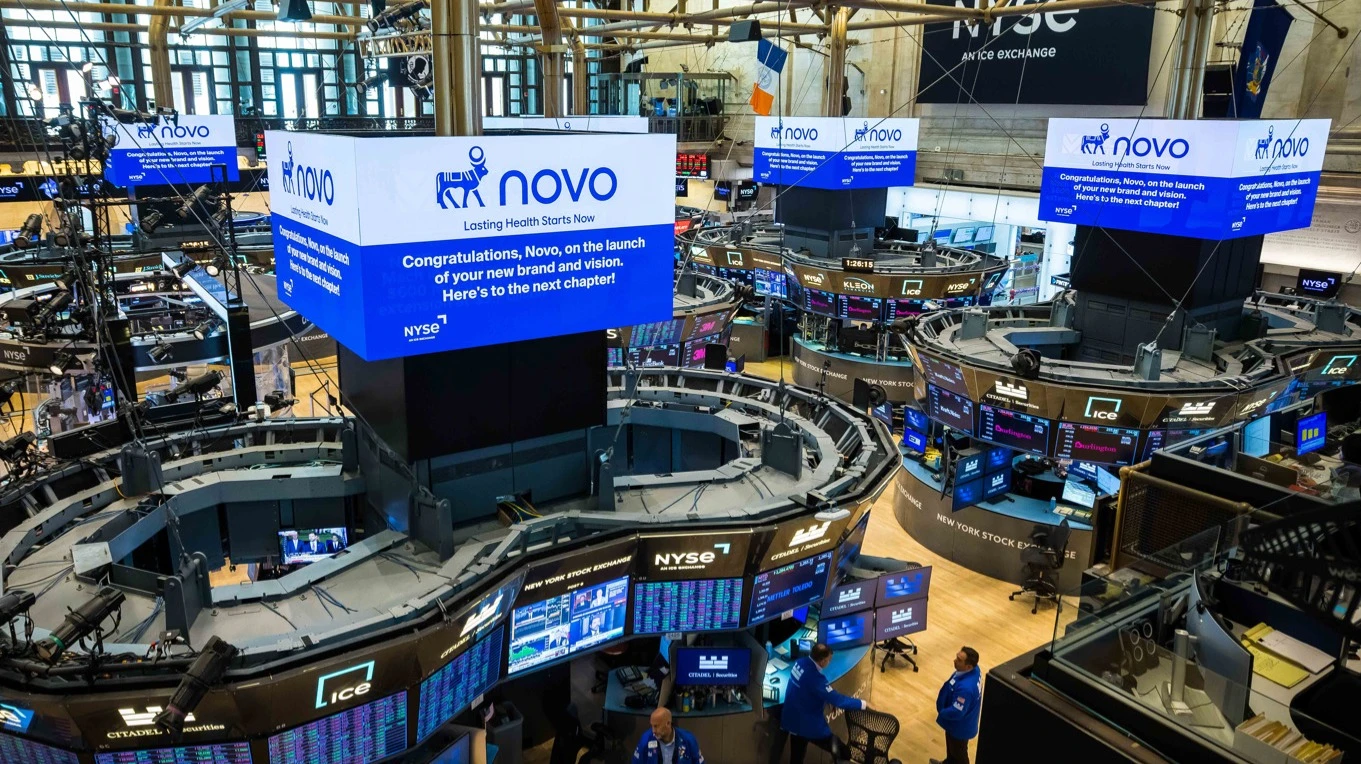
Novo Nordisk (NVO: -7.9%) shares fell following an investor day at which the company presented a sales target for its pipeline of over 150 billion Danish kroner ($23 billion) by 2035. The investment community deemed this target insufficient given that semaglutide will lose its exclusivity in the U.S. in 2032.
Since there were no significant macroeconomic releases the day before, comments from Fed officials drew increased attention. Ostin Goolsbee, president of the Chicago Fed, stated that the central bank cannot ignore recurring supply shocks. Alberto Musalem, president of the St. Louis Fed, noted that additional measures to curb inflation are needed to bring it back to 2%. According to FedWatch, the probability of a rate hike in October is estimated at over 50%. Nevertheless, Treasury yields fell in tandem with oil prices, and the spread between 2-year and 10-year Treasuries narrowed by about 5 basis points. Thus, the main driver of stock market prices was not expectations of monetary policy easing, but rather a reduction in the inflation premium amid a correction in oil prices.
This article was AI-translated and verified by a human editor