Morning in New York: Waller Brought Back a Pause in Market Anticipation Ahead of the Jobs Report

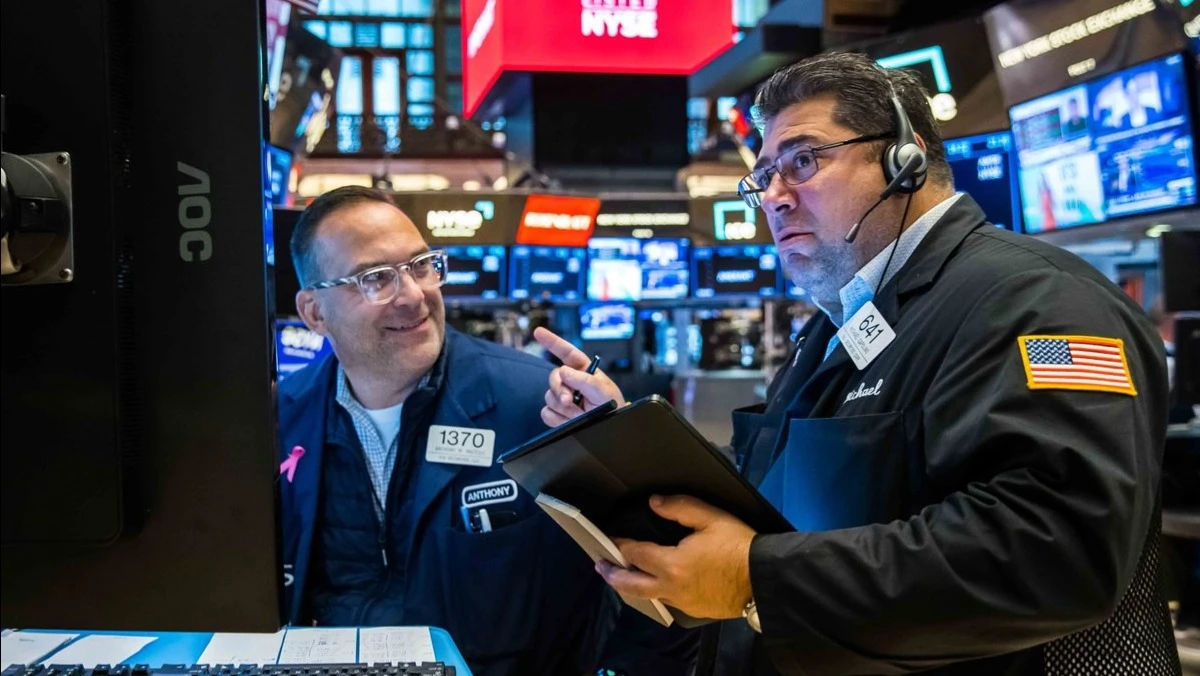
Following remarks by Federal Reserve Governor Christopher Waller, expectations regarding the Fed’s interest rate have shifted significantly; now, the key event of the day will be the August U.S. labor market report / Photo: X / NYSE
A daily review and forecast of events in the U.S. stock market by Mikhail Denislov, Deputy Director of Capital Markets Research at Freedom Broker.
We expect
Following the market’s strong gains yesterday, the external environment remains positive; however, the main shift has occurred in expectations regarding the Fed’s policy rate. Christopher Waller stated that he is inclined to support a pause in the rate-cutting cycle at the September meeting if data confirms a further slowdown in inflation. The decline in Treasury yields has supported demand for stocks, so barring any negative surprises, the positive trend is likely to continue.
The key event of the day will be the August U.S. labor market report. The consensus forecast calls for an increase of approximately 56,000 nonfarm payroll jobs following a decline of 23,000 in July, an unemployment rate of 4.1%, and a 0.3% month-over-month increase in average hourly earnings. Moderately weak data would reinforce the pause scenario, but another employment setback would heighten concerns about the economy, whereas a strong report and accelerating wage growth could put pressure back on short-term Treasuries. Given Waller’s focus on inflation, next week’s Consumer Price Index (CPI) will likely remain the most important factor for the FOMC’s decision.
The geopolitical situation in the Middle East remains a source of uncertainty; however, signs of de-escalation and the resumption of oil shipments through the Strait of Hormuz are currently having a positive impact on oil prices. Yesterday, WTI crude failed to break through its July high and pulled back, resulting in a short-term double top near $93.
The AI theme continues to be a positive driver for the technology sector and the broader market. Over the past week, investors received several confirmations that the AI investment cycle remains strong: Dell Technologies (DELL) reported record orders for AI servers, Broadcom (AVGO) expects AI revenue to accelerate further and sees potential for it to grow to approximately $230 billion in fiscal year 2028, and Hewlett Packard Enterprise (HPE) secured a $3.5 billion contract for inference infrastructure for a major cloud provider. At the same time, Snowflake (SNOW) reported an acceleration in platform adoption driven by AI products, while the launch of new models by OpenAI and Meta Platforms (META) confirmed ongoing progress in the models themselves. An additional positive signal was NVIDIA’s (NVDA) acquisition of the Hugging Face platform, which expands its presence beyond hardware infrastructure. The market is entering Friday’s session with the confirmed view that demand for computing power, infrastructure, and AI software remains robust and continues to support the investment cycle surrounding AI.
U.S. index futures are trading in positive territory. We assess the risk balance for the upcoming session as moderately positive, with elevated volatility. The August U.S. labor market report will be the focus of attention. The reaction of Treasury yields to the data will serve as a key guide for stocks. Trading activity in the second half of the session is likely to be lower than usual: U.S. stock exchanges are closed on Monday for Labor Day.
What to Watch for in the Pre-Market
— Lululemon (LULU) is down nearly 19% after yet another downward revision to its full-year guidance. Quarterly revenue came in at $2.42 billion, compared with the consensus estimate of $2.46 billion, while sales in North and South America fell by 8%. The company now expects full-year revenue to decline by 5–7% and EPS to be $9.48–9.73, down from the previous guidance of $10.95–11.15. The market reaction reflects concerns that the issues with the product mix and brand are more persistent and will take time to resolve.
— Samsara (IOT) is up about 14% following strong earnings and an upward revision of its guidance. Revenue grew 30% to $508.4 million, ARR reached $2.13 billion with 30% growth, and net ARR growth increased by 28%. Management noted a more than fourfold increase in the adoption of new AI features over two months and raised its full-year revenue forecast to $2.043–2.047 billion. The results confirm that the adoption of AI is beginning to drive increased use of the platform by large customers.
— Guidewire Software (GWRE) is down nearly 15% despite beating expectations for quarterly revenue and earnings. The revenue forecast for the current quarter of $372–378 million fell short of the consensus estimate of about $387 million. After strong stock gains in recent months, investors needed a more significant margin relative to expectations to justify the company’s high valuation.
— Smith & Wesson (SWBI) is up 10% following strong earnings. Revenue rose 32% to $112.6 million, and the company returned to profitability with earnings of $0.06 per share, compared with a loss of $0.08 a year earlier. The gross margin improved to 28.7%, although about 260 basis points of that increase came from one-time duty refunds.
The Market on the Eve of...
The U.S. market closed on September 3 with solid gains: the S&P 500 rose 1.06%, the Nasdaq-100 rose 1.16%, and the Dow Jones rose 1.18%. Market breadth improved noticeably, though the largest companies continued to lead the way: the RSP rose 0.66%, compared to 2.43% for the MAGS. Stocks were supported by stabilization in the bond market following remarks by Federal Reserve Board member Christopher Waller, who suggested that rates could remain unchanged in September if inflationary pressures continue to ease. Against this backdrop, the probability of a rate hike at the September meeting fell to about 50%, down from nearly 68% on Tuesday. The yield on two-year Treasuries fell by 3 basis points to 4.34%, while the yield on 10-year Treasuries fell by 1 basis point to 4.77%.
The decline in government bond yields primarily supported sectors sensitive to the cost of capital. The consumer sector, financial companies, communications services, and IT were among the top performers. However, performance within the technology sector remained mixed. Software developers fared better, led by Snowflake (SNOW: +16.6%), which accelerated growth for the third consecutive quarter and raised its product revenue forecast, confirming improvements in both its AI division and its core data platform. Meta Platforms (META: +3.0%) also bolstered AI sentiment with the launch of Muse Spark 1.3. Meanwhile, semiconductor stocks lagged: Broadcom (AVGO: −2.7%) fell after its full-quarter revenue guidance fell slightly short of expectations, despite a strong long-term outlook for AI revenue. This divergence shows that investors are leaving virtually no room for a weak short-term outlook.
The positive sentiment spread beyond the technology sector. Consumer stocks were buoyed by strong results from Five Below (FIVE: −1.3%), where comparable sales rose 14.1% primarily due to increased foot traffic, while Tesla (TSLA: +5.4%) outperformed the market thanks to a positive reception of Cybercab’s prospects. At the same time, the reaction to individual earnings reports remained harsh: Victoria’s Secret (VSXY: −13.2%) fell despite improved full-year guidance, as high expectations and concerns about growth rates outweighed strong actual results. This confirms that the rise in indices was accompanied by a more selective reallocation of capital toward companies with the most compelling combination of growth and outlook.
At the same time, the macroeconomic backdrop did not become unequivocally more accommodative. The ISM Services Index rose to 55.4 points, compared with the consensus estimate of 54.3, and the paid prices component reached a four-year high. Therefore, yesterday’s decline in yields likely reflected a shift in expectations following Waller’s comments rather than the disappearance of inflationary risks.
This article was AI-translated and verified by a human editor