Neoclouds have keenly felt the shortage of AI funding. What should investors keep an eye on?

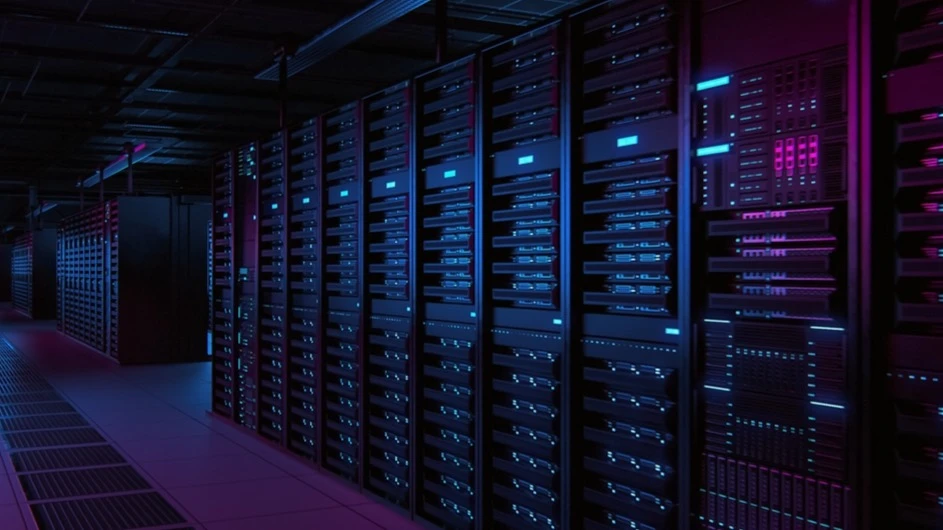
The situation in the AI market is particularly problematic for non-cloud companies—they are expanding their data centers with borrowed funds / Photo: Shutterstock.com
This week’s market sell-off showed that investors have once again lost confidence in the viability of betting on artificial intelligence. But the sector’s problems became apparent even before the market experienced an “AI bloodbath”: fundraising conditions for businesses involved in AI development had deteriorated significantly. Non-cloud companies were the first to take the hit. Two of them—CoreWeave and Nebius—will report their quarterly earnings on November 10 and November 12. Their results will provide insight into how successfully these companies are managing rising costs and meeting investor expectations.
Trillions for data centers
After the release of the first ChatGPT model, artificial intelligence companies began to “sweep up” the market more aggressively with each passing year: raising capital wherever possible—from venture capitalists, banks, equity and debt markets, and private lending funds. The volume of corporate debt issued by AI-related companies in the U.S. reached $655 billion as of October 22 of this year, according to Bank of America data cited by The Wall Street Journal. According to the bank’s analysts’ forecast, the volume of new AI-related borrowing will approach $1 trillion in 2027 and 2028.
The active “consumers” of capital are non-cloud companies that specialize in data centers: they own or lease them, equip them with a fleet of AI servers, and enter into contracts to sell computing power to major technology companies and other customers. Among them are CoreWeave, Nebius, Galaxy Digital, Stingray Compute, Nscale, IREN, and others.
“Everyone is trying to raise money for their [data center] construction projects before liquidity dries up,” the WSJ quotes Ben Connard, chief investment officer at Carnegie Investment Counsel, as saying. “But in the end, there may not be enough money to finance them.”
Connard believes that fundraising challenges could trigger a crisis that would ultimately cool the AI boom, which has been underway for several years now.
Accumulated negativity
Another negative factor for the AI sector was the Democrats’ landslide victory in the congressional elections held on Tuesday, November 3. They secured a significant majority in both chambers. One factor driving support for the Democrats was opposition to new AI data centers. According to an NBC exit poll, 76% of voters oppose their construction in their district.

In Texas, where numerous data centers are being built, Democratic Governor-elect Gina Inohosa has called for an immediate moratorium on their construction. Given the unpopularity of these projects among the public, a political backlash was only a matter of time, says Stef Cho, a high-yield bond strategist at Citigroup: “We just ran into resistance much sooner than many might have expected.”
Negative factors began to accumulate as early as the summer, and SpaceX’s IPO—as Oninvest had warned —turned out to be, at the very least, a medium-term peak for the technology sector. Following that, the Nasdaq index traded sideways for five months.
Then, on Thursday, November 5, the negative sentiment had built up to such an extent that the market crashed. The Nasdaq Composite Index lost 5.5% and a record $2.5 trillion in market capitalization. The Nasdaq 100, which is dominated by large technology companies, fell 6.4%, while the PHLX Semiconductor Index—which tracks semiconductor manufacturers—experienced its worst day since the start of the COVID-19 pandemic, plummeting 12.25%.
"Above all, the market fears that the Democrats will follow through on their campaign promises to restrict the construction of data centers," commented Jon Trisi, publisher of the Fuller Treacy Money investment newsletter.
“But since large companies hedge their risks by supporting politicians from both parties, there’s a high probability that what we’re seeing is a panic reaction, and there won’t ultimately be a significant slowdown in construction. “That’s essentially the only argument for buying on the dip,” he reasons. “The counterargument is that the public has a very negative view of AI and is concerned about inflation, job losses, and environmental damage. These problems aren’t going away.”
The current situation is particularly problematic for companies that have raised funds to build data centers but are not yet able to demonstrate a return on their investment, Trisi notes.
CoreWeave and Nebius shares fell even further, but this is also a problem for those who lent them money.
The markets are closing
CoreWeave and Nebius will release their quarterly earnings reports next week—on November 10 and November 12—and investors will be able to assess whether their financial results justify the expenses already incurred.
On November 5, their shares fell by 9.8% and 14.9%, respectively; IREN shares dropped 17%, and ChronoScale shares fell 15.7%.
Since their recent highs in late spring and summer, the stocks of these companies have already fallen by 74%, 51%, 68%, and 59%, respectively, according to Bloomberg.
As Trisi noted, creditors of both non-cloud companies and tech giants are facing challenges. Even Meta and SpaceX bonds are trading at significant discounts, and in their new issuances, these companies have had to offer investors higher yields. For companies such as CoreWeave, Nebius, and Nscale, the bond market has effectively shut down in recent weeks, the WSJ reports, citing investment bankers.
For neo-cloud providers, the tech giants themselves are making the situation even worse. For example, Microsoft, which previously helped spark the neo-cloud boom by signing contracts with them, is now tightening its control over data center projects by Nebius Group, IREN, and Nscale, pulling out of the riskiest ones, and reevaluating the feasibility of entering into new agreements, Bloomberg reported.
The bonds that CoreWeave issued this year at 9.75% are now trading at a yield above 15% and are worth about 80% of face value (bond yield and price move in opposite directions). In September of this year, the U.S. Federal Reserve raised interest rates for the first time in three years, and market participants began to view the business prospects of AI-related companies with much greater concern. And they simply cannot afford loans at 15%.
Since 2024, Nebius has sold $2.7 billion worth of its shares to Nvidia and other investors, and has also raised billions of dollars through the issuance of convertible bonds. Over the summer and early fall, company executives discussed with fund managers the possibility of issuing its first high-yield bonds, people familiar with the matter told the WSJ. But in the end, the company decided against the issuance.
She has to be more resourceful in securing funding for data centers, including asking clients for advance payments, Nebius CEO Arkady Volozh said at a conference in Berlin in October.
Investors also have questions about Big Tech companies
Investors have also become much more cautious about bonds issued by tech giants. According to Bloomberg’s calculations, the five largest players in the data center market alone plan to spend more than $3 trillion in the coming years. This figure represents the disclosed commitments by Alphabet, Amazon, Meta, Microsoft, and Oracle for construction, leasing, power supply, equipment purchases, and other expenses. Alphabet alone has reported commitments totaling more than $1 trillion—eight times more than a year ago.
Although Meta successfully placed its first euro-denominated bonds on Wednesday, November 4 (with €9 billion in bonds issued and €62 billion in bids), it was only able to attract so many investors by offering a higher interest rate, Bloomberg notes.
There were six issues with maturities ranging from 4 to 38 years, and on average, the premium on them was about 1.4 times higher than what Alphabet paid when it issued similar bonds just last week.
Due to the rapid deterioration of market conditions, Meta’s euro-denominated bonds ended up costing the company even more than its $15 billion in dollar-denominated bonds issued the day before, on Tuesday, November 3 (although the interest rate on euro-denominated loans should be lower, since the ECB’s rate is lower than the Fed’s). For short- and medium-term issues, the spread had to be increased by 15–20 basis points, and for long-term issues, by nearly 100 basis points.
That said, Meta has an AA- credit rating. However, according to Bloomberg’s calculations, the yields on its bonds have been on par with those of companies rated several notches lower.
And this is not an isolated case. Due to uncertainty surrounding the return on AI investments, Alphabet and Amazon bonds (rated AA+ and AA, respectively) are also trading at higher yields than those of companies with comparable credit quality.
Given their investment-grade ratings, Meta, Amazon, Alphabet, and Microsoft could, in principle, continue to raise large amounts of capital. However, the record volume of bonds already issued this year and plans for new borrowing totaling trillions of dollars are forcing investment firms, insurers, and pension funds to consider how much more they are willing to invest in the AI sector and whether it is time to limit the risks associated with it.
“This raises a purely practical question: How much can investors put into a single company or a single [investment] theme?” Dan Ivasin, chief investment officer at Pimco, concluded in an interview with the WSJ.
This article was AI-translated and verified by a human editor